

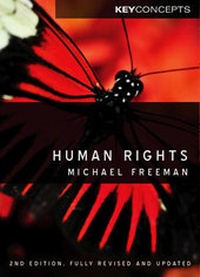
Human Rights
An Interdisciplinary Approach
2nd Edition
Published on 22. February 2011
Book
Hardback
224 pages
978-0-7456-3965-9 (ISBN)
Description
Human Rights is an introductory text that is both innovative and challenging. It invites students to think conceptually about one of the most important and influential political concepts of our time. In this unique interdisciplinary approach, Michael Freeman emphasizes the complex ways in which the experiences of the victims of human rights violations are related to legal, philosophical and social-scientific approaches to human rights.
By tracing the history of the concept, the book shows that there is a fundamental tension between the philosophy of human rights and the way in which it is understood in the social sciences. This analysis throws light on some of the most controversial issues in the field: Is the idea of the universality of human rights consistent with respect for cultural difference? Are there collective human rights? Should feminists embrace, revise or reject the idea of human rights? Does the idea of human rights distract our attention from the structural causes of oppression and exploitation? What are the underlying causes of human rights violations; and why do some countries have much worse human rights records than others?
The book will appeal to students in the social sciences, as well as students of human rights law who want an introduction to the non-legal aspects of their subject. It will also be read by scholars interested in ethics and the social sciences, as well as the general reader. This is a substantially revised edition that takes account of recent events such as the 'war on terror' and the global economic crisis of 2008.
By tracing the history of the concept, the book shows that there is a fundamental tension between the philosophy of human rights and the way in which it is understood in the social sciences. This analysis throws light on some of the most controversial issues in the field: Is the idea of the universality of human rights consistent with respect for cultural difference? Are there collective human rights? Should feminists embrace, revise or reject the idea of human rights? Does the idea of human rights distract our attention from the structural causes of oppression and exploitation? What are the underlying causes of human rights violations; and why do some countries have much worse human rights records than others?
The book will appeal to students in the social sciences, as well as students of human rights law who want an introduction to the non-legal aspects of their subject. It will also be read by scholars interested in ethics and the social sciences, as well as the general reader. This is a substantially revised edition that takes account of recent events such as the 'war on terror' and the global economic crisis of 2008.
Reviews / Votes
"A comprehensive, well-informed and intelligent discussion of the contemporary theoretical and philosophical debates in human rights. Crucially, Human Rights contextualizes its subject, deftly illustrating the lasting contribution of humanities and social science analyses of the non-legal aspects of human rights. Freeman manages to be both even-handed and incisive in his commentary and this textbook will appeal to novices and experts alike."Richard A. Wilson, University of Connecticut
"Michael Freeman's second edition of Human Rights is, like the first, very well written. In addition, it is very well grounded in history and normative political theory. Moreover, it accurately summarizes much literature in the social sciences dealing with both empirical theory and factual evidence."
Professor D. Forsythe, University of Nebraska
"When Polity published Human Rights in 2002, it filled a void. Finally, there was a book that introduced the concept with all its complexities but in a clear style. Freeman's systematic approach and passionate prose guided readers through a labyrinth of history, disciplines, and issues and allowed them to develop an understanding of the history of human rights, along with a range of debates and conflicts surrounding them. The layered analysis made the book equally attractive to the experts. Now, nearly a decade later, we have more books on human rights, but none to replace Freeman's. The second edition, still maintaining the original structure and broad scope, points to the elements of progress amidst ever increasing human rights violations, albeit in a rapidly changing world."
Zehra F. Kabaskal Arat, Purchase College
More details
Series
Edition
2nd edition
Language
English
Place of publication
Oxford
United Kingdom
Publishing group
John Wiley and Sons Ltd
Target group
College/higher education
Dimensions
Height: 227 mm
Width: 148 mm
Thickness: 23 mm
Weight
454 gr
ISBN-13
978-0-7456-3965-9 (9780745639659)
Copyright in bibliographic data and cover images is held by Nielsen Book Services Limited or by the publishers or by their respective licensors: all rights reserved.
Schweitzer Classification
Other editions
New editions
Michael Freeman
Human Rights
Book
05/2017
3rd Edition
Polity Press
Unfortunately, price unknown
Article exhausted; check for reprint
Additional editions
Book
02/2011
2nd Edition
Polity Press
€20.90
Article exhausted; check for reprint
Previous edition
Person
Michael Freeman is a research professor in the Department of Government at the University of Essex. He has given lectures at universities in more than 20 countries and has published extensively on the theory and practice of human rights.
Content
Preface to the Second Edition. Acknowledgments.
1. Introduction: Thinking about Human Rights.
2. Origins: the Rise and Fall of Natural Rights.
3. After 1945: the New Age of Rights.
4. Theories of Human Rights.
5. Putting Law in its Place: the Role of the Social Sciences.
6. Universality, Diversity and Difference: Culture and Human Rights.
7. Idealism, Realism and Repression: the Politics of Human Rights.
8. Globalization, Development and Poverty: Economics and Human Rights.
9. Conclusion: Human Rights in the Twenty-First Century.
References.
1. Introduction: Thinking about Human Rights.
2. Origins: the Rise and Fall of Natural Rights.
3. After 1945: the New Age of Rights.
4. Theories of Human Rights.
5. Putting Law in its Place: the Role of the Social Sciences.
6. Universality, Diversity and Difference: Culture and Human Rights.
7. Idealism, Realism and Repression: the Politics of Human Rights.
8. Globalization, Development and Poverty: Economics and Human Rights.
9. Conclusion: Human Rights in the Twenty-First Century.
References.