

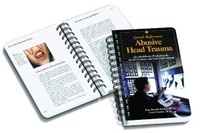
Abusive Head Trauma Quick Reference
for Healthcare Professionals, Social Services and Law Enforcement Professionals
Published on 15. July 2007
Book
Spiral bound
355 pages
978-1-878060-57-0 (ISBN)
Description
The Abusive Head Trauma Quick References is perfect field guide for investigators and clinicians. Portable and pocket-sized, this text is a valuable resource for recognizing, diagnosing, and treating head injuries that result from child abuse. The full-color clinical photography provides unmatched case examples for forensic exams, and the condensed format delivers vital information with easy browsing. This quick reference is a vital tool and a must-have for medical examiners, pediatricians, forensic nurses, ER staff, and investigators.
Reviews / Votes
Quick reference offers the reader a vast amount of readily accessible clinically pertinent information. A well designed resource which should prove invaluable to all professionals involved with the care of maltreated children International Society for the Prevention of Child Abuse and NeglectMore details
Series
Language
English
Place of publication
Saint Louis
United States
Publishing group
STM Learning
Target group
Professional and scholarly
Illustrations
139 images
Weight
400 gr
ISBN-13
978-1-878060-57-0 (9781878060570)
Copyright in bibliographic data and cover images is held by Nielsen Book Services Limited or by the publishers or by their respective licensors: all rights reserved.
Schweitzer Classification
Other editions
Additional editions
Lori D. Frasier | Kay Rauth-Farley | Randell Alexander
Abusive Head Trauma Quick Reference
For Healthcare Professionals, Social Services, and Law Enforcement
E-Book
06/2007
STM Learning
€43.49
Available for download
Content
1. Recognizing Intentional and Unintentional Head Injuries; 2. Biomechanics; 3. Neuroradiology; 4. Neurosurgery; 5. Ophthalmology; 6. Associated Injuries; 7. Medical Disorders That Mimic Abusive Head Trauma; 8. Nursing Care; 9. Social Services; 10. Autopsy Findings; 11. Forensic Investigations; 12. Prosecution and Courtroom Issues; 13. Neurodevelopmental Outcomes of Abusive Head Trauma; 14. Prevention and Education.