

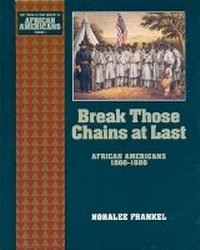
Break Those Chains at Last
Published on 25. April 1996
Book
Hardback
144 pages
978-0-19-508798-7 (ISBN)
Description
"We thought we'd break those chains at last," sang the slaves, hoping such spirituals would sustain them until the Confederacy surrendered and slavery was gone forever. During the Civil War, blacks served in the Union army and navy (although some fought for the South) and in Union-controlled camps, which harbored fleeing slaves. Not all slaves escaped, but even those who remained with their masters began to imagine a new life. After the war, amendments to
the Constitution abolished slavery, granted citizenship to freed people, and gave African-American men the right to vote. Freedom, blacks hoped, would also mean political equality and economic
well-being. Some moved from rural areas to cities in the South or North; others looked to the West, where many African-American men became farmers or found work as cattle-drive cooks and cowboys. But many whites viewed freedom for African Americans as a threat, and they responded by establishing white supremacy organizations such as the Ku Klux Klan. Organized violence against blacks, along with poor agricultural conditions, discrimination, and worsening economic times, guaranteed
poverty for most Southern blacks. Although the tightly knit slave communities on the larger plantations began to disperse, a sense of having shared interests and goals actually widened freed
people's vision of the meaning of community. Despite fierce white opposition, African Americans established their own churches, schools, and other associations and began to participate actively in government. Break Those Chains at Last tells the story of these turbulent and complicated years, as African Americans created the communities and organizations that survive to this day.
the Constitution abolished slavery, granted citizenship to freed people, and gave African-American men the right to vote. Freedom, blacks hoped, would also mean political equality and economic
well-being. Some moved from rural areas to cities in the South or North; others looked to the West, where many African-American men became farmers or found work as cattle-drive cooks and cowboys. But many whites viewed freedom for African Americans as a threat, and they responded by establishing white supremacy organizations such as the Ku Klux Klan. Organized violence against blacks, along with poor agricultural conditions, discrimination, and worsening economic times, guaranteed
poverty for most Southern blacks. Although the tightly knit slave communities on the larger plantations began to disperse, a sense of having shared interests and goals actually widened freed
people's vision of the meaning of community. Despite fierce white opposition, African Americans established their own churches, schools, and other associations and began to participate actively in government. Break Those Chains at Last tells the story of these turbulent and complicated years, as African Americans created the communities and organizations that survive to this day.
Reviews / Votes
"Even when the issues are complex, the text remains clear and engaging.... This lively text is largely based on interviews with former slaves and material from other primary sources."--The Book Report"Frankel makes especially good use of quotations from interviews with former slaves done in the 1930s.... Can stand alone, serve as companions to the other volumes in the series, or complement other books."--School Library Journal
More details
Language
English
Place of publication
New York
United States
Target group
Interest Age: From 12 to 17 years
ISBN-13
978-0-19-508798-7 (9780195087987)
Copyright in bibliographic data and cover images is held by Nielsen Book Services Limited or by the publishers or by their respective licensors: all rights reserved.
Schweitzer Classification
Person
Noralee Frankel is Assistant Director on Women and Minorities at the American Historical Association. She is the coeditor of Gender, Class, Race, and Reform in the Progressive Era and author of the forthcoming Freedom's Women: Black Women in Mississippi in the Civil War Era.