

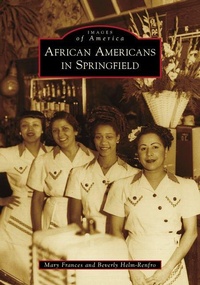
African Americans in Springfield
Published on 25. July 2022
Book
Paperback/Softback
128 pages
978-1-4671-0821-8 (ISBN)
Description
"Springfield became the capital of Illinois due in large part to Abraham Lincoln - lawyer, politician, and president. Lincoln lived in Springfield from 1837 to 1861, and during the decade after his departure, the African American population in the city quadrupled. Although Springfield was dominated by railroads, coal mines, and government, African Americans also worked as doctors, dentists, lawyers, professors, politicians, public school teachers, firemen, insurance agents, entrepreneurs, soldiers, military officers, police officers, state troopers, artists, inventors, secretaries, cooks, laborers, car salesmen, and church leaders. After the Springfield race Riot of 1908, the city became less welcoming for African Americans. Shortly after, however, the National Association for the Advancement of Colored People and the National Urban League were formed. Further gains under Dr. Martin Luther King Jr.'s leadership were made during the civil rights movement."--Back cover.
More details
Series
Language
English
Place of publication
United States
Product notice
Paperback (trade)
Unsewn / adhesive bound
Illustrations
Illustrations
Dimensions
Height: 234 mm
Width: 163 mm
Thickness: 10 mm
Weight
322 gr
ISBN-13
978-1-4671-0821-8 (9781467108218)
Copyright in bibliographic data and cover images is held by Nielsen Book Services Limited or by the publishers or by their respective licensors: all rights reserved.
Schweitzer Classification
Persons
Mary Frances, documentarian and independent historian, along with Beverly Helm-Renfro, daughter of professional photographer Doc Helm, searched institutional and individual collections for relevant photographs. The Abraham Lincoln Presidential Library and Museum, Illinois State Archives, Lincoln Library, Springfield Urban League, Brookens Library, Illinois State Museum, Beverly Helm-Renfro, and Robert Moore contributed to this visual journey through the history of African Americans in Springfield.