

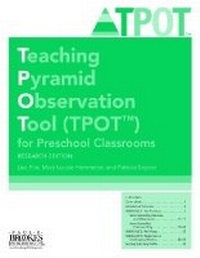
Teaching Pyramid Observation Tool (TPOT (TM)) for Preschool Classrooms Set
Published on 30. December 2013
Book
Paperback/Softback
168 pages
978-1-59857-652-8 (ISBN)
Description
If your programme is among the thousands using the evidence-based Pyramid Model for Promoting Social Emotional Competence in Infants and Young Children, this is the one tool you need to support teachers to effectively use the practices. Developed by highly respected creators of the Pyramid Model for classrooms enrolling children 2-5 years of age, the TPOT (TM) is an in-depth tool that provides information on how well teachers are implementing practices related to universal, targeted, and individualized supports. A trained administrator conducts a classroom observation and teacher interview, uncovering detailed information about the quality of 14 key teaching practices, noting red flags that indicate areas for immediate support, and observing how teachers respond to challenging behaviours. TPOT (TM) results show which practices are being implemented successfully-and what teachers need to focus on to ensure positive social-emotional outcomes for young children.
TPOT (TM) helps programmes:
Support effective implementation of the proven PBIS-based Pyramid model
Promote social-emotional competence in young children
Implement strategies to prevent and address challenging behaviour
Compare implementation across classrooms, teachers, and programmes
Identify where teachers need extra professional development and support
Guide coaching efforts
This Set includes the TPOT (TM) Manual and one package of TPOT (TM) forms.
This is the one tool you need to make sure teachers are effectively putting the evidence-based Pyramid Model for Promoting Social Emotional Competence in Infants and Young Children into practice.
TPOT (TM) helps programmes:
Support effective implementation of the proven PBIS-based Pyramid model
Promote social-emotional competence in young children
Implement strategies to prevent and address challenging behaviour
Compare implementation across classrooms, teachers, and programmes
Identify where teachers need extra professional development and support
Guide coaching efforts
This Set includes the TPOT (TM) Manual and one package of TPOT (TM) forms.
This is the one tool you need to make sure teachers are effectively putting the evidence-based Pyramid Model for Promoting Social Emotional Competence in Infants and Young Children into practice.
More details
Edition
Research Edition
Language
English
Place of publication
Baltimore
United States
Target group
Professional and scholarly
Illustrations
Includes TPOT (TM) Manual, 1 package of TPOT (TM) forms
Dimensions
Height: 279 mm
Width: 216 mm
Weight
760 gr
ISBN-13
978-1-59857-652-8 (9781598576528)
Copyright in bibliographic data and cover images is held by Nielsen Book Services Limited or by the publishers or by their respective licensors: all rights reserved.
Schweitzer Classification
Persons
Dr. Lise Fox is a professor in the Department of Child and Family Studies of the University of South Florida in Tampa, Florida and the Co-Director of Florida Center for Inclusive Communities: A University Center for Excellence in Developmental Disabilities. Lise was the Principal Investigator of the Technical Assistance Center for Social Emotional Intervention funded by the Office of Special Education Programs. Dr. Fox is engaged in research and training efforts related to the implementation of the Pyramid Model in early education and care classrooms, program-wide models of implementation, and positive behaviour support.
Mary Louise Hemmeter, Ph.D., is a professor in the Department of Special Education at Vanderbilt University. She teaches courses, advises students, and conducts research on early childhood issues. She is the cofaculty director of the Susan Gray School for Children, which is an early childhood program for children with and without disabilities. Her research focuses on effective instruction, social-emotional development and challenging behaviour, translating research to practice, and effective approaches to professional development. Currently, she directs an Institute of Education Sciences-funded research project focused on the efficacy of implementing the Teaching Pyramid in classrooms, and she works on the National Center on Quality Teaching and Learning and the Office of Special Education Programs-funded Technical Assistance Center on Social Emotional Interventions. She is a coeditor of the Journal of Early Intervention and serves on the editorial boards of other major journals in early childhood special education. She served as President of the Council for Exceptional Children's Division for Early Childhood (DEC) and received the Merle B. Karnes award from DEC.
Patricia Snyder is the David Lawrence Jr. Endowed Chair in Early Childhood Studies and Director of the Center for Excellence in Early Childhood Studies at the University of Florida. She has more than 35 years experience in early intervention and early childhood as a direct service provider, program administrator, faculty member, and researcher. She is former editor of the Journal of Early Intervention and is an associate editor for Topics in Early Childhood Special Education. Her research focuses on embedded instruction for early learning, young children's social-emotional competence, professional development, and measurement of early childhood outcomes. She has been a principal investigator or co-principal investigator for a number of funded research and technical assistance projects focused on these research emphasis areas. Dr. Snyder has authored more than 85 articles and book chapters, has served on the editorial boards for seven professional journals, and presented more than 400 seminars, workshops, and presentations at state, national, and international conferences. She served two terms as a principal member of the early intervention and early learning in special education review panel for the Institute of Education Sciences, is a member of the Division for Early Childhood Recommended Practices Commission, and has received numerous awards for her research, teaching, and service contributions to the field, including the Mary E. McEvoy Service to the Field and Merle B. Karnes Service to the Division awards from the Division for Early Childhood of the Council for Exceptional Children.
Mary Louise Hemmeter, Ph.D., is a professor in the Department of Special Education at Vanderbilt University. She teaches courses, advises students, and conducts research on early childhood issues. She is the cofaculty director of the Susan Gray School for Children, which is an early childhood program for children with and without disabilities. Her research focuses on effective instruction, social-emotional development and challenging behaviour, translating research to practice, and effective approaches to professional development. Currently, she directs an Institute of Education Sciences-funded research project focused on the efficacy of implementing the Teaching Pyramid in classrooms, and she works on the National Center on Quality Teaching and Learning and the Office of Special Education Programs-funded Technical Assistance Center on Social Emotional Interventions. She is a coeditor of the Journal of Early Intervention and serves on the editorial boards of other major journals in early childhood special education. She served as President of the Council for Exceptional Children's Division for Early Childhood (DEC) and received the Merle B. Karnes award from DEC.
Patricia Snyder is the David Lawrence Jr. Endowed Chair in Early Childhood Studies and Director of the Center for Excellence in Early Childhood Studies at the University of Florida. She has more than 35 years experience in early intervention and early childhood as a direct service provider, program administrator, faculty member, and researcher. She is former editor of the Journal of Early Intervention and is an associate editor for Topics in Early Childhood Special Education. Her research focuses on embedded instruction for early learning, young children's social-emotional competence, professional development, and measurement of early childhood outcomes. She has been a principal investigator or co-principal investigator for a number of funded research and technical assistance projects focused on these research emphasis areas. Dr. Snyder has authored more than 85 articles and book chapters, has served on the editorial boards for seven professional journals, and presented more than 400 seminars, workshops, and presentations at state, national, and international conferences. She served two terms as a principal member of the early intervention and early learning in special education review panel for the Institute of Education Sciences, is a member of the Division for Early Childhood Recommended Practices Commission, and has received numerous awards for her research, teaching, and service contributions to the field, including the Mary E. McEvoy Service to the Field and Merle B. Karnes Service to the Division awards from the Division for Early Childhood of the Council for Exceptional Children.
Content
About the Authors
Acknowledgments
1. Introduction to the Teaching Pyramid Observation Tool
2. Overview of Pyramid Model and the Teaching Pyramid Observation Tool
3. Using the TPOT
4. TPOT Scoring Guidance
5. Scoring the Teaching Pyramid Observation Tool and Summarizing Results
6. Using the TPOT in Coaching to Promote Effective Practices: Case Studies
7. Technical Features of the Teaching Pyramid Observation Tool
References
Appendix A: FAQs
Appendix B: Resources
Index
Acknowledgments
1. Introduction to the Teaching Pyramid Observation Tool
2. Overview of Pyramid Model and the Teaching Pyramid Observation Tool
3. Using the TPOT
4. TPOT Scoring Guidance
5. Scoring the Teaching Pyramid Observation Tool and Summarizing Results
6. Using the TPOT in Coaching to Promote Effective Practices: Case Studies
7. Technical Features of the Teaching Pyramid Observation Tool
References
Appendix A: FAQs
Appendix B: Resources
Index