


Poetry and the Built Environment
A Theory of the Flesh of Art
Published on 9. July 2024
Book
Hardback
288 pages
978-0-19-288899-0 (ISBN)
Description
Like gardens, sculptures, paintings, and architecture, Fowler argues, poems are cultural artifacts designed to appeal to our divergent human bodies. As we move through the built environment, we draw on our achieved expertise in negotiating its complex instructions to us. So it is when we read. All art mobilizes our bodily expertise, deploying sophisticated conventions and entangling the virtual with the real. As we engage with them, poems, like other artifacts, support skilled collaborations of the sensate (our perceiving flesh) and the sensible (the perceptible properties of the artifact), further developing our kinesthetic and cultural expertise.
In ten essays, this book explores a range of works by poets from Geoffrey Chaucer and John Milton to Seamus Heaney and Tracy K. Smith, and by artists from Jean de Touyl and Nicholas Stone to Antonin Mercie and Kara Walker. Fowler calls the sphere of interaction between us and such artifacts "the flesh of art," signaling the phenomenological nature of her approach. She theorizes how interactions with art enflesh and acculturate us, making art a primary means through which we orient ourselves in spatiality and work out our places in the social world. Writing poetics at the juncture between aesthetics and politics, Fowler concludes with 43 theses in manifesto. Poetry and the Built Environment insistently demonstrates art's ability to shape us. In poetry, Fowler argues, we see how, especially when the transparency and sensibleness of the world are under stress, art equips us with strategies for transformation.
In ten essays, this book explores a range of works by poets from Geoffrey Chaucer and John Milton to Seamus Heaney and Tracy K. Smith, and by artists from Jean de Touyl and Nicholas Stone to Antonin Mercie and Kara Walker. Fowler calls the sphere of interaction between us and such artifacts "the flesh of art," signaling the phenomenological nature of her approach. She theorizes how interactions with art enflesh and acculturate us, making art a primary means through which we orient ourselves in spatiality and work out our places in the social world. Writing poetics at the juncture between aesthetics and politics, Fowler concludes with 43 theses in manifesto. Poetry and the Built Environment insistently demonstrates art's ability to shape us. In poetry, Fowler argues, we see how, especially when the transparency and sensibleness of the world are under stress, art equips us with strategies for transformation.
Reviews / Votes
This is a thought-provoking, suggestive, richly researched thesis which builds unexpected textual alignments across centuries, cultures, art forms, genres, and individual poems It offers some fascinating propositions even as it occasionally asks us to take some pretty broad claims on trust. Poetry and the Built Environment ranges widely and imaginatively across the terrain; it often provides new and insightful readings of the spaces, occasions, and curious significance of the chosen poems and, through the extended discussion of the 'ductus,' provides a new approach to text and genre. * Jo Gill, The Review of English Studies * If we really wish to understand the power of legal forms, as social forms, and the choreography of domination and subordination these enable, then we need to draw on the insights offered us by artists of past and present generations. And Fowler is a wonderful guide, showing us how things made with language, like law, can create spaces full of pleasure and pain, and ones in which we are trapped until and unless, with art, we make them visible. * Maksymilian Del Mar, International Journal of Law in Context *More details
Series
Language
English
Place of publication
Oxford
United Kingdom
Target group
College/higher education
Product notice
sewn/stitched
Cloth over boards
Illustrations
35 black and white figures
Dimensions
Height: 231 mm
Width: 155 mm
Thickness: 25 mm
Weight
590 gr
ISBN-13
978-0-19-288899-0 (9780192888990)
Copyright in bibliographic data and cover images is held by Nielsen Book Services Limited or by the publishers or by their respective licensors: all rights reserved.
Schweitzer Classification
Other editions
Additional editions
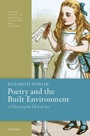
E-Book
07/2024
1st Edition
OUP eBook
€87.99
Available for download
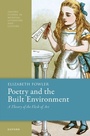
E-Book
05/2024
1st Edition
OUP eBook
€87.99
Available for download
Person
Elizabeth Fowler is a literary scholar and former architect. Her writing concerns language in the context of other cultural practices, and she is working on a study of prayer. She is the author of Literary Character: The Human Figure in Early English Writing (Cornell), co-editor with Roland Greene of The Project of Prose in Early Modern Europe and the New World (Cambridge), and one of five general editors of the forthcoming Oxford Collected Works of Edmund Spenser. She held a post-doc at Harvard, taught at Yale, and now teaches at the University of Virginia and lives on the Blue Ridge.
Content
List of Figures List of Principle Objects Acknowledgements Introduction: Art is the Habituation of Bodily Experience Part I: Station 1: Aspects of Virtual Space 2: and Orientation Part II: Motion 3: Potential Energy of the Artifact 4: Contagion of Attitude: Standing, Lying, Turning Part III: Virtual Pleasure and Pain 5: Roaming in the Gap Between Sensation and Meaning 6: Reformation of the Senses Part IV: Ductility and Genre: The Case of Elegy 7: and Emotion: Shattered Grief 8: and Emotion: Enriching Grief Part V: Virtual Injuries and Rewards 9: in the Historical Space of Injury 10: The Body in the Station Afterword: A Theory of the Flesh of Art in Manifesto Form Bibliography Index