

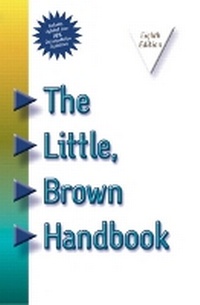
Little, The, Brown Handbook (APA Update), with CD
8th Edition
Published on 10. September 2002
Book
Mixed media product
978-0-321-12554-5 (ISBN)
Description
The Little, Brown Handbook has always addressed both the most current and the recurrent needs of composition teachers and students while remaining an accessible reference and a comprehensive classroom text. The eighth edition continues that tradition by offering greatly expanded coverage of writing and researching with computers, smaller chapters for large subjects such as the writing process and research writing, and in numerable improvements in all other material.
More details
Edition
8th edition
Language
English
Place of publication
United States
Publishing group
Pearson Education (US)
Target group
Professional and scholarly
Dimensions
Height: 217 mm
Width: 142 mm
Thickness: 37 mm
Weight
1174 gr
ISBN-13
978-0-321-12554-5 (9780321125545)
Copyright in bibliographic data and cover images is held by Nielsen Book Services Limited or by the publishers or by their respective licensors: all rights reserved.
Schweitzer Classification
Other editions
Previous edition

H. Ramsey Fowler | Jane E. Aaron
Little, Brown Handbook and Multi CD Pack
Book
10/2001
8th Edition
Pearson
€38.46
Article exhausted; check for reprint
Content
I. THE WRITING PROCESS.
1. Assessing Your Writing Situation.
2. Developing and Shaping Your Ideas.
3. Drafting and Revising.
4. Paragraphs.
II. CRITICAL THINKING, READING, AND WRITING.
5. Critical Perspective.
6. Critical Reading of Arguments.
7. Writing an Argument.
III. USING COMPUTERS CRITICALLY.
8. Computer Literacy.
9. Document Design.
10. Web Composition.
11. Online Collaboration.
IV. GRAMMATICAL SENTENCES.
12. Sentence Grammar.
13. Case of Nouns and Pronouns.
14. Verbs.
15. Agreement.
16. Adjectives and Adverbs.
V. CLEAR SENTENCES.
17. Sentence Fragments.
18. Comma Splices, Fused Sentences.
19. Pronoun Reference.
20. Shifts.
21. Misplaced and Dangling Modifiers.
22. Mixed and Incomplete Sentences.
VI. EFFECTIVE SENTENCES.
23. Emphasis.
24. Coordination and Subordination.
25. Parallelism.
26. Variety.
VII. PUNCTUATION.
27. End Punctuation.
28. Comma.
29. Semicolon.
30. Apostrophe.
31. Quotation Marks.
32. Other Marks.
VIII. MECHANICS.
33. Capitals.
34. Underlining or Italics.
35. Abbreviations.
36. Numbers.
37. Word Division.
IX. EFFECTIVE WORDS.
38. Choosing Words.
39. Dictionaries.
40. Vocabulary.
41. Spelling and the Hyphen.
X. RESEARCH WRITING.
42. Planning a Research Project.
43. Finding Sources.
44. Working with Sources.
45. Writing the Paper.
46. Documenting Sources: MLA Style.
47. Two Sample Research Papers (MLA).
XI. WRITING IN THE DISCIPLINES.
48. Disciplines' Goals and Requirements.
49. Reading and Writing About Literature.
50. Writing in Other Humanities.
51. Writing in the Social Sciences.
52. Writing in the Natural and Applied Sciences.
53. Columbia Style for Online Sources.
XII. SPECIAL WRITING ASSIGNMENTS.
54. Essay Examinations.
55. Business Writing.
56. Oral Presentations.
Glossary of Usage.
Glossary of Terms.
Index.
1. Assessing Your Writing Situation.
2. Developing and Shaping Your Ideas.
3. Drafting and Revising.
4. Paragraphs.
II. CRITICAL THINKING, READING, AND WRITING.
5. Critical Perspective.
6. Critical Reading of Arguments.
7. Writing an Argument.
III. USING COMPUTERS CRITICALLY.
8. Computer Literacy.
9. Document Design.
10. Web Composition.
11. Online Collaboration.
IV. GRAMMATICAL SENTENCES.
12. Sentence Grammar.
13. Case of Nouns and Pronouns.
14. Verbs.
15. Agreement.
16. Adjectives and Adverbs.
V. CLEAR SENTENCES.
17. Sentence Fragments.
18. Comma Splices, Fused Sentences.
19. Pronoun Reference.
20. Shifts.
21. Misplaced and Dangling Modifiers.
22. Mixed and Incomplete Sentences.
VI. EFFECTIVE SENTENCES.
23. Emphasis.
24. Coordination and Subordination.
25. Parallelism.
26. Variety.
VII. PUNCTUATION.
27. End Punctuation.
28. Comma.
29. Semicolon.
30. Apostrophe.
31. Quotation Marks.
32. Other Marks.
VIII. MECHANICS.
33. Capitals.
34. Underlining or Italics.
35. Abbreviations.
36. Numbers.
37. Word Division.
IX. EFFECTIVE WORDS.
38. Choosing Words.
39. Dictionaries.
40. Vocabulary.
41. Spelling and the Hyphen.
X. RESEARCH WRITING.
42. Planning a Research Project.
43. Finding Sources.
44. Working with Sources.
45. Writing the Paper.
46. Documenting Sources: MLA Style.
47. Two Sample Research Papers (MLA).
XI. WRITING IN THE DISCIPLINES.
48. Disciplines' Goals and Requirements.
49. Reading and Writing About Literature.
50. Writing in Other Humanities.
51. Writing in the Social Sciences.
52. Writing in the Natural and Applied Sciences.
53. Columbia Style for Online Sources.
XII. SPECIAL WRITING ASSIGNMENTS.
54. Essay Examinations.
55. Business Writing.
56. Oral Presentations.
Glossary of Usage.
Glossary of Terms.
Index.