

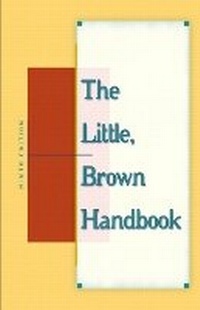
The Little, Brown Handbook (with MyCompLab)
9th Edition
Published on 26. May 2005
Book
Mixed media product
978-0-321-36278-0 (ISBN)
Description
Authoritative and accessible, The Little Brown Handbook helps writing students find what they need and then use what they find. One of the best-selling handbooks on the market, it provides comprehensive coverage of writing, research and grammar, with detailed discussions of critical thinking and argument, using computers and the Internet for writing and research, the latest guidelines for citing sources correctly in MLA, APA, CMS, CSE and COS styles, and writing in the disciplines. Accompanied by the CompSolutions Plus Interactive Ebook of the text, The Little Brown Handbook retains all the hallmarks that has made it a bestseller over the years while continuing to meet the needs of a new generation of students.
Reviews / Votes
"This has been 'our book' for many years; many people in the department have an emotional attachment to the book! I have taught English at this college for thirty-four years and The Little, Brown Handbook has been my closest companion. We work well together. "-Barbara H. Cole, Sandhills Community College
"Established leader in the field. I don't know about other areas, but in the South, at most of the schools I have attended or have worked at or have heard about through friends and colleagues, LBH seems to be the most used handbook."
-J. Lisa Ray, Thomas Nelson Community College
"[Chapter 54, Essay Examinations] is such an excellent chapter it has a larger use than the one identified-this serves as a wonderful overview to writing any essay."
-Peggy Cole, Arapahoe Community College
"I love the fact that you have a section dedicated to the use and punctuation of in-text citations [in MLA style]. This is always an issue for my students."
-Noelle Williams, San Jose State University
"LBH promises an enjoyable writing experience on the very first page in the wit and charm of the opening paragraphs."
-Diane Orsini, Valencia Community College-West
More details
Edition
9th edition
Language
English
Place of publication
New Jersey
United States
Publishing group
Pearson Education (US)
Target group
College/higher education
Dimensions
Height: 229 mm
Width: 228 mm
Thickness: 40 mm
Weight
1210 gr
ISBN-13
978-0-321-36278-0 (9780321362780)
Copyright in bibliographic data and cover images is held by Nielsen Book Services Limited or by the publishers or by their respective licensors: all rights reserved.
Schweitzer Classification
Other editions
New editions
H. Ramsey Fowler | Jane E. Aaron
Little, Brown Handbook, The (with What Every Student Should Know About Using a Handbook)
Book
09/2007
10th Edition
Longman Inc
€74.46
Article exhausted; check for reprint
Content
I. THE WRITING PROCESS.
1. Assessing Your Writing Situation.
2. Developing and Shaping Your Ideas.
3. Drafting and Revising.
4. Writing and Revising Paragraphs.
II. CRITICAL THINKING, READING, AND WRITING.
5. Taking a Critical Perspective.
6. Reading Arguments Critically.
7. Writing an Argument.
III. USING COMPUTERS CRITICALLY.
8. Using Key Computer Skills.
9. Designing Documents.
10. Composing for the Web.
11. Collaborating Online.
IV. GRAMMATICAL SENTENCES.
12. Understanding Sentence Grammar.
13. Case of Nouns and Pronouns.
14. Verbs.
15. Agreement.
16. Adjectives and Adverbs.
V. CLEAR SENTENCES.
17. Sentence Fragments.
18. Comma Splices and Fused Sentences.
19. Pronoun Reference.
20. Shifts.
21. Misplaced and Dangling Modifiers.
22. Mixed and Incomplete Sentences.
VI. EFFECTIVE SENTENCES.
23. Emphasizing Ideas.
24. Using Coordination and Subordination.
25. Using Parallelism.
26. Achieving Variety.
VII. PUNCTUATION.
27. End Punctuation.
28. The Comma.
29. The Semicolon.
30. The Apostrophe.
31. Quotation Marks.
32. Other Punctuation Marks.
VIII. MECHANICS.
33. Capitals.
34. Underlining or Italics.
35. Abbreviations.
36. Numbers.
37. Word Division.
IX. EFFECTIVE WORDS.
38. Using Appropriate Language.
39. Using Exact Language.
40. Writing Concisely.
41. Using Dictionaries.
42. Improving Your Vocabulary.
43. Spelling and the Hyphen.
X. RESEARCH WRITING.
44. Planning a Research Project.
45. Finding Sources.
46. Working with Sources.
47. Avoiding Plagarism and Documenting Sources.
48. Writing the Paper.
49. Using MLA Documentation and Format.
50. Two Sample Research Papers (MLA).
XI. WRITING IN THE ACADEMIC DISCIPLINES.
51. Working with the Disciplines' Goals and Requirements.
52. Reading and Writing About Literature.
53. Writing in Other Humanities.
54. Writing in the Social Sciences.
55. Writing in the Natural and Applied Sciences.
XII. SPECIAL WRITING ASSIGNMENTS.
56. Essay Examinations.
57. Business Writing.
58. Oral Presentations.
Glossary of Usage.
Glossary of Terms.
Index.
1. Assessing Your Writing Situation.
2. Developing and Shaping Your Ideas.
3. Drafting and Revising.
4. Writing and Revising Paragraphs.
II. CRITICAL THINKING, READING, AND WRITING.
5. Taking a Critical Perspective.
6. Reading Arguments Critically.
7. Writing an Argument.
III. USING COMPUTERS CRITICALLY.
8. Using Key Computer Skills.
9. Designing Documents.
10. Composing for the Web.
11. Collaborating Online.
IV. GRAMMATICAL SENTENCES.
12. Understanding Sentence Grammar.
13. Case of Nouns and Pronouns.
14. Verbs.
15. Agreement.
16. Adjectives and Adverbs.
V. CLEAR SENTENCES.
17. Sentence Fragments.
18. Comma Splices and Fused Sentences.
19. Pronoun Reference.
20. Shifts.
21. Misplaced and Dangling Modifiers.
22. Mixed and Incomplete Sentences.
VI. EFFECTIVE SENTENCES.
23. Emphasizing Ideas.
24. Using Coordination and Subordination.
25. Using Parallelism.
26. Achieving Variety.
VII. PUNCTUATION.
27. End Punctuation.
28. The Comma.
29. The Semicolon.
30. The Apostrophe.
31. Quotation Marks.
32. Other Punctuation Marks.
VIII. MECHANICS.
33. Capitals.
34. Underlining or Italics.
35. Abbreviations.
36. Numbers.
37. Word Division.
IX. EFFECTIVE WORDS.
38. Using Appropriate Language.
39. Using Exact Language.
40. Writing Concisely.
41. Using Dictionaries.
42. Improving Your Vocabulary.
43. Spelling and the Hyphen.
X. RESEARCH WRITING.
44. Planning a Research Project.
45. Finding Sources.
46. Working with Sources.
47. Avoiding Plagarism and Documenting Sources.
48. Writing the Paper.
49. Using MLA Documentation and Format.
50. Two Sample Research Papers (MLA).
XI. WRITING IN THE ACADEMIC DISCIPLINES.
51. Working with the Disciplines' Goals and Requirements.
52. Reading and Writing About Literature.
53. Writing in Other Humanities.
54. Writing in the Social Sciences.
55. Writing in the Natural and Applied Sciences.
XII. SPECIAL WRITING ASSIGNMENTS.
56. Essay Examinations.
57. Business Writing.
58. Oral Presentations.
Glossary of Usage.
Glossary of Terms.
Index.