

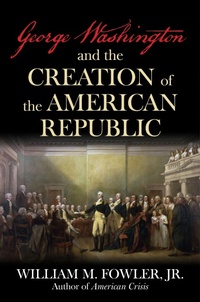
George Washington and the Creation of the American Republic
Published on 2. September 2025
Book
Hardback
296 pages
978-1-4930-9166-9 (ISBN)
Description
Washington’s strategic genius extended beyond war, laying the foundation for a powerful American Republic.
The twentieth-century publication of Washington's writings, and more recently the digital editions of his papers, have provided George Washington's biographers with increased access to the details of his life. Despite the availability of these materials, however, biographers continue to pay close attention to the years of the Revolution and his presidency, while quickly passing through the period between the Revolution and his call to the presidency.
Described by historians as the “Critical Years” (1781–1789), this was a period when the new nation stood on the precipice of anarchy and disunion. Although appearing occasionally during these years, Washington is portrayed as assiduously avoiding any direct involvement that might draw him into the political fray until he emerges, reluctantly, in Philadelphia to preside over the Constitutional Convention.
This is not the Washington revealed in his papers, or those of his political allies and enemies. Washington was a superb strategist and a skilled tactician. During these critical years between the end of the Revolution and the formation of the Union, Washington was deeply involved in land speculation, western expansion, scientific farming, canal building, political affairs, and family matters. While careful to husband his influence and maintain his Olympian stature, Washington deftly maneuvered to direct the nation toward a strong central government able to govern a “rising empire.” How he managed to do it is the subject of this book.
The twentieth-century publication of Washington's writings, and more recently the digital editions of his papers, have provided George Washington's biographers with increased access to the details of his life. Despite the availability of these materials, however, biographers continue to pay close attention to the years of the Revolution and his presidency, while quickly passing through the period between the Revolution and his call to the presidency.
Described by historians as the “Critical Years” (1781–1789), this was a period when the new nation stood on the precipice of anarchy and disunion. Although appearing occasionally during these years, Washington is portrayed as assiduously avoiding any direct involvement that might draw him into the political fray until he emerges, reluctantly, in Philadelphia to preside over the Constitutional Convention.
This is not the Washington revealed in his papers, or those of his political allies and enemies. Washington was a superb strategist and a skilled tactician. During these critical years between the end of the Revolution and the formation of the Union, Washington was deeply involved in land speculation, western expansion, scientific farming, canal building, political affairs, and family matters. While careful to husband his influence and maintain his Olympian stature, Washington deftly maneuvered to direct the nation toward a strong central government able to govern a “rising empire.” How he managed to do it is the subject of this book.
More details
Language
English
Place of publication
Old Saybrook
United States
Product notice
sewn/stitched
Cloth over boards
With dust jacket
Dimensions
Height: 231 mm
Width: 155 mm
Thickness: 28 mm
Weight
612 gr
ISBN-13
978-1-4930-9166-9 (9781493091669)
Copyright in bibliographic data and cover images is held by Nielsen Book Services Limited or by the publishers or by their respective licensors: all rights reserved.
Schweitzer Classification
Person
William M. Fowler Jr. is Distinguished Professor of History Emeritus at Northeastern University. He is the author of ten books on American history, including American Crisis: George Washington and the Dangerous Two Years After Yorktown, 1781–1783 (Bloomsbury), The Baron of Beacon Hill: A Biography of John Hancock (Houghton Mifflin), Samuel Adams: Radical Puritan (Longman), and Rebels Under Sail: A History of the American Navy in the Revolution (Scribner’s). In 2006 he was named the first Gay Hart Gaines Distinguished Visiting Fellow at Mount Vernon. Between 2008 and 2010 he was the Massachusetts Society of the Cincinnati George Washington Distinguished Professor. Since 2016 he has been a lead scholar for the George Washington Teacher Institute at Mount Vernon. He lives in Reading, Massachusetts.
Content
Introduction
Chapter One: Home
Chapter Two: The West
Chapter Three: Settlers
Chapter Four: Potomac Company
Chapter Five: Family
Chapter Six: Visitors
Chapter Seven: Farmer
Chapter Eight: Annapolis
Chapter Nine: Philadelphia
Chapter Ten: President
Notes
Bibliography
Chapter One: Home
Chapter Two: The West
Chapter Three: Settlers
Chapter Four: Potomac Company
Chapter Five: Family
Chapter Six: Visitors
Chapter Seven: Farmer
Chapter Eight: Annapolis
Chapter Nine: Philadelphia
Chapter Ten: President
Notes
Bibliography