

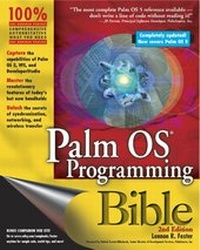
Palm OS Programming Bible
2nd Edition
Published on 10. October 2002
Book
Paperback/Softback
946 pages
978-0-7645-4961-8 (ISBN)
Description
* Examines new Palm OS handheld models and new tools for developing Palm OS programs.
* Includes new working code samples for developing conduits, which synchronize data between handhelds and PCs.
* Contains a new chapter on the Virtual File System, which allows for handling of data on removable memory cards in the newest Palm devices.
* Covers the new graphic and sound capabilities available in OS 5.
* Includes new working code samples for developing conduits, which synchronize data between handhelds and PCs.
* Contains a new chapter on the Virtual File System, which allows for handling of data on removable memory cards in the newest Palm devices.
* Covers the new graphic and sound capabilities available in OS 5.
More details
Series
Edition
2., Auflage
Language
English
Place of publication
Foster City
United States
Publishing group
John Wiley & Sons Inc
Target group
Professional and scholarly
Edition type
Revised edition
Illustrations
illustrations
Dimensions
Height: 23.3 cm
Width: 18.8 cm
Thickness: 52 mm
Weight
1304 gr
ISBN-13
978-0-7645-4961-8 (9780764549618)
Schweitzer Classification
Other editions
Previous edition
Lonnon R. Foster
Palm OS Programming Bible
Book
11/2000
Hungry Minds Inc,U.S.
€49.90
Article exhausted; check for reprint
Person
LONNON R. FOSTER is a programmer and writer who has spent the past nine years creating desktop applications, database front ends, web sites, communications software, technical documentation, and handheld applications. He has been developing Palm OS applications almost as long as the Platform has existed, starting with his first Pilot 5000 and progressing to more complicated wireless software for Symbol's 1700 series. Lonnon fills his sparse free time with tactical tabletop gaming, recreational Perl coding, and reading everything he can get his hands on.
Content
Foreword.
Preface.
Acknowledgements.
PART I: Getting Started.
Chapter 1: Understanding the Palm OS Platform.
Chapter 2: Understanding the Palm OS.
PART II: Creating Palm OS Applications.
Chapter 3: Introducing the Development Tools.
Chapter 4: Writing Your First Palm OS Application.
Chapter 5: Debugging Your Program.
PART III: Programming the Palm OS.
Chapter 6: Creating and Understanding Resources.
Chapter 7: Building Forms and Menus.
Chapter 8: Programming User Interface Elements.
Chapter 9: Programming System Elements.
Chapter 10: Programming Graphics and Sounds.
Chapter 11: Programming Alarms and Time.
Chapter 12: Programming Tables.
PART IV: Storing Information.
Chapter 13: Storing and Retrieving Data.
Chapter 14: Manipulating Records.
Chapter 15: Using secondary Storage.
PART V: Communicating Outside the Handheld.
Chapter 16:Sharing Data Through the Exchange Manager.
Chapter 17: Using the Serial Port.
Chapter 18: Communicating Over a Network.
Chapter 19: Creating Web Clipping Applications.
PART VI: Synchronizing Data With the Desktop.
Chapter 20: Learning Conduit Basics.
Chapter 21: Building Conduits.
PART VII: Advanced Topics
Chapter 22: Programming Navigation Wheels.
Chapter 23: Odds and Ends.
Glossary.
Index.
Preface.
Acknowledgements.
PART I: Getting Started.
Chapter 1: Understanding the Palm OS Platform.
Chapter 2: Understanding the Palm OS.
PART II: Creating Palm OS Applications.
Chapter 3: Introducing the Development Tools.
Chapter 4: Writing Your First Palm OS Application.
Chapter 5: Debugging Your Program.
PART III: Programming the Palm OS.
Chapter 6: Creating and Understanding Resources.
Chapter 7: Building Forms and Menus.
Chapter 8: Programming User Interface Elements.
Chapter 9: Programming System Elements.
Chapter 10: Programming Graphics and Sounds.
Chapter 11: Programming Alarms and Time.
Chapter 12: Programming Tables.
PART IV: Storing Information.
Chapter 13: Storing and Retrieving Data.
Chapter 14: Manipulating Records.
Chapter 15: Using secondary Storage.
PART V: Communicating Outside the Handheld.
Chapter 16:Sharing Data Through the Exchange Manager.
Chapter 17: Using the Serial Port.
Chapter 18: Communicating Over a Network.
Chapter 19: Creating Web Clipping Applications.
PART VI: Synchronizing Data With the Desktop.
Chapter 20: Learning Conduit Basics.
Chapter 21: Building Conduits.
PART VII: Advanced Topics
Chapter 22: Programming Navigation Wheels.
Chapter 23: Odds and Ends.
Glossary.
Index.