


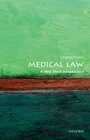
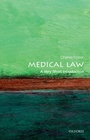
Medical Law
A Very Short Introduction
Published on 28. February 2013
Book
Paperback/Softback
160 pages
978-0-19-966044-5 (ISBN)
Description
Medical law is concerned with our bodies, and what happens to them during and after our lives. When things go wrong with our bodies, we want to know what our rights are, and what governs the conduct of the clinicians into whose hands we put our lives and limbs. Dealing with matters of life and death, it can therefore have a fundamental impact on medical practice.
Headlines in the media often involve the core issues of medical law - organ transplantation, abortion, withdrawal of treatment, euthanasia, confidentiality, research on humans - these are topics that affect us all. Headlines can misrepresent, however. In order to fully understand the issues and their relevance, we have to delve into the cases and into the principles behind them.
In this highly readable Very Short Introduction, Charles Foster explores different examples to illustrate the key problems and principles of medical law.
ABOUT THE SERIES: The Very Short Introductions series from Oxford University Press contains hundreds of titles in almost every subject area. These pocket-sized books are the perfect way to get ahead in a new subject quickly. Our expert authors combine facts, analysis, perspective, new ideas, and enthusiasm to make interesting and challenging topics highly readable.
Headlines in the media often involve the core issues of medical law - organ transplantation, abortion, withdrawal of treatment, euthanasia, confidentiality, research on humans - these are topics that affect us all. Headlines can misrepresent, however. In order to fully understand the issues and their relevance, we have to delve into the cases and into the principles behind them.
In this highly readable Very Short Introduction, Charles Foster explores different examples to illustrate the key problems and principles of medical law.
ABOUT THE SERIES: The Very Short Introductions series from Oxford University Press contains hundreds of titles in almost every subject area. These pocket-sized books are the perfect way to get ahead in a new subject quickly. Our expert authors combine facts, analysis, perspective, new ideas, and enthusiasm to make interesting and challenging topics highly readable.
Reviews / Votes
colourful and engaging * Medical Law Review *More details
Series
Language
English
Place of publication
Oxford
United Kingdom
Target group
College/higher education
An ideal introduction to law students on medical law courses, as well as healthcare professionals and general readers interested in knowing more about the relevance and impact of medical law.
Illustrations
10 black and white hafltones
Dimensions
Height: 172 mm
Width: 111 mm
Thickness: 15 mm
Weight
126 gr
ISBN-13
978-0-19-966044-5 (9780199660445)
Copyright in bibliographic data and cover images is held by Nielsen Book Services Limited or by the publishers or by their respective licensors: all rights reserved.
Schweitzer Classification
Other editions
Additional editions
E-Book
02/2013
OUP eBook
€5.49
Available for download
E-Book
02/2013
OUP eBook
€5.49
Available for download
Person
Charles Foster is a Fellow of Green Templeton College, University of Oxford, a tutor in medical law and ethics at the University of Oxford, and a barrister (practising in medical law) at Outer Temple Chambers, London. He read law and veterinary medicine at the University of Cambridge. He is the author, editor or contributor to over thirty five books. His website is at www.charlesfoster.co.uk
Content
Acknowledgements ; 1. Origins and legacies ; 2. The enforcement of medical law ; 3. Before birth ; 4. Confidentiality and privacy ; 5. Consent ; 6. Clinical negligence ; 7. Research on human subjects ; 8. Resource allocation ; 9. The end of life ; 10. Organ donation and the ownership of body parts ; 11. The future of medical law ; References: Cases discussed ; Further reading