

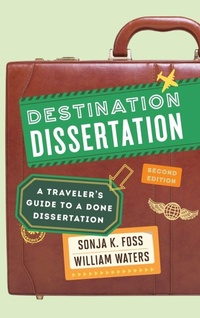
Destination Dissertation
A Traveler's Guide to a Done Dissertation
2nd Edition
Published on 22. October 2015
Book
Hardback
464 pages
978-1-4422-4613-3 (ISBN)
Description
Destination Dissertation: A Traveler's Guide to a Done Dissertation is a handbook that helps students successfully complete their dissertations. It uses a metaphor of travel to frame the dissertation process as an exciting trip of twenty-nine steps that can be completed in less than nine months. Designed for use by students in all disciplines and for both quantitative and qualitative dissertations, the book shows concrete and efficient processes for completing those parts of the dissertation where students tend to get stuck: conceptualizing a topic, developing a pre-proposal, writing a literature review, writing a proposal, collecting and analyzing data, and writing the last chapter.
Reviews / Votes
With relevant, realistic, and easily accessible information, this book covers a wide array of issues pertinent to one of the most important milestones of a graduate education-the creation of a dissertation. It is an outstanding book, and adopting it may only lead to better guidance on my part, and success for my students. -- Alexis O. Miranda, California Lutheran University Destination Dissertation is a great addition to any course that seeks to explain the dissertation process to students. Helpful advice and guidance is plentiful and the step-by-step process of completing a dissertation offered by Foss and Waters will help students view the journey as one they can navigate. -- Mary Madden, University of MaineMore details
Edition
Second Edition
Language
English
Place of publication
United States
Publishing group
Bloomsbury Publishing Plc
Target group
College/higher education
US School Grade: College Graduate Student, Interest Age: From 18 to 22 years
Product notice
sewn/stitched
Cloth over boards
With dust jacket
Illustrations
54 BW Illustrations, 2 Tables
Dimensions
Height: 235 mm
Width: 157 mm
Thickness: 29 mm
Weight
820 gr
ISBN-13
978-1-4422-4613-3 (9781442246133)
Copyright in bibliographic data and cover images is held by Nielsen Book Services Limited or by the publishers or by their respective licensors: all rights reserved.
Schweitzer Classification
Persons
Sonja K. Foss is professor of communication at the University of Colorado at Denver. She created and is co-director of Scholars' Retreat, designed to provide intensive, focused, and supervised writing time for dissertations, theses, and other writing projects. William Waters is associate professor of English at the University of Houston, Downtown and co-director of Scholars' Retreat.
Content
Acknowledgments
1: Preparing to Go: The Dissertation Journey
Can a Dissertation Really Be a Trip?
Packing Your Bags
Our Guarantees
Your Travel Agents
How to Use This Guide
2: The Journey before You: 29 Steps
Our Timetable
Yeah, But . . .
3: Planning the Trip: The Conceptual Conversation
Selecting and Orienting a Partner
Asking and Answering Questions
Identifying Key Pieces
4: Developing Your Itinerary: The Preproposal
Naming the Problem
Formulating Your Research Question
Selecting Your Data
Identifying Your Method of Data Collection
Identifying Your Method of Data Analysis
Identifying the Literature to Review
Identifying the Significance of Your Study
Identifying Your Chapters
Writing Your Preproposal
Assessing Your Decisions
Committing to the Preproposal with Your Advisor
5: Advice from Other Travelers: The Literature Review
Coding Your Literature
Cutting Apart Your Codes
Sorting Your Codes
Checking Your Piles
Creating Your Conceptual Schema
Writing It Up
6: Getting There: The Dissertation Proposal
Introduction
Research Question
Definition of Terms
Literature Review
Research Design
Significance of the Study
Outline of the Study
Recap: Sections of a Dissertation Proposal
Approval of the Proposal
7: Things to See and Do: Data Collection and Analysis
Collecting Your Data
Creating Codable Data
Identifying Your Unit of Analysis
Coding Your Data
Sorting Your Codes
Checking Your Codes
Creating Your Explanatory Schema
Getting Inspiration for Your Explanatory Schema
Assessing Your Explanatory Schema
Writing It Up
8: Making the Most of Your Travels: The Last Chapter Plus
Summary
Interpretation of Findings
Limitations
Suggestions for Future Research
Three-Article Format
Finishing Up
9: Useful Phrases: Writing and Editing
Fast Writing
Slow Revising
10: Travelogue: The Dissertation Defense
Preparing for Your Defense
The Defense Itself
Following Your Defense
11: Making the Best Use of Your Guide: Advisor Advising
Asking Appropriately
Agreeing on a Vision
Articulating Needs
Enacting Professionalism
Assessing Your Relationship
12: Avoiding Delays and Annoyances: Enacting the Scholar Role
Incomplete-Scholar Roles
Enacting the Scholar Role: Writing Regularly
Index
About the Authors
1: Preparing to Go: The Dissertation Journey
Can a Dissertation Really Be a Trip?
Packing Your Bags
Our Guarantees
Your Travel Agents
How to Use This Guide
2: The Journey before You: 29 Steps
Our Timetable
Yeah, But . . .
3: Planning the Trip: The Conceptual Conversation
Selecting and Orienting a Partner
Asking and Answering Questions
Identifying Key Pieces
4: Developing Your Itinerary: The Preproposal
Naming the Problem
Formulating Your Research Question
Selecting Your Data
Identifying Your Method of Data Collection
Identifying Your Method of Data Analysis
Identifying the Literature to Review
Identifying the Significance of Your Study
Identifying Your Chapters
Writing Your Preproposal
Assessing Your Decisions
Committing to the Preproposal with Your Advisor
5: Advice from Other Travelers: The Literature Review
Coding Your Literature
Cutting Apart Your Codes
Sorting Your Codes
Checking Your Piles
Creating Your Conceptual Schema
Writing It Up
6: Getting There: The Dissertation Proposal
Introduction
Research Question
Definition of Terms
Literature Review
Research Design
Significance of the Study
Outline of the Study
Recap: Sections of a Dissertation Proposal
Approval of the Proposal
7: Things to See and Do: Data Collection and Analysis
Collecting Your Data
Creating Codable Data
Identifying Your Unit of Analysis
Coding Your Data
Sorting Your Codes
Checking Your Codes
Creating Your Explanatory Schema
Getting Inspiration for Your Explanatory Schema
Assessing Your Explanatory Schema
Writing It Up
8: Making the Most of Your Travels: The Last Chapter Plus
Summary
Interpretation of Findings
Limitations
Suggestions for Future Research
Three-Article Format
Finishing Up
9: Useful Phrases: Writing and Editing
Fast Writing
Slow Revising
10: Travelogue: The Dissertation Defense
Preparing for Your Defense
The Defense Itself
Following Your Defense
11: Making the Best Use of Your Guide: Advisor Advising
Asking Appropriately
Agreeing on a Vision
Articulating Needs
Enacting Professionalism
Assessing Your Relationship
12: Avoiding Delays and Annoyances: Enacting the Scholar Role
Incomplete-Scholar Roles
Enacting the Scholar Role: Writing Regularly
Index
About the Authors