

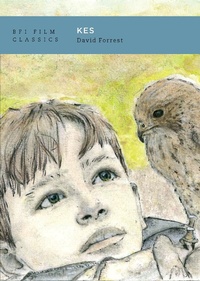
Kes
Published on 2. May 2024
Book
Paperback/Softback
112 pages
978-1-83902-564-8 (ISBN)
Description
Ken Loach's 1969 drama Kes, considered one of the finest examples of British social realism, tells the story of Billy, a working class boy who finds escape and meaning when he takes a fledgling kestrel from its nest.
David Forrest's study of the film examines the genesis of the original novel, Barry Hines' A Kestrel for a Knave (1968), the eventual collaboration that brought it to the screen, and the film's funding and production processes. He provides an in depth analysis of key scenes and draws on archival sources to shed new light on the film's most celebrated moments.
He goes on to consider the film's lasting legacy, having influenced films like Ratcatcher (1999) and This is England (2006), both in terms of its contribution to film history and as a document of political and cultural value. He makes a case for the film's renewed relevance in our present era of systemic economic (and regional) inequality, alienated labour, increasingly narrow educational systems, toxic masculinity, and ecological crisis. Kes endures, he argues, because it points towards the possibility for emancipation and fulfilment through a more responsive and nurturing approach to education, a more delicate and symbiotic relationship with landscape and the non-human, and an emotional articulacy and sensitivity shorn of the rigid expectations of gender.
David Forrest's study of the film examines the genesis of the original novel, Barry Hines' A Kestrel for a Knave (1968), the eventual collaboration that brought it to the screen, and the film's funding and production processes. He provides an in depth analysis of key scenes and draws on archival sources to shed new light on the film's most celebrated moments.
He goes on to consider the film's lasting legacy, having influenced films like Ratcatcher (1999) and This is England (2006), both in terms of its contribution to film history and as a document of political and cultural value. He makes a case for the film's renewed relevance in our present era of systemic economic (and regional) inequality, alienated labour, increasingly narrow educational systems, toxic masculinity, and ecological crisis. Kes endures, he argues, because it points towards the possibility for emancipation and fulfilment through a more responsive and nurturing approach to education, a more delicate and symbiotic relationship with landscape and the non-human, and an emotional articulacy and sensitivity shorn of the rigid expectations of gender.
Reviews / Votes
Thoroughly informative. * London Review of Books *More details
Series
Language
English
Place of publication
United Kingdom
Publishing group
Bloomsbury Publishing PLC
Target group
College/higher education
Illustrations
60 colour illus
Dimensions
Height: 186 mm
Width: 132 mm
Thickness: 9 mm
Weight
176 gr
ISBN-13
978-1-83902-564-8 (9781839025648)
Copyright in bibliographic data and cover images is held by Nielsen Book Services Limited or by the publishers or by their respective licensors: all rights reserved.
Schweitzer Classification
Other editions
Person
David Forrest is Senior Lecturer in Film Studies at the University of Sheffield, UK. His previous publications include New Realism: Contemporary British Cinema (2020), and Social Realism: Art, Nationhood and Politics (2013). He is co-author of Barry Hines: Kes, Threads and Beyond (with Sue Vice, 2017) and co-editor of Filmurbia: Screening the Suburbs (2017) and Social Class and Television Drama in Contemporary Britain (2017).
Content
Introduction
Chapter 1: Making Kes
Chapter 2: Key Moments
Chapter 3: Legacies
Filmography
Bibliography
Chapter 1: Making Kes
Chapter 2: Key Moments
Chapter 3: Legacies
Filmography
Bibliography