

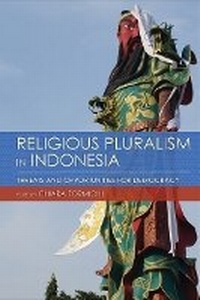
Religious Pluralism in Indonesia
Threats and Opportunities for Democracy
Published on 15. December 2021
Book
Hardback
276 pages
978-1-5017-6043-3 (ISBN)
Description
In 1945, Sukarno declared that the new Indonesian republic would be grounded on monotheism, while also insisting that the new nation would protect diverse religious practice. The essays in Religious Pluralism in Indonesia explore how the state, civil society groups, and individual Indonesians have experienced the attempted integration of minority and majority religious practices and faiths across the archipelagic state over the more than half century since Pancasila.
The chapters in Religious Pluralism in Indonesia offer analyses of contemporary phenomena and events; the changing legal and social status of certain minority groups; inter-faith relations; and the role of Islam in Indonesia's foreign policy. Amidst infringements of human rights, officially recognized minorities-Protestants, Catholics, Hindus, Buddhists and Confucians-have had occasional success advocating for their rights through the Pancasila framework. Others, from Ahmadi and Shi'i groups to atheists and followers of new religious groups, have been left without safeguards, demonstrating the weakness of Indonesia's institutionalized "pluralism."
Contributors: Lorraine Aragon, Christopher Duncan, Kikue Hamayotsu, Robert Hefner, James Hoesterey, Sidney Jones, Mona Lohanda, Michele Picard, Evi Sutrisno, Silvia Vignato
The chapters in Religious Pluralism in Indonesia offer analyses of contemporary phenomena and events; the changing legal and social status of certain minority groups; inter-faith relations; and the role of Islam in Indonesia's foreign policy. Amidst infringements of human rights, officially recognized minorities-Protestants, Catholics, Hindus, Buddhists and Confucians-have had occasional success advocating for their rights through the Pancasila framework. Others, from Ahmadi and Shi'i groups to atheists and followers of new religious groups, have been left without safeguards, demonstrating the weakness of Indonesia's institutionalized "pluralism."
Contributors: Lorraine Aragon, Christopher Duncan, Kikue Hamayotsu, Robert Hefner, James Hoesterey, Sidney Jones, Mona Lohanda, Michele Picard, Evi Sutrisno, Silvia Vignato
Reviews / Votes
As this lively, informative multi-author volume shows, Islamists from the beginning argued that Indonesia should be an Islamic state, and they pressed this demand with renewed force after the country's transition to democracy in 1998.(Foreign Affairs) Readers interested in Indonesia from a more comparative perspective might have benefitted from more comparisons from farther afield, but they will gain very useful overviews especially from the first two chapters by Chiara Formichi and Robert Hefner, who skillfully disentangle the complicated landscape of religious and political actors.
(The University of British Columbia) Finally, Duncan provides an mportant account of the very real tensions that continue to exist between Christians and Muslims in Maluku and North Maluku.
(Sojourn)
More details
Series
Language
English
Place of publication
Ithaca
United States
Publishing group
Cornell University Press
Product notice
Paper over boards
Illustrations
3 b&w halftones, 1 map, 1 chart - 3 Halftones, black and white - 1 Charts - 1 Maps
Dimensions
Height: 229 mm
Width: 152 mm
Thickness: 25 mm
Weight
907 gr
ISBN-13
978-1-5017-6043-3 (9781501760433)
Copyright in bibliographic data and cover images is held by Nielsen Book Services Limited or by the publishers or by their respective licensors: all rights reserved.
Schweitzer Classification
Other editions
Additional editions
E-Book
12/2021
Cornell University East Asia Program
€26.49
Available for download
Person
Chiara Formichi is Associate Professor in Asian Studies at Cornell University. She is author of Islam and Asia. Follow her on X @chiaraformichi.
Content
1. The Limits of Pancasilaasa Framework for Pluralism, by Chiara Formichi
2. Islamism and the Struggle for Inclusive Citizenship in Democratic Indonesia, by Robert Hefner
3. The Rise of Islamist Majoritarianism in Indonesia, by Sidney Jones
4. Making the Majority in the Name of Islam: Democratization, Moderate-Radical Coalition, and Religious Intolerance in Indonesia, by Kikue Hamayotsu
5. Deity Statue Disputed: The Politicization of Religion, Intolerance, and Local Resistance in Tuban, East Java, by Evi Sutrisno
6. The Tragedy of Basuki Tjahaja Purnama, by Mona Lohanda
7. Regulating Religion and Recognizing Animist "Beliefs" in Indonesian Law and Life, by Lorraine Aragon
8. From Imposed Order to Conflicting Superdiversity: The Tamil Hindu and Their Neighborsin Medan, by Silvia Vignato
9. Saints, Scholars, and Diplomats: Religious Statecraft and the Problem of "Moderate Islam" in Indonesia, by James Hoesterey
10. Agama Hindu under Pressure from Muslim and Christian Proselytizing, by Michele Picard
11. Dispelling Myths of Religious Pluralism: A Critical Look at Maluku and North Maluku, by Christopher R. Duncan
2. Islamism and the Struggle for Inclusive Citizenship in Democratic Indonesia, by Robert Hefner
3. The Rise of Islamist Majoritarianism in Indonesia, by Sidney Jones
4. Making the Majority in the Name of Islam: Democratization, Moderate-Radical Coalition, and Religious Intolerance in Indonesia, by Kikue Hamayotsu
5. Deity Statue Disputed: The Politicization of Religion, Intolerance, and Local Resistance in Tuban, East Java, by Evi Sutrisno
6. The Tragedy of Basuki Tjahaja Purnama, by Mona Lohanda
7. Regulating Religion and Recognizing Animist "Beliefs" in Indonesian Law and Life, by Lorraine Aragon
8. From Imposed Order to Conflicting Superdiversity: The Tamil Hindu and Their Neighborsin Medan, by Silvia Vignato
9. Saints, Scholars, and Diplomats: Religious Statecraft and the Problem of "Moderate Islam" in Indonesia, by James Hoesterey
10. Agama Hindu under Pressure from Muslim and Christian Proselytizing, by Michele Picard
11. Dispelling Myths of Religious Pluralism: A Critical Look at Maluku and North Maluku, by Christopher R. Duncan