

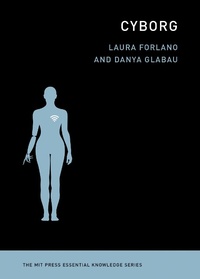
Cyborg
Published on 6. February 2024
Book
Paperback/Softback
224 pages
978-0-262-54755-0 (ISBN)
Description
A concise introduction to cyborg theory that examines the way in which technology is situated, political, and embodied.
This introduction to cyborg theory provides a critical vantage point for analyzing the claims around emerging technologies like automation, robots, and AI. Cyborg analyzes and reframes popular and scholarly conversations about cyborgs from the perspective of feminist cyborg theory. Drawing on their combined decades of training, teaching, and research in the social sciences, design, and engineering education, Laura Forlano and Danya Glabau introduce an approach called critical cyborg literacy. Critical cyborg literacy foregrounds power dynamics and pays attention to the ways that social and cultural factors such as gender, race, and disability shape how technology is imagined, developed, used, and resisted.
Forlano and Glabau offer critical cyborg literacy as a way of thinking through questions about the relationship between humanity and technology in areas such as engineering and computing, art and design, and health care and medicine, as well as the social sciences and humanities. Cyborg examines whether modern technologies make us all cyborgs-if we consider, for instance, the fact that we use daily technologies at work, have technologies embedded into our bodies in health care applications, or use technology to critically explore possibilities as artists, designers, activists, and creators. Lastly, Cyborg offers perspectives from critical race, feminist, and disability thinkers to help chart a path forward for cyborg theory in the twenty-first century.
This introduction to cyborg theory provides a critical vantage point for analyzing the claims around emerging technologies like automation, robots, and AI. Cyborg analyzes and reframes popular and scholarly conversations about cyborgs from the perspective of feminist cyborg theory. Drawing on their combined decades of training, teaching, and research in the social sciences, design, and engineering education, Laura Forlano and Danya Glabau introduce an approach called critical cyborg literacy. Critical cyborg literacy foregrounds power dynamics and pays attention to the ways that social and cultural factors such as gender, race, and disability shape how technology is imagined, developed, used, and resisted.
Forlano and Glabau offer critical cyborg literacy as a way of thinking through questions about the relationship between humanity and technology in areas such as engineering and computing, art and design, and health care and medicine, as well as the social sciences and humanities. Cyborg examines whether modern technologies make us all cyborgs-if we consider, for instance, the fact that we use daily technologies at work, have technologies embedded into our bodies in health care applications, or use technology to critically explore possibilities as artists, designers, activists, and creators. Lastly, Cyborg offers perspectives from critical race, feminist, and disability thinkers to help chart a path forward for cyborg theory in the twenty-first century.
Reviews / Votes
"An excellent introduction to the subject and a foundational text for their notion of 'critical cyborg literacy.'"-Urgent Futures
More details
Language
English
Place of publication
Cambridge (Massachusetts)
United States
Publishing group
MIT Press Ltd
Dimensions
Height: 176 mm
Width: 125 mm
Thickness: 16 mm
Weight
184 gr
ISBN-13
978-0-262-54755-0 (9780262547550)
Copyright in bibliographic data and cover images is held by Nielsen Book Services Limited or by the publishers or by their respective licensors: all rights reserved.
Schweitzer Classification
Other editions
Additional editions
Persons
Laura Forlano is Professor in the College of Arts, Media and Design at Northeastern University. She is a coeditor of three books: digitalSTS, and Bauhaus Futures and From Social Butterfly to Engaged Citizen (both MIT Press).
Danya Glabau is Industry Assistant Professor in the Department of Technology, Culture and Society at the Tandon School of Engineering at New York University. She is the author of Food Allergy Advocacy: Parenting and the Politics of Care.
Danya Glabau is Industry Assistant Professor in the Department of Technology, Culture and Society at the Tandon School of Engineering at New York University. She is the author of Food Allergy Advocacy: Parenting and the Politics of Care.
Content
CONTENTS:
Series Foreword vii
1 Introduction 1
2 Cyborg Labor 27
3 Cyborg Bodies 55
4 Cyborg Culture 81
5 A Manifesto for Cyborgs 113
6 Troubling Cyborgs 137
7 Conclusion: Cyborg Futures 165
Glossary 179
Notes 183
Bibliography 193
Further Reading 201
Index 205
Series Foreword vii
1 Introduction 1
2 Cyborg Labor 27
3 Cyborg Bodies 55
4 Cyborg Culture 81
5 A Manifesto for Cyborgs 113
6 Troubling Cyborgs 137
7 Conclusion: Cyborg Futures 165
Glossary 179
Notes 183
Bibliography 193
Further Reading 201
Index 205