

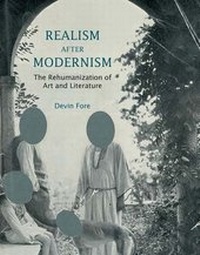
Realism After Modernism
The Rehumanization of Art and Literature
Published on 21. September 2012
Book
Hardback
416 pages
978-0-262-01771-8 (ISBN)
Description
The human figure made a spectacular return in visual art and literature
in the 1920s. Following modernism's withdrawal, nonobjective painting gave way to
realistic depictions of the body and experimental literary techniques were abandoned
for novels with powerfully individuated characters. But the celebrated return of the
human in the interwar years was not as straightforward as it may seem. In
Realism after Modernism, Devin Fore challenges the widely
accepted view that this period represented a return to traditional realist
representation and its humanist postulates. Interwar realism, he argues, did not
reinstate its nineteenth-century predecessor but invoked realism as a strategy of
mimicry that anticipates postmodernist pastiche. Through close readings of a series
of works by German artists and writers of the period, Fore investigates five
artistic devices that were central to interwar realism. He analyzes Bauhaus polymath
László Moholy-Nagy's use of linear perspective; three industrial novels riven by the
conflict between the temporality of capital and that of labor; Brecht's socialist
realist plays, which explore new dramaturgical principles for depicting a collective
subject; a memoir by Carl Einstein that oscillates between recollection and
self-erasure; and the idiom of physiognomy in the photomontages of John Heartfield.
Fore's readings reveal that each of these "rehumanized" works in fact
calls into question the very categories of the human upon which realist figuration
is based. Paradoxically, even as the human seemed to make a triumphal return in the
culture of the interwar period, the definition of the human and the integrity of the
body were becoming more tenuous than ever before. Interwar realism did not hearken
back to earlier artistic modes but posited new and unfamiliar syntaxes of aesthetic
encounter, revealing the emergence of a human subject quite unlike anything that had
come before.
in the 1920s. Following modernism's withdrawal, nonobjective painting gave way to
realistic depictions of the body and experimental literary techniques were abandoned
for novels with powerfully individuated characters. But the celebrated return of the
human in the interwar years was not as straightforward as it may seem. In
Realism after Modernism, Devin Fore challenges the widely
accepted view that this period represented a return to traditional realist
representation and its humanist postulates. Interwar realism, he argues, did not
reinstate its nineteenth-century predecessor but invoked realism as a strategy of
mimicry that anticipates postmodernist pastiche. Through close readings of a series
of works by German artists and writers of the period, Fore investigates five
artistic devices that were central to interwar realism. He analyzes Bauhaus polymath
László Moholy-Nagy's use of linear perspective; three industrial novels riven by the
conflict between the temporality of capital and that of labor; Brecht's socialist
realist plays, which explore new dramaturgical principles for depicting a collective
subject; a memoir by Carl Einstein that oscillates between recollection and
self-erasure; and the idiom of physiognomy in the photomontages of John Heartfield.
Fore's readings reveal that each of these "rehumanized" works in fact
calls into question the very categories of the human upon which realist figuration
is based. Paradoxically, even as the human seemed to make a triumphal return in the
culture of the interwar period, the definition of the human and the integrity of the
body were becoming more tenuous than ever before. Interwar realism did not hearken
back to earlier artistic modes but posited new and unfamiliar syntaxes of aesthetic
encounter, revealing the emergence of a human subject quite unlike anything that had
come before.
More details
Series
Language
English
Place of publication
Cambridge, Mass.
United States
Publishing group
MIT Press Ltd
Target group
Professional and scholarly
US School Grade: College Graduate Student and over
Illustrations
52 s/w Abbildungen
52 b&w illus.
Dimensions
Height: 229 mm
Width: 178 mm
Thickness: 0 mm
Weight
907 gr
ISBN-13
978-0-262-01771-8 (9780262017718)
Copyright in bibliographic data and cover images is held by Nielsen Book Services Limited or by the publishers or by their respective licensors: all rights reserved.
Schweitzer Classification
Other editions
Additional editions
Book
01/2015
MIT Press
€36.40
Article exhausted; check different version