

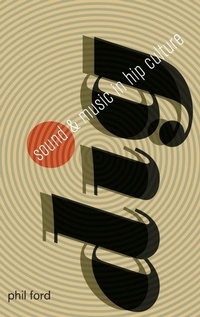
Dig
Sound and Music in Hip Culture
Published on 12. September 2013
Book
Hardback
336 pages
978-0-19-993991-6 (ISBN)
Description
Hipsters have always used clothing, hairstyle, gesture, and slang to mark their distance from consensus culture, yet it is music that has always been the privileged means of cultural disaffiliation, the royal road to hip.
Hipness in postwar America became an indelible part of the nation's intellectual and cultural landscape, and during the past half century, hip sensibility has structured self-understanding and self-representation, thought and art, in various recognizable ways. Although hipness is a famously elusive and changeable quality, what remains recognizable throughout its history in American intellectual life is a particular conception of the individual's alienation from society-alienation due not to any specific political wrong but to something more radical, a clash of perception and consciousness. The dominant culture thus constitutes a system bent on foreclosing the creativity, self-awareness, and self-expression by which people might find satisfaction in their lives. The hipster's project is to imagine this system and define himself against it; his task is to resist being stamped in its uniform, squarish mold. Culture then becomes the primary medium of hip resistance rather than political action as such, and this resistance is manifested in aesthetic creation, be that artworks or the very self. Music has stood consistently at the center of the evolving and alienated hipster's self-structuring: every hip subculture at least tags along with some kind of music (as the musically ungifted Beats did with jazz), and for many subcultures music is their raison d'etre.
In Dig, author Phil Ford argues that hipness is in fact wedded to music at an altogether deeper level. In hip culture it is sound itself, and the faculty of hearing, that is the privileged part of the sensory experience. Ford's discussion of songs and albums in context of the social and political world illustrates how hip intellectuals conceived of sound as a way of challenging meaning - that which is cognitive and abstract, timeless and placeless - with experience - that which is embodied, concrete and anchored in place and time. Through Charlie Parker's "Ornithology," Ken Nordine's "Sound Museum," Bob Dylan's "Ballad of a Thin Man," and a string of other lucid and illuminating examples, Ford shows why and how music became a central facet of hipness and the counterculture. Shedding new light on an elusive and enigmatic culture, Dig is essential reading for students and scholars of popular music and culture, as well as anyone fascinated by the counterculture movement of the mid-twentieth-century.
Hipness in postwar America became an indelible part of the nation's intellectual and cultural landscape, and during the past half century, hip sensibility has structured self-understanding and self-representation, thought and art, in various recognizable ways. Although hipness is a famously elusive and changeable quality, what remains recognizable throughout its history in American intellectual life is a particular conception of the individual's alienation from society-alienation due not to any specific political wrong but to something more radical, a clash of perception and consciousness. The dominant culture thus constitutes a system bent on foreclosing the creativity, self-awareness, and self-expression by which people might find satisfaction in their lives. The hipster's project is to imagine this system and define himself against it; his task is to resist being stamped in its uniform, squarish mold. Culture then becomes the primary medium of hip resistance rather than political action as such, and this resistance is manifested in aesthetic creation, be that artworks or the very self. Music has stood consistently at the center of the evolving and alienated hipster's self-structuring: every hip subculture at least tags along with some kind of music (as the musically ungifted Beats did with jazz), and for many subcultures music is their raison d'etre.
In Dig, author Phil Ford argues that hipness is in fact wedded to music at an altogether deeper level. In hip culture it is sound itself, and the faculty of hearing, that is the privileged part of the sensory experience. Ford's discussion of songs and albums in context of the social and political world illustrates how hip intellectuals conceived of sound as a way of challenging meaning - that which is cognitive and abstract, timeless and placeless - with experience - that which is embodied, concrete and anchored in place and time. Through Charlie Parker's "Ornithology," Ken Nordine's "Sound Museum," Bob Dylan's "Ballad of a Thin Man," and a string of other lucid and illuminating examples, Ford shows why and how music became a central facet of hipness and the counterculture. Shedding new light on an elusive and enigmatic culture, Dig is essential reading for students and scholars of popular music and culture, as well as anyone fascinated by the counterculture movement of the mid-twentieth-century.
Reviews / Votes
What Dig offers to scholars of U.S. music is its indispensable modeling of a nimble, oblique, and resonant approach to cultural critique. Fords work reminds us of the galvanizing interchange that always tacitly binds music to ideas: it reads the intellectual discourse of an era as something with the properties of music, something mobile, volatile, and alive. For this reason alone, Fords Dig promises to become a canonical entry in the field of early twenty-first century musicology. * Dale Chapman, Journal of the Society for American Music * [Ford's] conclusions on the Beats, popular music in American culture and the ever-continuing onrush of (blindfold consuming) square culture, nemesis of those who adiga things, are unquestionably worth reading. * Dr. A. Ebert, Jive Talk *More details
Language
English
Place of publication
New York
United States
Target group
College/higher education
Professional and scholarly
Illustrations
15 illustrations and 2 music examples
Dimensions
Height: 240 mm
Width: 161 mm
Thickness: 24 mm
Weight
708 gr
ISBN-13
978-0-19-993991-6 (9780199939916)
Copyright in bibliographic data and cover images is held by Nielsen Book Services Limited or by the publishers or by their respective licensors: all rights reserved.
Schweitzer Classification
Other editions
Person
Phil Ford is Assistant Professor of Music at the Indiana University Jacobs School of Music. His work deals with American popular music in the cold war, performance and auditory culture studies, and the intellectual history of counterculture. He was founder and co-author of the Dial 'M' for Musicology weblog.
Content
Table of Contents ; Introduction: Dig ; Chapter 1: Koan (What Is Hip?) ; 1. What is Hip? ; 2. The Suzuki Rhythm Boys ; 3. The Devil's Staircase ; 4. The Black Spot ; Chapter 2: Somewhere/Nowhere ; 1. Precambrian ; 2. Game Ideology ; 3. 1948: Smart Goes Crazy ; 4. Miles and Monk ; 5. Somewhere/Nowhere ; Chapter 3: Sound Become Holy (The Beats) ; 1. Sound Become Holy ; 2. The Sadness of It All ; 3. Digging What They Dig ; 4. Astounding and Prophetic ; 5. Stenciled off the Real ; Chapter 4: Hip Sensibility in an Age of Mass Counterculture ; 1. Right On, Mr. Horowitz ; 2. The Square ; 3. Asymmetrical Consciousness ; 4. Elitism ; 5. Mass Culture Critique ; 6. The Decline of Midcentury Modernism and the Birth of Postmodernism ; 7. Sound Museum ; Chapter 5: Mailer's Sound ; 1. The Sound is the Thing, Man ; 2. Abstraction ; 3. Whiteness ; 4. Mailer's Sound ; 5. Enantiodromia ; Chapter 6: "Let's Say That We're New, Every Minute" (John Benson Brooks) ; 1. Off-Minor ; 2. Music of the Isms ; 3. DJology ; 4. Cipher ; 5. Magical Hermeneutics ; 6. Technologies of Experience ; 7. Practice