

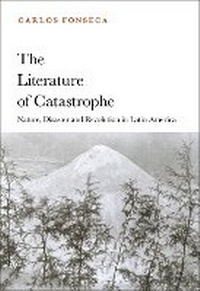
The Literature of Catastrophe
Nature, Disaster and Revolution in Latin America
Published on 18. November 2021
Book
Paperback/Softback
208 pages
978-1-5013-7070-0 (ISBN)
Description
This book investigates how nature and history intertwined during the violent aftermath of the Latin American Wars of Independence. Synthesizing intellectual history and readings of textual production, The Literature of Catastrophe reimagines the emergence of the modern Latin American nation-states beyond the scope of the harmonious "foundational fictions" that marked the emergence of the nation as an organic community. Through a study of philosophical, literary and artistic representations of three catastrophic figures - earthquakes, volcanoes and epidemics - this book provides a critical model through which to refute these state-sponsored "happy narratives," proposing instead that the emergence of the modern state in Latin America was indeed a violent event whose aftershocks are still felt today.
Engaging a variety of sources and protagonists, from Simon Bolivar's manifestoes to Cesar Aira's use of landscape in his novels, from the revolutionary role mosquitoes had within the Haitian Revolution to the role AIDS played in the writing of Reinaldo Arenas' posthumous novel, Carlos Fonseca offers an original retelling of this foundational moment, recounting how history has become a site where the modern division between nature and culture collapses.
Engaging a variety of sources and protagonists, from Simon Bolivar's manifestoes to Cesar Aira's use of landscape in his novels, from the revolutionary role mosquitoes had within the Haitian Revolution to the role AIDS played in the writing of Reinaldo Arenas' posthumous novel, Carlos Fonseca offers an original retelling of this foundational moment, recounting how history has become a site where the modern division between nature and culture collapses.
Reviews / Votes
In this beautifully written book Carlos Fonseca offers a forceful account of what he calls the catastrophic paradigm of history in Latin America, proceeding by way of shock and aftershock to present ways in which writers have coped with three types of disaster or catastrophe: earthquakes, volcanic explosions, and epidemics. This is a must-read for literary scholars, cultural historians, and critical theorists alike. * Bruno Bosteels, Professor of Latin American and Iberian Cultures, Columbia University, USA, and author of Marx and Freud in Latin America (2012) * The Literature of Catastrophe sheds new light on catastrophe as a literary subject and pervasive trope in Latin American cultural history. Fonseca's daring hypothesis on catastrophe as the point of disruption that unsettles the progressive ordering of time and history is particularly effective. His intervention in the ongoing debate on the Anthropocene and our planet's disjointed times is of utmost relevance. * Julio Ramos, Professor Emeritus of Spanish and Portuguese, University of California, Berkeley, USA, and author of Divergent Modernities: Culture and Politics in Nineteenth-Century Latin America (1989, 2001) *More details
Language
English
Place of publication
New York
United States
Publishing group
Bloomsbury Publishing Plc
Target group
College/higher education
Illustrations
6 bw illus
Dimensions
Height: 228 mm
Width: 148 mm
Thickness: 16 mm
Weight
300 gr
ISBN-13
978-1-5013-7070-0 (9781501370700)
Copyright in bibliographic data and cover images is held by Nielsen Book Services Limited or by the publishers or by their respective licensors: all rights reserved.
Schweitzer Classification
Other editions
Additional editions
E-Book
05/2020
1st Edition
Bloomsbury Academic USA
€35.49
Available for download
E-Book
05/2020
1st Edition
Bloomsbury Academic USA
€35.49
Available for download
Person
Carlos Fonseca is Lecturer in Latin American Literature and Culture and Fellow of Trinity College, University of Cambridge, UK. He is the author of Coronel Lagrimas (2015), Museo animal (2017), and the book of essays La lucidez del miope (2017), which won the National Prize for Literature in Costa Rica.
Content
Acknowledgments
1. Introduction: Radical Landscapes
2. Earthquakes: The Shaky Grounds of Latin American History
Aftershock: Cesar Aira's Rugendas: Photographing the Earthquake
3. Volcanoes: Emergencies of an Archaeological Modernity
Aftershock: Malcolm Lowry's Under the Volcano: On Clouds, Telegraphs and Volcanoes
4. Epidemics: Virality, Immunity and the Outbreak of Modern Sovereignty
Aftershock: Reinaldo Arenas's El Color del Verano: AIDS and the End(s) of the Immunological State
5. Conclusion: One Final Gust: Macondo and the Aftermaths of Modernity
Notes
Index
1. Introduction: Radical Landscapes
2. Earthquakes: The Shaky Grounds of Latin American History
Aftershock: Cesar Aira's Rugendas: Photographing the Earthquake
3. Volcanoes: Emergencies of an Archaeological Modernity
Aftershock: Malcolm Lowry's Under the Volcano: On Clouds, Telegraphs and Volcanoes
4. Epidemics: Virality, Immunity and the Outbreak of Modern Sovereignty
Aftershock: Reinaldo Arenas's El Color del Verano: AIDS and the End(s) of the Immunological State
5. Conclusion: One Final Gust: Macondo and the Aftermaths of Modernity
Notes
Index