


The Geography of Insight
The Sciences, the Humanities, How they Differ, Why They Matter
Published on 28. June 2018
Book
Hardback
144 pages
978-0-19-086512-2 (ISBN)
Description
The humanities and the sciences face challenging times, each in their own way. The humanities suffer shrinking enrollments and budgets, and are perceived by some as irrelevant in a changing economy. The sciences face a political climate that disrespects academic expertise and challenges settled debates. Meanwhile age-old disputes about their spheres of knowledge continue: does scientific knowledge subsume that of the humanities? Are their forms of knowledge complementary, or ultimately at odds?
Richard Foley, a philosopher of knowledge and the former Dean of Arts and Sciences at New York University, here provides a concise and accessible overview of what the overarching goals of these disciplines are, relative to one another, and what kind of knowledge they aim to produce. His fundamental argument is that the sciences aim at insights that ideally are not limited to particular locations or times and are also perspective-free and wholly descriptive, whereas the humanities appropriately seek insights about specific locations and times, with the insights being perspective-based and having evaluative as well as descriptive elements. He also finds these two spheres of knowledge to be complementary in the search for understanding of our world and the human condition. The ultimate goal of Foley's investigation however is an eloquent defense and celebration of the culture of academic research. In an era of sound-bites and tweet-length falsehoods, this culture values and supports long-term intellectual achievements for the good of humanity--produced with hard work, dedication, and patience. The Geography of Insight is essential reading for readers both inside and outside of the academy.
Richard Foley, a philosopher of knowledge and the former Dean of Arts and Sciences at New York University, here provides a concise and accessible overview of what the overarching goals of these disciplines are, relative to one another, and what kind of knowledge they aim to produce. His fundamental argument is that the sciences aim at insights that ideally are not limited to particular locations or times and are also perspective-free and wholly descriptive, whereas the humanities appropriately seek insights about specific locations and times, with the insights being perspective-based and having evaluative as well as descriptive elements. He also finds these two spheres of knowledge to be complementary in the search for understanding of our world and the human condition. The ultimate goal of Foley's investigation however is an eloquent defense and celebration of the culture of academic research. In an era of sound-bites and tweet-length falsehoods, this culture values and supports long-term intellectual achievements for the good of humanity--produced with hard work, dedication, and patience. The Geography of Insight is essential reading for readers both inside and outside of the academy.
Reviews / Votes
[Foley's] extremely approachable arguments will interest anyone concerned with the future of the arts and sciences. Summing up: Highly Recommended * CHOICE * Foley's book is a thoughtful meditation on academic knowledge by someone with a rare, sustained exposure to work across the disciplines. It is the most sensible, even-handed, and illuminating discussion that I have read of the relationship between the sciences and the humanities. It should become a standard reference on this topic. * Jenann Ismael, Department of Philosophy, University of Arizona * The importance of Foley's book cannot be overstated. Reading it can re-kindle the passion within all of us who are engaged in the physical, mathematical and life sciences, the humanities, or the social sciences. Richard Foley not only makes important and insightful distinctions between various kinds of knowledge, but eloquently argues for their lasting value and importance. For too long, we have been on the defense; sometimes too cautious to say what we really do and why it is important, and sometimes bending with the remover to remove. This is the C.P. Snow book for our times. * Peter D. Klein, Emeritus Professor of Philosophy, Rutgers University *More details
Language
English
Place of publication
New York
United States
Target group
Professional and scholarly
Dimensions
Height: 222 mm
Width: 145 mm
Thickness: 12 mm
Weight
324 gr
ISBN-13
978-0-19-086512-2 (9780190865122)
Copyright in bibliographic data and cover images is held by Nielsen Book Services Limited or by the publishers or by their respective licensors: all rights reserved.
Schweitzer Classification
Other editions
Additional editions
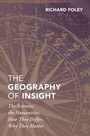
Richard Foley
The Geography of Insight
The Sciences, the Humanities, How they Differ, Why They Matter
E-Book
04/2018
1st Edition
OUP eBook
€12.49
Available for download
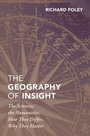
Richard Foley
The Geography of Insight
The Sciences, the Humanities, How they Differ, Why They Matter
E-Book
04/2018
1st Edition
OUP eBook
€16.49
Available for download
Person
Richard Foley is Professor of Philosophy and former Dean of Arts and Sciences and Vice Chancellor for Strategic Planning at New York University. Previously he was Dean of Arts and Sciences and Dean of the Graduate School at Rutgers University, and prior to that, the chair of the Philosophy Department at the University of Notre Dame.
Content
Preface
Part 1: The Humanities and Sciences are Different
Part 2: The Distinctions
Indexical vs. Non-Indexical
Perspectival vs. Non-Perspectival
Prescriptive vs. Descriptive
Individual vs. Collective
Part 3: Secondary Differences
An Endpoint to Inquiry
Intellectual Progress
Intellectual Authority
Simplicity and Complexity
Involvement with Mentality
Part 4: Related Topics
Philosophy, the Humanities, the Sciences
Conclusion
Part 1: The Humanities and Sciences are Different
Part 2: The Distinctions
Indexical vs. Non-Indexical
Perspectival vs. Non-Perspectival
Prescriptive vs. Descriptive
Individual vs. Collective
Part 3: Secondary Differences
An Endpoint to Inquiry
Intellectual Progress
Intellectual Authority
Simplicity and Complexity
Involvement with Mentality
Part 4: Related Topics
Philosophy, the Humanities, the Sciences
Conclusion