

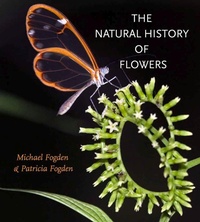
The Natural History of Flowers
Published on 30. September 2018
Book
Hardback
232 pages
978-1-62349-644-9 (ISBN)
Description
Flowers have played an important role in human culture and survival for thousands of years. The final products of flowers-fruits and seeds-are vitally important as food. Flowers provide bursts of color to homes and gardens and they symbolize love, sorrow, and renewal. Yet we often overlook their real purpose. Why do flowers exist and why do they have certain colors, shapes, and smells? What function does a flower have in the life and survival of the plants themselves?
In nature, flowers play an essential role in improving a plant's chances of survival. Some flowers are pollinated by wind or water but most are designed to attract and reward pollinators, such as bees, butterflies, birds, and bats, to carry their pollen from flower to flower. After being pollinated, flowers produce fruits and again take advantage of wind, water, and animals to disperse their seeds, ensuring a new generation of their species.
Pollination and seed dispersal are fine-tuned systems, and their importance in sustaining a healthy environment cannot be overstated. And, as ongoing climate and other environmental changes apply new pressures, flowers must continue to adapt in order to survive.
In this beautifully illustrated book with over 200 stunning photographs, Michael Fogden and Patricia Fogden draw from existing research and their extensive field experiences all over the world to present a detailed but accessible introduction to the natural history of flowers. They discuss a representative sample of flowering and fruiting strategies, illustrating interactions between plants and their pollinators and dispersers, and conclude with descriptions of their favorite tropical flowers.
In nature, flowers play an essential role in improving a plant's chances of survival. Some flowers are pollinated by wind or water but most are designed to attract and reward pollinators, such as bees, butterflies, birds, and bats, to carry their pollen from flower to flower. After being pollinated, flowers produce fruits and again take advantage of wind, water, and animals to disperse their seeds, ensuring a new generation of their species.
Pollination and seed dispersal are fine-tuned systems, and their importance in sustaining a healthy environment cannot be overstated. And, as ongoing climate and other environmental changes apply new pressures, flowers must continue to adapt in order to survive.
In this beautifully illustrated book with over 200 stunning photographs, Michael Fogden and Patricia Fogden draw from existing research and their extensive field experiences all over the world to present a detailed but accessible introduction to the natural history of flowers. They discuss a representative sample of flowering and fruiting strategies, illustrating interactions between plants and their pollinators and dispersers, and conclude with descriptions of their favorite tropical flowers.
More details
Series
Language
English
Place of publication
College Station
United States
Target group
Professional and scholarly
Product notice
sewn/stitched
Cloth over boards
Illustrations
237 colour photographs
Dimensions
Height: 261 mm
Width: 238 mm
Thickness: 22 mm
Weight
1097 gr
ISBN-13
978-1-62349-644-9 (9781623496449)
Copyright in bibliographic data and cover images is held by Nielsen Book Services Limited or by the publishers or by their respective licensors: all rights reserved.
Schweitzer Classification
Persons
Michael Fogden and Patricia Fogden are freelance writers and acclaimed nature photographers whose work has appeared in books and magazines worldwide. They are the authors of Hummingbirds of Costa Rica and Hummingbirds: A Life-Sized Guide to Every Species. The Fogdens have conducted research and lived all around the world, including Costa Rica, Uganda, and Australia. They currently live in the UK.