

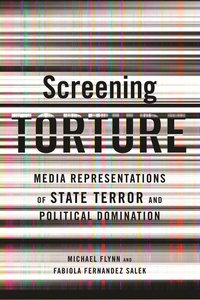
Screening Torture
Media Representations of State Terror and Political Domination
Will be published approx. on 18. September 2012
Book
Paperback/Softback
328 pages
978-0-231-15359-1 (ISBN)
Description
Before 9/11, films addressing torture outside of the horror/slasher genre depicted the practice in a variety of forms. In most cases, torture was cast as the act of a desperate and depraved individual, and the viewer was more likely to identify with the victim rather than the torturer. Since the terrorist attacks of September 11, 2001, scenes of brutality and torture in mainstream comedies, dramatic narratives, and action films appear for little other reason than to titillate and delight. In these films, torture is devoid of any redeeming qualities, represented as an exercise in brutal senselessness carried out by authoritarian regimes and institutions. This volume follows the shift in the representation of torture over the past decade, specifically in documentary, action, and political films. It traces and compares the development of this trend in films from the United States, Europe, China, Latin America, South Africa, and the Middle East.
Featuring essays by sociologists, psychologists, historians, journalists, and specialists in film and cultural studies, the collection approaches the representation of torture in film and television from multiple angles and disciplines, connecting its aesthetics and practices to the dynamic of state terror and political domination.
Featuring essays by sociologists, psychologists, historians, journalists, and specialists in film and cultural studies, the collection approaches the representation of torture in film and television from multiple angles and disciplines, connecting its aesthetics and practices to the dynamic of state terror and political domination.
Reviews / Votes
...adds breath and freshness to the analysis of media representations of state terror and political violence. -- Dr Ruth Kitchen DigitalIcons Thoughtful, insightful, and compelling... Flynn and Salek have gathered together a collection of essays that will have wide appeal to communication scholars, film scholars and graduate students. -- Marita Gronnvoll European Journal of Communication This book is a compelling critique of our dominant political and media discourses. The European LegacyMore details
Language
English
Place of publication
New York
United States
Target group
Professional and scholarly
College/higher education
Product notice
Paperback (trade)
Illustrations
<B>Color Photos: </B>17,
Dimensions
Height: 229 mm
Width: 152 mm
Weight
440 gr
ISBN-13
978-0-231-15359-1 (9780231153591)
Copyright in bibliographic data and cover images is held by Nielsen Book Services Limited or by the publishers or by their respective licensors: all rights reserved.
Schweitzer Classification
Other editions
Additional editions
Michael Flynn | Fabiola Fernandez Salek
Screening Torture
Media Representations of State Terror and Political Domination
E-Book
09/2015
1st Edition
De Gruyter
from
€29.95
Available for download
Michael Flynn | Fabiola Fernandez Salek
Screening Torture
Media Representations of State Terror and Political Domination
Book
09/2012
Columbia University Press
€144.84
Shipment within 10-20 days
Persons
Michael Flynn is associate professor of psychology at York College, City University of New York, and associate director of the Center on Terrorism at John Jay College of Criminal Justice. He is the coeditor, with Charles B. Strozier, of Genocide, War, and Human Survival; Trauma and Self; and The Year 2000: Essays on the End; and, with David C. Brotherton, of Globalizing the Streets: Cross-Cultural Perspectives on Youth, Social Control, and Empowerment. Fabiola F. Salek is the chair of the Department of Foreign Languages, ESL, and Humanities and coordinator of women's studies at York College, City University of New York. She is also a research fellow at the Center on Terrorism at John Jay College of Criminal Justice. Her research focuses on film and contemporary culture and their relationship to human rights, immigration, gender, and the construction of identity and nationality.
Content
Screening Torture: An Introduction Part I. Torture and the Implications of Masculinity 1. Countering the Jack Bauer Effect: An Examination of How to Limit the Influence of TV's Most Popular, and Most Brutal, Hero 2. Mel Gibson's Tortured Heroes: From the Symbolic Function of Blood to Spectacles of Pain 3. It's a Perfect World: Torture, Confession, and Sacrifice Part II. Torture and the Sadomasochistic Impulse 4. Lust, Caution: Torture, Sex, and Passion in Chinese Cinema 5. The Art of Photogenic Torture 6. Beyond Susan Sontag: The Seduction of Psychological Torture 7. Stanley Kubrick's A Clockwork Orange as Art Against Torture Part III. Confronting the Legacies of Torture and State Terror 8. "Accorded a Place in the Design": Torture in Post-Apartheid Cinema 9. Confessing Without Regret: An Israeli Film Genre Part IV. Torture and the Shortcomings of Film 10. Movies of Modern Torture as Convenient Truths 11. Torture at the Limit of Politics 12. Doing Torture in Film: Confronting Ambiguity and Ambivalence 13. Documenting the Documentaries on Abu Ghraib: Facts Versus Distortion List of Contributors Index