


Communicology
Mutations in Human Relations?
Published on 13. December 2022
Book
Paperback/Softback
236 pages
978-1-5036-3448-0 (ISBN)
Description
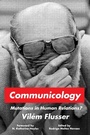
Communicology is Vilem Flusser's first thesis on his concepts of technical images and technical imagination. In this foundational text he lays the groundwork for later work, offering a philosophical approach to communication as a phenomenon that permeates every aspect of human existence. Clearly organized around questions such as "What is Communication?," "What are Codes?," and "What is Technical Imagination?," the work touches on theater, photography, film, television, and more. Originally written in 1978, but only posthumously published in German, the book is one of the clearest statements of Flusser's theory of communication as involving a variably mediated relation between humans and the world. Although Flusser was writing in the 1970s, his work demonstrates a prescience that makes it of significant contemporary interest to scholars in visual culture, art history, media studies, and philosophy.
Reviews / Votes
"Flusser is a painter of oblique strokes, dismantling familiar perspectives. Never less than entertaining, Communicology refreshes, challenges and blasts open unexpected vistas."-Sean Cubitt, University of Melbourne "If you are in search of Flusser the media theorist, indeed, if you are seeking to understand how information works, Communicology is it. Flusser teases out the kinds of fundamental questions that are at the core of the human experience."-Anke Finger, University of Connecticut "Communicology is a central work for any appraisal of Flusser's thinking, and an innovative and singular introduction to media theory."-Erick Felinto, State University of Rio de Janeiro "Communicology is an important work for the study of media theory in general and, more specifically, Flusser's own communication theory."-Rodrigo Petronio, Armando Alvares Penteado Foundation "New theories in communication are rare. However,Communicology-written in 1978, posthumously published (in German), and now newly translated into English-leads the reader to consider contemporary answers to age-old questions.... Though Flusser builds on philosophers suchas Heidegger, this work is original and seminal. Flusser's work is now more important than ever, given the present rapid and radical changes to communication such as ChatGPT. Highly recommended."-K. L. Majocha, CHOICEMore details
Series
Edition
New edition
Language
English
Place of publication
Palo Alto
United States
Target group
Professional and scholarly
Edition type
New edition
Product notice
Paperback (trade)
Dimensions
Height: 226 mm
Width: 153 mm
Thickness: 17 mm
Weight
373 gr
ISBN-13
978-1-5036-3448-0 (9781503634480)
Copyright in bibliographic data and cover images is held by Nielsen Book Services Limited or by the publishers or by their respective licensors: all rights reserved.
Schweitzer Classification
Other editions
Additional editions
E-Book
12/2022
Stanford University Press
from
€67.99
Available for download
Persons
The philosopher Vilem Flusser (1920-1991) is best known for his work in media theory after publishing his seminal book Towards a Philosophy of Photography (1983), which was followed shortly by Into the Universe of Technical Images (1985) and Does Writing Have a Future? (1987).
Rodrigo Maltez Novaes is an artist, translator and editor. He worked on the general reorganization of the Vilem Flusser Archive in Berlin as a researcher in residence between 2009-2014 and has translated several of Vilem Flusser's works from Portuguese into English.
Rodrigo Maltez Novaes is an artist, translator and editor. He worked on the general reorganization of the Vilem Flusser Archive in Berlin as a researcher in residence between 2009-2014 and has translated several of Vilem Flusser's works from Portuguese into English.
Content
0. Synopsis
1. What Is Communication?
2. What Are Codes?
3. What is Technical Imagination?
1. What Is Communication?
2. What Are Codes?
3. What is Technical Imagination?