


Resource Activation
Using Clients' Own Strengths in Psychotherapy and Counseling
1st Edition
Published on 21. December 2009
Book
Paperback/Softback
VIII, 70 pages
978-0-88937-378-5 (ISBN)
Description
This concise practice-oriented manual effectively shows how psychologists, psychiatrists, social workers, supervisors, and counselors can quickly identify and put to therapeutic use an individual's own talents and resources.
Written in an easy and relaxed style using everyday language, this manual illustrates how to actively take a person's resources into consideration during therapy and counseling sessions, and how to integrate them into existing intervention concepts.
The first part illustrates approaches that can be used to focus attention on assessment and dialog, and that shed light on a person's individual resources from various angles. These therapeutic approaches can be used in the framework of existing manuals and guidelines to focus on how to "do things."
The second part illustrates procedures offering a framework for further applying the different perspectives and provides sample worksheets for practical use.
Reviews / Votes
Little things can make a big difference - for instance, by making change possible where before no change could be seen. This practical little book looks very precisely at therapeutic micro-interventions and shows how to integrate a patient's strengths into clinical practice on a day-by-day basis to make change possible. Some ideas cross a threshold and then take off and get spread everywhere - I hope this will happen to the ideas presented here. Practical and very efficacious!A" Wolfgang Lutz, PhD, Professor of Clinical Psychology and Psychotherapy, University of Trier, Germany Resource Activation heralds the emergence of a new vista for psychotherapists. It provides a detailed roadmap for systemically assessing and utilizing clients' talents, skills, and resources to facilitate therapeutic change. It gives very specific therapeutic guidelines and also lays the foundation for research on this historically neglected area. This book and this work should be read and utilized by individual, couple, and family therapists to realistically enhance their clients' sense of self and relationship efficacy.A" William M. Pinsof, PhD, President, The Family Institute, Northwestern University, Evanston, IL, USAMore details
Edition
1st edition 2010
Language
English
Place of publication
Toronto
Canada
Target group
Professional and scholarly
Therapists, psychologists, psychiatrists, counsellors, and students.
Product notice
Klappenbroschur
Dimensions
Height: 23 cm
Width: 15.2 cm
Weight
142 gr
ISBN-13
978-0-88937-378-5 (9780889373785)
Schweitzer Classification
Other editions
New editions
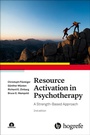
Christoph Flückiger | Günther Wüsten | Richard E. Zinbarg
Resource Activation in Psychotherapy
A Strength-Based Approach
Book
approx. 05/2026
2nd Edition
Hogrefe Publishing
€24.95
Not yet published
Persons
Content
1 Systematic Resource Analysis; 1.1 Resource Priming; 2 Resource-Oriented Dialog Strategies; 2.1 Perceiving and Strengthening Directly Available Resources and Actively Introducing Unused Resources; 2.2 Verbalizing Resources and Immediately Experiencing Resources; 2.3 Using Potential Resources and Integrating Motivational Resources; 2.4 Strengthening Personal Resources and Furthering the Available Resources of the Social Network; 2.5 Focusing on Problem-Independent Resources and Taking Advantage of Problem-Relevant Resources; 2.6 Optimizing Usable Resources and Boosting and Maintaining Trainable Resources; 2.7 Perspectives as Heuristics for Directing Attention; 2.8 Resource-Orientation - Putting the Cart Before the Horse; 2.9 Differences in Self- and Other-Perception; 2.10 Problem Situations and Therapeutic Strategies; 2.11 Resource-Oriented Strategies and Phases of Therapy; 2.12 Risks and Side Effects of Resource-Oriented Strategies; 3 Resource-Activating Structural Interventions; 3.1 LifeOverview; 3.2 Genograms and Ecograms from a Resource Perspective; 3.3 Miracle Questions and Target Visions; 3.4 Other People as Resource Models; 3.5 Activating Coping Resources Through Role Reversal; 3.6 Planning Pleasure; 3.7 Resource Activation Through Imaginative Procedures; 3.8 Resource Diary; 3.9 Differentiating Between Positive Feelings and Moods; 3.10 Reframing and Normalization; Appendix; Worksheet 1: Resource Priming; Worksheet 2: Resource-Oriented Dialog Strategies - Possible Questions; Worksheet 3: Differentiating Positive Feelings and Moods; References; Index.