

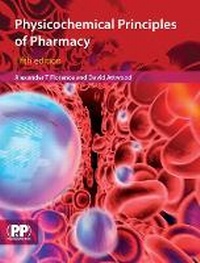
Physicochemical Principles of Pharmacy
5th Edition
Published on 19. August 2011
Book
Paperback/Softback
978-0-85369-984-2 (ISBN)
Description
Physical chemistry is the basis of pharmaceutical formulation and processing and is fundamental to understanding the complexities of drug delivery and absorption. Physicochemical Principles of Pharmacy goes beyond the introductory aspects of physical pharmacy to show how basic physicochemical principles are essential to an understanding of every aspect of drug action, from the design of dosage forms to the sites of action in the body. Chapters are organised logically, with visual representations to aid the understanding of difficult concepts. The fifth edition of this well-established textbook has been thoroughly revised. Changes include: a new chapter on pharmaceutical nanotechnology; key learning points; more worked examples of clinical calculations; and clearer distinction between the basic text and more complex theory to facilitate ease of use. Written by experienced academics, it is essential reading for undergraduate and postgraduate students in pharmacy and pharmaceutical sciences.
More details
Edition
5th Revised edition
Language
English
Place of publication
London
United Kingdom
Target group
Professional and scholarly
Illustrations
Illustrations
Dimensions
Height: 244 mm
Width: 188 mm
Thickness: 23 mm
Weight
1134 gr
ISBN-13
978-0-85369-984-2 (9780853699842)
Copyright in bibliographic data and cover images is held by Nielsen Book Services Limited or by the publishers or by their respective licensors: all rights reserved.
Schweitzer Classification
Other editions
New editions
Alexander T. Florence | David Attwood
Physicochemical Principles of Pharmacy
In Manufacture, Formulation and Clinical Use
Book
12/2015
6th Edition
Pharmaceutical Press
€60.00
Shipment within 3-4 weeks
Persons
Content
1. Solids; 2. Physicochemical Properties of Drugs in Solution; 3. Drug Stability; 4. The Solubility of Drugs; 5. Surfactants; 6. Emulsions, Suspensions and Other Disperse Systems; 7. Polymers and Macromolecules; 8. Pharmaceutical Nanotechnology; 9. Drug Absorption and the Oral Route; 10. Parenteral Routes of Drug Administration; 11. Physicochemical Drug Interactions and Incompatibilities; 12. Peptides, Proteins and Other Biopharmaceuticals; 13. Physical Assessment of Dosage Forms