

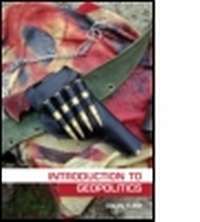
Introduction to Geopolitics
Published on 22. June 2006
Book
Hardback
240 pages
978-0-415-34494-4 (ISBN)
Description
This clear and concise introductory textbook guides students through their first engagement with geopolitics. It offers a clear framework for understanding contemporary conflicts by showing how geography provides opportunities and limits upon the actions of countries, national groups, and terrorist organizations, and the overarching theme of geopolitical structures and agents requires no previous knowledge of theory or current affairs.
Throughout the book, case studies, including the rise of al Qaeda, the Korean conflict, Israel-Palestine, Chechnya and Kashmir, emphasize the multi-faceted nature of conflict. These, along with guided exercises, help explain contemporary global power struggles, the global military actions of the United States, the persistence of nationalist conflicts, the changing role of borders, and the new geopolitics of terrorism. Throughout, the readers are introduced to different theoretical perspectives, including feminist contributions, as both the practice and representation of geopolitics are discussed.
Introduction to Geopolitics is extensively illustrated with diagrams, maps, and photographs. Reading this book will provide a deeper and critical understanding of current affairs and facilitate access to higher level course work and essays on geopolitics. Both students and general readers alike will find this book an essential stepping-stone to understanding contemporary conflicts.
Throughout the book, case studies, including the rise of al Qaeda, the Korean conflict, Israel-Palestine, Chechnya and Kashmir, emphasize the multi-faceted nature of conflict. These, along with guided exercises, help explain contemporary global power struggles, the global military actions of the United States, the persistence of nationalist conflicts, the changing role of borders, and the new geopolitics of terrorism. Throughout, the readers are introduced to different theoretical perspectives, including feminist contributions, as both the practice and representation of geopolitics are discussed.
Introduction to Geopolitics is extensively illustrated with diagrams, maps, and photographs. Reading this book will provide a deeper and critical understanding of current affairs and facilitate access to higher level course work and essays on geopolitics. Both students and general readers alike will find this book an essential stepping-stone to understanding contemporary conflicts.
More details
Language
English
Place of publication
London
United Kingdom
Publishing group
Taylor & Francis Ltd
Target group
Professional and scholarly
Illustrations
21 s/w Zeichnungen, 17 s/w Photographien bzw. Rasterbilder, 8 s/w Tabellen, 38 s/w Abbildungen
21 Line drawings, black and white; 17 Halftones, black and white; 8 Tables, black and white; 38 Illustrations, black and white
Dimensions
Height: 245 mm
Width: 170 mm
Weight
703 gr
ISBN-13
978-0-415-34494-4 (9780415344944)
Copyright in bibliographic data and cover images is held by Nielsen Book Services Limited or by the publishers or by their respective licensors: all rights reserved.
Schweitzer Classification
Other editions
New editions
Colin Flint
Introduction to Geopolitics
Book
12/2011
2nd Edition
Routledge
€141.13
Article exhausted; check for reprint
Additional editions

Colin Flint
Introduction to Geopolitics
Book
06/2006
Routledge
€58.37
Article exhausted; check for reprint
Person
Colin Flint is an Associate Professor of Geography at the University of Illinois. His research interests include geopolitics and hate groups. He is editor of The Geography of War and Peace and Spaces of Hate and co-author, with Peter Taylor, of Political Geography: World-Economy, Nation-State, and Locality.
Content
Prologue 1. A Framework for Understanding Geopolitics 2. Setting the Global Geopolitical Context 3. Geopolitical Codes: Agents Define their Geopolitical Options 4. Representations of Geopolitical Codes 5. Embedding Geopolitics within National Identity 6. Boundary Geopolitics: Shaky Foundations of the World Political Map? 7. Geopolitical Metageographies: Terrorist Networks and the United States' War on Terrorism 8. Messy Geopolitics: Agency and Multiple Structures