


The Philosophy of Well-Being
An Introduction
2nd Edition
Will be published approx. on 2. July 2026
Book
Hardback
174 pages
978-1-032-87790-7 (ISBN)
Description
Well-being occupies a central role in ethics and political philosophy, including in major theories such as utilitarianism. It also extends far beyond philosophy: recent studies into the science and psychology of well-being have propelled the topic to centre stage, and governments spend millions on promoting it. We are encouraged to adopt modes of thinking and behaviour that support individual well-being or 'wellness'.
What is well-being? Which theories of well-being are most plausible? In this rigorous and comprehensive introduction to the topic, Guy Fletcher unpacks and assesses these questions and many more, including:
Are pleasure and pain the only things that affect well-being?
Does getting what we want make our lives go better?
Can something be good for someone who does not desire it?
Is well-being fundamentally connected to human nature?
Is happiness all that makes our lives go well?
Which things make our lives go worse?
Is death always bad for us?
How is the well-being of a whole life related to well-being at particular times?
Fully revised and updated throughout, this second edition includes a new chapter on ill-being. Annotated further reading and study and comprehension questions follow each chapter, and a glossary of key terms is also included.
The Philosophy of Well-Being is essential reading for students of ethics and political philosophy, and is also suitable for those in related disciplines such as psychology, politics and sociology.
What is well-being? Which theories of well-being are most plausible? In this rigorous and comprehensive introduction to the topic, Guy Fletcher unpacks and assesses these questions and many more, including:
Are pleasure and pain the only things that affect well-being?
Does getting what we want make our lives go better?
Can something be good for someone who does not desire it?
Is well-being fundamentally connected to human nature?
Is happiness all that makes our lives go well?
Which things make our lives go worse?
Is death always bad for us?
How is the well-being of a whole life related to well-being at particular times?
Fully revised and updated throughout, this second edition includes a new chapter on ill-being. Annotated further reading and study and comprehension questions follow each chapter, and a glossary of key terms is also included.
The Philosophy of Well-Being is essential reading for students of ethics and political philosophy, and is also suitable for those in related disciplines such as psychology, politics and sociology.
Reviews / Votes
Praise for the previous edition:'An excellent advanced introduction to philosophical theories of well-being. It surveys the main theories and important arguments in the literature, and does so with impressive clarity and a flare for entertaining and illustrative examples. Highly recommended.' - Valerie Tiberius, University of Minnesota, USA
'Guy Fletcher's introduction to well-being is everything such a book should be: lively, clear, and comprehensive. If I were teaching an undergraduate course on well-being, this is the book I would choose. If I were a student in such a course, this is the book I would want my professor to choose.' - Neera K. Badhwar, University of Oklahoma, USA
'This crisply written, rigorous and reliable book is the go-to guide for anyone interested in contemporary theories of Well-being and Happiness. Fletcher's masterful overview of the key topics will be immensely useful to advanced undergraduates, graduate students, psychologists, and economists.' - Bradford Cokelet, University of Kansas, USA
'An extremely welcome addition to the literature on well-being. Fletcher shows great judgement in choice of topics, and takes readers straight to the heart of current philosophical controversies. His discussion is even-handed, well-informed, sophisticated, up-to-date, and clear. Students and scholars will gain a great deal from using this book. It is very highly recommended.' - Christopher Woodard, University of Nottingham, UK
'This is a thorough and engaging discussion of philosophical approaches to and dimensions of well-being. Fletcher's keen eye for technical analysis and creative use of examples combine to make an engaging and important resource for undergraduates and anyone interested in learning about well-being.' - Lorraine L. Besser, Middlebury College, USA Praise for the previous edition:
'An excellent advanced introduction to philosophical theories of well-being. It surveys the main theories and important arguments in the literature, and does so with impressive clarity and a flair for entertaining and illustrative examples. Highly recommended.' - Valerie Tiberius, University of Minnesota, USA
'Guy Fletcher's introduction to well-being is everything such a book should be: lively, clear, and comprehensive. If I were teaching an undergraduate course on well-being, this is the book I would choose. If I were a student in such a course, this is the book I would want my professor to choose.' - Neera K. Badhwar, University of Oklahoma, USA
'This crisply written, rigorous and reliable book is the go-to guide for anyone interested in contemporary theories of Well-being and Happiness. Fletcher's masterful overview of the key topics will be immensely useful to advanced undergraduates, graduate students, psychologists, and economists.' - Bradford Cokelet, University of Kansas, USA
'An extremely welcome addition to the literature on well-being. Fletcher shows great judgement in choice of topics, and takes readers straight to the heart of current philosophical controversies. His discussion is even-handed, well-informed, sophisticated, up-to-date, and clear. Students and scholars will gain a great deal from using this book. It is very highly recommended.' - Christopher Woodard, University of Nottingham, UK
'This is a thorough and engaging discussion of philosophical approaches to and dimensions of well-being. Fletcher's keen eye for technical analysis and creative use of examples combine to make an engaging and important resource for undergraduates and anyone interested in learning about well-being.' - Lorraine L. Besser, Middlebury College, USA
More details
Edition
2nd edition
Language
English
Place of publication
London
United Kingdom
Publishing group
Taylor & Francis Ltd
Target group
College/higher education
Undergraduate Core
Illustrations
10 s/w Tabellen, 1 s/w Abbildung, 1 s/w Zeichnung
10 Tables, black and white; 1 Line drawings, black and white; 1 Illustrations, black and white
Dimensions
Height: 234 mm
Width: 156 mm
ISBN-13
978-1-032-87790-7 (9781032877907)
Copyright in bibliographic data and cover images is held by Nielsen Book Services Limited or by the publishers or by their respective licensors: all rights reserved.
Schweitzer Classification
Other editions
Additional editions
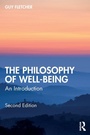
Book
approx. 07/2026
2nd Edition
Routledge
€52.50
Not yet published
E-Book
approx. 07/2026
2nd Edition
Routledge
€55.49
Available for download
E-Book
approx. 07/2026
2nd Edition
Routledge
€55.49
Available for download
Previous edition
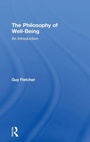
Book
04/2016
1st Edition
Routledge
€241.40
Shipment within 10-20 days
Person
Guy Fletcher is Professor of Practical Philosophy at the University of Edinburgh, UK. His research is in practical philosophy and its history, encompassing metaethics, normative ethics, and political philosophy. He is the editor of The Routledge Handbook of Philosophy of Well-Being (2016) and the author of Dear Prudence (2021).
Content
Acknowledgements Preface to the Second Edition Introduction 1. Hedonism 2. Desire-Fulfilment Theories 3. Objective List Theories 4. Perfectionist Theories of Well-Being 5. The Happiness Theory of Well-Being 6. Hybrid Theories of Well-Being 7. Ill-Being 8. Well-Being and the Shape of a Life 9. Well-Being and Death. Glossary Index