


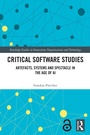
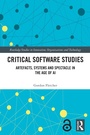
Critical Software Studies
Artefacts, Systems and Spectacle in the Age of AI
1st Edition
Published on 27. May 2026
Book
Hardback
230 pages
978-1-032-97302-9 (ISBN)
Description
This book is based around two key premises: all software is an artefact of human construct and all software shapes the behaviours of those who use it directly or experience its influence indirectly. With the rise of popular consumer-facing generative AI tools, never has understanding these two premises been more important or more obscured. This book explores the relationship between people and software as a relationship between a tool and its users.
Through a series of exemplar cases, it presents an examination of the historical development of software from a critical perspective, with special attention given to the consequences of using this software and assumptions made around its neutrality. The author explores the development of the World Wide Web, Word and Excel, and social media, concluding with an investigation of how the principles identified in these earlier examples are now being found within public interface generative AI tools. The book looks beyond the functionality and user interface of the software to look at it as a complex artefact of human manufacture by exploring the wider cultural and technical environment in which the software is created and considering the political, economic and social forces that come to bear on the software and become embodied within. This narrative approach provides readers with valuable insights into the influences of specific software on contemporary society and business, encouraging them to apply a critical lens to their own and their organisation's software use.
This book is a novel read for academics and students within software development, information systems, AI and critical management studies.
Through a series of exemplar cases, it presents an examination of the historical development of software from a critical perspective, with special attention given to the consequences of using this software and assumptions made around its neutrality. The author explores the development of the World Wide Web, Word and Excel, and social media, concluding with an investigation of how the principles identified in these earlier examples are now being found within public interface generative AI tools. The book looks beyond the functionality and user interface of the software to look at it as a complex artefact of human manufacture by exploring the wider cultural and technical environment in which the software is created and considering the political, economic and social forces that come to bear on the software and become embodied within. This narrative approach provides readers with valuable insights into the influences of specific software on contemporary society and business, encouraging them to apply a critical lens to their own and their organisation's software use.
This book is a novel read for academics and students within software development, information systems, AI and critical management studies.
More details
Series
Language
English
Place of publication
London
United Kingdom
Publishing group
Taylor & Francis Ltd
Target group
College/higher education
Postgraduate
Product notice
Laminated cover
Illustrations
1 s/w Tabelle, 1 s/w Zeichnung, 1 s/w Photographie bzw. Rasterbild, 2 s/w Abbildungen
1 Tables, black and white; 1 Line drawings, black and white; 1 Halftones, black and white; 2 Illustrations, black and white
Dimensions
Height: 234 mm
Width: 156 mm
Thickness: 16 mm
Weight
527 gr
ISBN-13
978-1-032-97302-9 (9781032973029)
Copyright in bibliographic data and cover images is held by Nielsen Book Services Limited or by the publishers or by their respective licensors: all rights reserved.
Schweitzer Classification
Other editions
Additional editions
E-Book
05/2026
1st Edition
Routledge
€0.00
Available for download
E-Book
05/2026
1st Edition
Routledge
€0.00
Available for download
Person
Gordon Fletcher is Associate Dean of Research and Innovation at Salford Business School, UK.
Content
1. Defining critical software studies Interchapter 1: Undertaking critical software studies 2. Software as an artefact: Shaping the critical perspective 3. The development of software development 4. Old software still shapes what we do Interchapter 2: Methods from history 5. The view from the network or, only because of the internet 6. The AI generation Interchapter 3: Fast prompts to slow thinking 7. How to critically analyse software 8. Future software: The most radical gesture