

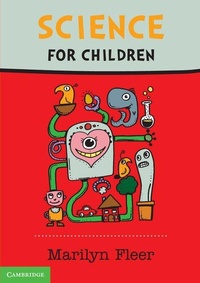
Science for Children
Published on 8. September 2015
Book
Paperback/Softback
360 pages
978-1-107-54870-1 (ISBN)
Description
Science for Children introduces readers to the pedagogy of primary and early childhood science education. The book pays special attention to the three strands of science, in accordance with the Australian Curriculum. It also uses the practice principles and learning outcomes of the national Early Years Learning Framework to present content for babies through to the transition into the Foundation year at school. Science for Children explores various approaches to teaching and learning in science. It covers inquiry approaches in detail; makes explicit links to the 5Es; critiques longstanding approaches, such as discovery approaches and a transmission approach; and explores Indigenous perspectives and a Vygotskian framework. This allows the reader to make informed choices about when to use a particular approach in primary classrooms and early childhood settings. Designed to prepare future educators for practice, Science for Children challenges students and offers practical classroom-based strategies for their science teaching careers.
More details
Language
English
Place of publication
Cambridge
United Kingdom
Target group
College/higher education
Professional and scholarly
Product notice
Paperback (trade)
Dimensions
Height: 250 mm
Width: 177 mm
Thickness: 13 mm
Weight
603 gr
ISBN-13
978-1-107-54870-1 (9781107548701)
Copyright in bibliographic data and cover images is held by Nielsen Book Services Limited or by the publishers or by their respective licensors: all rights reserved.
Schweitzer Classification
Other editions
Additional editions
Marilyn Fleer
Science for Children
E-Book
09/2015
Cambridge University Press
€66.49
Available for download
Marilyn Fleer
Science for Children
E-Book
09/2015
Cambridge University Press
€56.49
Available for download
Person
Marilyn Fleer is the Foundation Chair of Early Childhood Education at Monash University, Victoria.
Content
Part I. Research Foundation for Developing a Personal Approach to Teaching Science: 1. Science as a human endeavour; 2. Researching children's understanding and ways of learning; Part II. Transmission and Discovery Approaches to Teaching and Learning in Science: 3. A transmission approach to teaching science; 4. A discovery based approach to learning science; Part III. Inquiry-Based Approaches: 5. Inquiry-based approach to teaching science; 6. Inquiry-based approach to learning science; 7. Teaching for conceptual change: constructivism; Part IV. Inclusive Constructions of Knowledge across and within Communities and Cultures: 8. Conceptual play, and contextual and conceptual intersubjectivity: cultural-historical approaches to learning science; 9. Culturally sensitive teaching: sustainability and relatedness in our ecosystems; Part V. Leadership in Science: 10. Becoming a leader of science: situating yourself.