

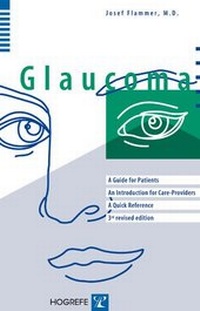
Glaucoma
A Guide for Patients. An Introduction for Care-Providers. A Quick Reference
3rd Edition
Published on 1. October 2006
Book
Paperback/Softback
439 pages
978-0-88937-342-6 (ISBN)
Description
Glaucoma is a disease that poses a serious threat to vision. Patients seek to know how the disease originates, whether they did something "wrong" to cause it, whether a change in their lifestyle can improve it, and which treatment options are available. This book will provide patients, relatives and friends, as well as care providers and even those simply interested in this topic with a better understanding of the clinical picture of glaucoma.
Reviews / Votes
Prithvi S Sankar, MD(University of Pennsylvania School of Medicine) in Doody's Notes, published online in February 2007 **Description** In this third revised edition, the author delves into the definition and classification as well as the pathogenesis and the treatment of glaucoma. The first edition was published in German in 2000. **Purpose** The purpose is "to create a bridge between the professional and the interested lay reader." This is a worthy goal, since the treatment of glaucoma depends on the keen understanding of the topic by the patient. Overall, the book meets the objective. **Audience** Although the book is targeted to the lay reader, the book often goes beyond this audience. Many patients who are interested in learning a little more about glaucoma may find this book too complex to read. This book would be more appropriate for the very motivated patient who wants to learn as much as possible with one book. **Features** The book covers the definition of glaucoma as well as the causes, pathogenesis, diagnosis, and therapy of the disease. A nice section covers living with glaucoma, which is well written and practical for patients. Although the pictures and illustrations may be too complex for the average reader, they are interesting and helpful. **Assessment** Overall, this is a nice book and there are not too many written for patients about glaucoma. In this sense, the book is helpful. It is well written and the pictures are helpful. Patients with an avid interest in learning beyond what the normal patient-oriented glaucoma literature offers will find this book of value. ----------------------------------------------------------- Weighted Numerical Score: 89 - 3 StarsMore details
Edition
3rd completely revised edition 2006
Language
English
Place of publication
Toronto
Canada
Publishing group
Hogrefe Publishing
Target group
All those afflicted with the disease, students, family practitioners, care providers.
Edition type
Revised edition
Product notice
Klappenbroschur
Illustrations
385 Schaubilder, 7 Tabellen
6 tables, 385 figures
Dimensions
Height: 229 mm
Width: 153 mm
Weight
792 gr
ISBN-13
978-0-88937-342-6 (9780889373426)
Schweitzer Classification
Other editions
Previous edition
Book
11/2002
2nd Edition
Hogrefe & Huber
€16.95
Article exhausted; check for reprint
Person
Content
Table of Contents
Foreword
Introduction
Purpose of the Book
What is Glaucoma?
What is Glaucomatous Damage?
What are the Consequences of Glaucomatous -Damage?
How Common is Glaucoma?
Glaucomatous Damage
Phenomenology of Glaucomatous Damage
How does Glaucomatous Damage Arise?
Classification of the Various Types of Glaucoma
Congenital Glaucoma
Infantile Glaucoma
Juvenile Glaucoma
Primary Chronic Open-Angle Glaucoma (POAG)
Primary Angle-Closure Glaucoma
Secondary Glaucoma
Risk Factors
General Risk Factors for an Increase in IOP
Risk Factors for Glaucomatous Damage
Pathogenesis of Glaucomatous Damage
Apoptosis "Programmed Cell Death"
The Importance of Ocular Perfusion
Reperfusion Damage
Activation of Glial Cells
Altered Micro-Environment
The Pathogenetic Concept
Diagnosing Glaucoma
Which Symptoms are Noticed by the Patient?
When Should an Ophthalmologist be Consulted?
Examination by the Ophthalmologist
Documenting the Papilla and Nerve Fiber Layer
Testing the Visual Field
Assessing Ocular Perfusion
Special Examinations
Blood Chemistry
Therapy
General Remarks Regarding Treatment Options
IOP-Lowering Medication
IOP-Reducing Laser Treatment
IOP-Lowering Operations
Enhancing Ocular Perfusion
Alternative Forms of Therapy
Living with Glaucoma
Lifestyle and Nutrition
Leisure and Stress
Contact Lenses
Pregnancy and Nursing
Supplementary Chapters
Anatomy and Physiology of the Visual System
The Development of the Eye
Genetics
Optics of the Eye
Cataracts
Arteriosclerosis
Diabetis Melitus
Vascular Regulation and Dysregulation
Age-related Macular Degeneration
Visual Field Examination/Perimetry
Measuring Perfusion
Ocular Pharmacotherapy
How do Lasers Function?
Appendices
Glossary
Catalog of Medications
Additional Reading Material
Online Sites for the Visually Impaired
Ophthalmology in Developing Countries
Acknowledgments