

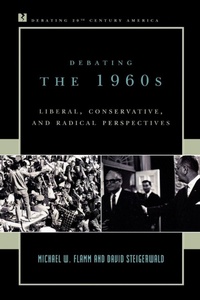
Debating the 1960s
Liberal, Conservative, and Radical Perspectives
Published on 20. August 2007
Book
Paperback/Softback
220 pages
978-0-7425-2213-8 (ISBN)
Description
The conventional interpretation of the 1960s emphasizes how liberal, even radical, the decade was. It was, after all, the age of mass protests against the Vietnam War and social movements on behalf of civil rights and women's rights. It was also an era when the counterculture challenged many of the values and beliefs held by morally traditional Americans. But a newer interpretation stresses how truly polarized the 1960s were. It portrays how radicals, liberals, and conservatives repeatedly clashed in ideological combat for the hearts and minds of Americans. Millions in the center and on the right contested the counterculture, defended the Vietnam War, and opposed civil rights.
Debating the 1960s explores the decade through the arguments and controversies between radicals, liberals, and conservatives. The focus is on four main areas of contention: social welfare, civil rights, foreign relations, and social order. The book also examines the emergence of the New Left and the modern conservative movement. Finally, it assesses the enduring importance of the 1960s on contemporary American politics and society. Combining analytical essays and historical documents, the book highlights the polarization of the decade by focusing on the political, social, and cultural debates that divided the nation then and now.
Debating the 1960s explores the decade through the arguments and controversies between radicals, liberals, and conservatives. The focus is on four main areas of contention: social welfare, civil rights, foreign relations, and social order. The book also examines the emergence of the New Left and the modern conservative movement. Finally, it assesses the enduring importance of the 1960s on contemporary American politics and society. Combining analytical essays and historical documents, the book highlights the polarization of the decade by focusing on the political, social, and cultural debates that divided the nation then and now.
Reviews / Votes
This is a splendid survey of the three-cornered conflict that still shapes American politics and culture. It should be required reading in classrooms around the nation. -- Michael Kazin, co-author of America Divided: The Civil War of the 1960s This is, in fact, an excellent tool for the undergraduate classroom. . . . The two essays are useful and clear. And the documents are important to the discussion of the period. * The Historian * Michael Flamm and David Steigerwald, two of the best historians of the Sixties era, have created a smart, provocative book that is perfect for the classroom. Combining state-of-the-art overviews with a rich selection of documents, Debating the 1960s pushes past the standard narrative of the 1960s and asks students to analyze the contesting forces of radicalism, liberalism and conservatism during that turbulent period. -- David Farber, author of The Age of Great Dreams: America in the 1960sMore details
Series
Language
English
Place of publication
United States
Publishing group
Bloomsbury Publishing Plc
Target group
College/higher education
Dimensions
Height: 229 mm
Width: 152 mm
Thickness: 13 mm
Weight
365 gr
ISBN-13
978-0-7425-2213-8 (9780742522138)
Copyright in bibliographic data and cover images is held by Nielsen Book Services Limited or by the publishers or by their respective licensors: all rights reserved.
Schweitzer Classification
Persons
Michael W. Flamm is associate professor of history at Ohio Wesleyan University. He is a scholar of modern U.S. political history with a research focus on the 1960s. He is the author of Law and Order: Street Crime, Civil Unrest, and the Crisis of Liberalism in the 1960s. He is currently researching and writing a book on the Harlem Riot of July 1964 entitled In the Heat of the Summer. David Steigerwald is associate professor of history at Ohio State University and teaches at the university's Marion Campus. Among his books is The Sixties and the End of Modern America. He is now finishing a book on American intellectuals and the affluent society.
Content
Part I: The Liberal-Radical Debates of the 1960s
Chapter 1: Excerpts from "The Port Huron Statement"
Chapter 2: "Radio and Television Report on Civil Rights"
Chapter 3: "Remarks on Signing the Economic Opportunity Act"
Chapter 4: "An Interracial Movement of the Poor?"
Chapter 5: "Peace Without Conquest"
Chapter 6: "Name the System!"
Chapter 7: Excerpts from "Rights in the Conflict: Chicago's 7 Brutal Days"
Part II: The Liberal-Conservative Debates of the 1960s
Chapter 8: The Sharon Statement
Chapter 9: Principles of the John Birch Society
Chapter 10: Excerpts from John Kennedy's Commencement Address (American University)
Chapter 11: Excerpts from Lyndon Johnson's Commencement Address (University of Michigan)
Chapter 12: Excerpts from Barry Goldwater's Acceptance Speech (Republican Convention)
Chapter 13: Excerpts from Ronald Reagan's "A Time for Choosing"
Chapter 14: Excerpts from Richard Nixon's Acceptance Speech (Republican Convention)
Chapter 1: Excerpts from "The Port Huron Statement"
Chapter 2: "Radio and Television Report on Civil Rights"
Chapter 3: "Remarks on Signing the Economic Opportunity Act"
Chapter 4: "An Interracial Movement of the Poor?"
Chapter 5: "Peace Without Conquest"
Chapter 6: "Name the System!"
Chapter 7: Excerpts from "Rights in the Conflict: Chicago's 7 Brutal Days"
Part II: The Liberal-Conservative Debates of the 1960s
Chapter 8: The Sharon Statement
Chapter 9: Principles of the John Birch Society
Chapter 10: Excerpts from John Kennedy's Commencement Address (American University)
Chapter 11: Excerpts from Lyndon Johnson's Commencement Address (University of Michigan)
Chapter 12: Excerpts from Barry Goldwater's Acceptance Speech (Republican Convention)
Chapter 13: Excerpts from Ronald Reagan's "A Time for Choosing"
Chapter 14: Excerpts from Richard Nixon's Acceptance Speech (Republican Convention)