

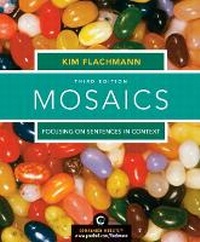
Mosaics
Focusing on Sentences in Context (with MyWritingLab Student Access Code Card)
3rd Edition
Published on 20. May 2008
Book
Mixed media product
736 pages
978-0-13-601781-3 (ISBN)
Description
For courses in Developmental English, Basic Skills, or Remedial Writing.
Students study their own writing! Part of a three-level developmental series that integrates critical thinking, reading, writing, revising, and editing, this text teaches the processes and skills common to all good academic writing.
Students study their own writing! Part of a three-level developmental series that integrates critical thinking, reading, writing, revising, and editing, this text teaches the processes and skills common to all good academic writing.
More details
Edition
3rd edition
Language
English
Place of publication
New Jersey
United States
Publishing group
Pearson Education (US)
Target group
College/higher education
Dimensions
Height: 232 mm
Width: 191 mm
Weight
1157 gr
ISBN-13
978-0-13-601781-3 (9780136017813)
Copyright in bibliographic data and cover images is held by Nielsen Book Services Limited or by the publishers or by their respective licensors: all rights reserved.
Schweitzer Classification
Other editions
Previous edition
Book
08/2004
3rd Edition
Pearson
€49.51
Article exhausted; check for reprint
Content
(NOTE:All chapters begin with Introduction and conclude with Chapter Review, Editing a Student Paragraph, and Editing Your Own Paragraph, except for chapters 1 through 7, and 33 through 47.) I. THE WRITING PROCESS.
1. Writing Successful Sentences.
Your Approach to Writing. Writing Assignments.
2.Understanding the Writing Process.
Picture the Process.
3. Prewriting.
Thinking. Planning.
4. Writing.
Writing the Topic Sentence. Developing. Organizing. Drafting.
5. Revising.
Revising Checklist.
6. Editing.
Editing Checklist. Your EQ (Editing Quotient). How to Edit.
II. WRITING EFFECTIVE SENTENCES.
Introduction: Parts of Speech, Phrases, and Clauses.
Parts of Speech. Phrases. Clauses.
Unit 1. Sentences.
7. Subjects and Verbs.
Subjects. Verbs.
8. Fragments.
About Fragments. Identifying and Correcting Fragments.
9. Fused Sentences and Comma Splices.
Identifying Fused Sentences and Comma Splices. Correcting Fused Sentences and Comma Splices.
Unit 1. Tests.
Unit Writing Assignments.
Unit 2. Verbs.
10. Regular and Irregular Verbs.
Regular Verbs. Irregular Verbs. Using Lie/Lay and Sit/Set Correctly.
11. Verb Tense.
Present Tense. Past Tense. Using Helping Words with Past Participles. Using -ing Verbs Correctly. Problems with be. Problems with do. Problems with have.
12. Subject-Verb Agreement.
Subject-Verb Agreement. Words Separating. Subjects and Verbs. More than One Subject. Verbs Before Subjects. Collective Nouns. Indefinite Pronouns.
13. More on Verbs.
Consistent Verb Tense. Using the Active Voice
Unit 2. Tests.
Unit Writing Assignments.
Unit 3. Pronouns.
14. Pronoun Problems.
Pronouns as Subjects. Pronouns as Objects. Possessive Pronouns. Pronouns in Comparisons. Demonstrative Pronouns.
15. Pronoun Reference and Point of View.
Pronoun Reference. Shifting Point of View.
16. Pronoun Agreement.
Indefinite Pronouns. Avoiding Sexism.
Unit 3. Tests.
Unit Writing Assignments.
Unit 4. Modifiers.
17. Adjectives.
Using Adjectives. Comparing with Adjectives. Common Adjective Errors. Using Good and Bad Correctly.
18. Adverbs.
Using Adverbs. Comparing with Adverbs. Adjective or Adverb?. Double Negatives. Using Good/Well and Bad/Badly Correctly.
19. Modifier Errors.
Misplaced Modifiers. Dangling Modifiers.
Unit 4. Tests.
Unit Writing Assignments.
Unit 5. Punctuation.
20. End Punctuation.
Period. Question Mark. Exclamation Point.
21. Commas.
Commas with Items in a Series. Commas with Introductory Words. Commas with Independent Clauses. Commas with Interrupters. Commas with Direct Quotations. Other Uses of Commas.
22. Apostrophes.
Marking Contractions. Showing Possession. Common Apostrophe Errors.
23. Quotation Marks.
Direct Quotations. Indirect Quotations. Capitalizing and Using Other Punctuation Marks with Quotation Marks. Quotation Marks Around Titles.
24. Other Punctuation Marks.
Semicolons. Colons. Dashes and Parentheses.
Unit 5. Tests.
Unit Writing Assignments.
Unit 6. Mechanics.
25. Capitalization.
26. Abbreviations and Numbers.
Abbreviations. Numbers.
Unit 6. Tests.
Unit Writing Assignments.
Unit 7. Effective Sentences.
27. Varying Sentence Structure.
28. Parallelism.
29. Combining Sentences.
Simple Sentences. Compound Sentences. Complex Sentences. Compound-Complex Sentences.
Unit 7. Tests.
Unit Writing Assignments.
Unit 8. Choosing the Right Word.
30. Standard and Nonstandard English.
Standard and Nonstandard English. Nonstandard English. Slang.
31. Easily Confused Words.
Easily Confused Words, Part I. Easily Confused Words, Part II. Easily Confused Words, Part III.
32. Spelling.
Spelling Hints. Spelling Rules. Commonly Misspelled Words.
Unit 8. Tests.
Unit Writing Assignments.
III. PARAGRAPHS: SENTENCES IN CONTEXT.
33. Recognizing a Paragraph.
34. How to Read a Paragraph.
35. How to Write a Successful Paragraph.
36. Revising and Editing a Student Paragraph.
37. Revising and Editing Your Own Paragraph.
38. Writing Workshop.
IV. FROM READING TO WRITING.
39. Describing.
Colette Russell, "A Day in the Homeless Life." Judith Ortiz Cofer, "Casa: A Partial Remembrance of a Puerto Rican Childhood."
40. Narrating.
Henry Louis Gates Jr., "A Giant Step." Elizabeth Wong, "The Struggle to be an All-American Girl."
41. Illustrating.
Sherry Hemman Hogan, "A Question of Trust." Bailey White, "Mortality."
42. Analyzing a Process
Tomas Robles, "Ferrying Dreamers to the Other Side." Peter Jaret, "Stress Free in 10 Minutes: 7 Ways to Chill Out and Recharge."
43. Comparing and Contrasting.
Lisen Stromberg, "My Son the Cross-Dresser." Dave Barry, "The Ugly Truth about Beauty."
44. Dividing and Classifying.
Annie Murphy Paul, "Dads." John Roger and Peter McWilliams, "Why Do We Resist Learning?"
45. Defining.
Monica Ramirez Basco, "The Perfect Trap." Roberto Santiago, "Black and Latino."
46. Analyzing Causes and Effects.
Bryan Johnson, "How the Navy Changed My Life." Lewis Sawaquat, "For My Indian Daughter."
47. Arguing.
Roger Sipher, "So That Nobody Has to Go to School If They Don't Want To." John Romano, "It's a Job for Parents, Not the Government."
Appendixes.
Credits.
Index.
1. Writing Successful Sentences.
Your Approach to Writing. Writing Assignments.
2.Understanding the Writing Process.
Picture the Process.
3. Prewriting.
Thinking. Planning.
4. Writing.
Writing the Topic Sentence. Developing. Organizing. Drafting.
5. Revising.
Revising Checklist.
6. Editing.
Editing Checklist. Your EQ (Editing Quotient). How to Edit.
II. WRITING EFFECTIVE SENTENCES.
Introduction: Parts of Speech, Phrases, and Clauses.
Parts of Speech. Phrases. Clauses.
Unit 1. Sentences.
7. Subjects and Verbs.
Subjects. Verbs.
8. Fragments.
About Fragments. Identifying and Correcting Fragments.
9. Fused Sentences and Comma Splices.
Identifying Fused Sentences and Comma Splices. Correcting Fused Sentences and Comma Splices.
Unit 1. Tests.
Unit Writing Assignments.
Unit 2. Verbs.
10. Regular and Irregular Verbs.
Regular Verbs. Irregular Verbs. Using Lie/Lay and Sit/Set Correctly.
11. Verb Tense.
Present Tense. Past Tense. Using Helping Words with Past Participles. Using -ing Verbs Correctly. Problems with be. Problems with do. Problems with have.
12. Subject-Verb Agreement.
Subject-Verb Agreement. Words Separating. Subjects and Verbs. More than One Subject. Verbs Before Subjects. Collective Nouns. Indefinite Pronouns.
13. More on Verbs.
Consistent Verb Tense. Using the Active Voice
Unit 2. Tests.
Unit Writing Assignments.
Unit 3. Pronouns.
14. Pronoun Problems.
Pronouns as Subjects. Pronouns as Objects. Possessive Pronouns. Pronouns in Comparisons. Demonstrative Pronouns.
15. Pronoun Reference and Point of View.
Pronoun Reference. Shifting Point of View.
16. Pronoun Agreement.
Indefinite Pronouns. Avoiding Sexism.
Unit 3. Tests.
Unit Writing Assignments.
Unit 4. Modifiers.
17. Adjectives.
Using Adjectives. Comparing with Adjectives. Common Adjective Errors. Using Good and Bad Correctly.
18. Adverbs.
Using Adverbs. Comparing with Adverbs. Adjective or Adverb?. Double Negatives. Using Good/Well and Bad/Badly Correctly.
19. Modifier Errors.
Misplaced Modifiers. Dangling Modifiers.
Unit 4. Tests.
Unit Writing Assignments.
Unit 5. Punctuation.
20. End Punctuation.
Period. Question Mark. Exclamation Point.
21. Commas.
Commas with Items in a Series. Commas with Introductory Words. Commas with Independent Clauses. Commas with Interrupters. Commas with Direct Quotations. Other Uses of Commas.
22. Apostrophes.
Marking Contractions. Showing Possession. Common Apostrophe Errors.
23. Quotation Marks.
Direct Quotations. Indirect Quotations. Capitalizing and Using Other Punctuation Marks with Quotation Marks. Quotation Marks Around Titles.
24. Other Punctuation Marks.
Semicolons. Colons. Dashes and Parentheses.
Unit 5. Tests.
Unit Writing Assignments.
Unit 6. Mechanics.
25. Capitalization.
26. Abbreviations and Numbers.
Abbreviations. Numbers.
Unit 6. Tests.
Unit Writing Assignments.
Unit 7. Effective Sentences.
27. Varying Sentence Structure.
28. Parallelism.
29. Combining Sentences.
Simple Sentences. Compound Sentences. Complex Sentences. Compound-Complex Sentences.
Unit 7. Tests.
Unit Writing Assignments.
Unit 8. Choosing the Right Word.
30. Standard and Nonstandard English.
Standard and Nonstandard English. Nonstandard English. Slang.
31. Easily Confused Words.
Easily Confused Words, Part I. Easily Confused Words, Part II. Easily Confused Words, Part III.
32. Spelling.
Spelling Hints. Spelling Rules. Commonly Misspelled Words.
Unit 8. Tests.
Unit Writing Assignments.
III. PARAGRAPHS: SENTENCES IN CONTEXT.
33. Recognizing a Paragraph.
34. How to Read a Paragraph.
35. How to Write a Successful Paragraph.
36. Revising and Editing a Student Paragraph.
37. Revising and Editing Your Own Paragraph.
38. Writing Workshop.
IV. FROM READING TO WRITING.
39. Describing.
Colette Russell, "A Day in the Homeless Life." Judith Ortiz Cofer, "Casa: A Partial Remembrance of a Puerto Rican Childhood."
40. Narrating.
Henry Louis Gates Jr., "A Giant Step." Elizabeth Wong, "The Struggle to be an All-American Girl."
41. Illustrating.
Sherry Hemman Hogan, "A Question of Trust." Bailey White, "Mortality."
42. Analyzing a Process
Tomas Robles, "Ferrying Dreamers to the Other Side." Peter Jaret, "Stress Free in 10 Minutes: 7 Ways to Chill Out and Recharge."
43. Comparing and Contrasting.
Lisen Stromberg, "My Son the Cross-Dresser." Dave Barry, "The Ugly Truth about Beauty."
44. Dividing and Classifying.
Annie Murphy Paul, "Dads." John Roger and Peter McWilliams, "Why Do We Resist Learning?"
45. Defining.
Monica Ramirez Basco, "The Perfect Trap." Roberto Santiago, "Black and Latino."
46. Analyzing Causes and Effects.
Bryan Johnson, "How the Navy Changed My Life." Lewis Sawaquat, "For My Indian Daughter."
47. Arguing.
Roger Sipher, "So That Nobody Has to Go to School If They Don't Want To." John Romano, "It's a Job for Parents, Not the Government."
Appendixes.
Credits.
Index.