

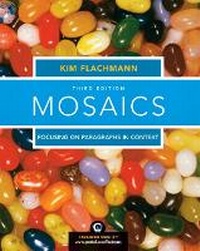
Mosaics
Focusing on Paragraphs in Context
3rd Edition
Published on 2. September 2004
Book
Paperback/Softback
736 pages
978-0-13-189348-1 (ISBN)
Description
For Developmental Writing, Basic Writing Skills, or Remedial Writing courses.
Students study their own writing! MOSAICS is a three-book writing series that focuses on students learning and studying their own writing to master the basics of grammar, writing and rhetorical modes.
Students study their own writing! MOSAICS is a three-book writing series that focuses on students learning and studying their own writing to master the basics of grammar, writing and rhetorical modes.
More details
Edition
3rd edition
Language
English
Place of publication
United States
Publishing group
Pearson Education (US)
Target group
Professional and scholarly
Dimensions
Height: 232 mm
Width: 191 mm
Weight
1066 gr
ISBN-13
978-0-13-189348-1 (9780131893481)
Copyright in bibliographic data and cover images is held by Nielsen Book Services Limited or by the publishers or by their respective licensors: all rights reserved.
Schweitzer Classification
Other editions

Content
I. THE WRITING PROCESS.
1. Getting Started.
2. Prewriting.
3. Writing.
4. Revising.
5. Editing.
II. WRITING EFFECTIVE PARAGRAPHS.
6. Describing.
7. Narrating.
8. Illustrating.
9. Analyzing a Process.
10. Comparing and Contrasting.
11. Dividing and Classifying.
12. Defining.
13. Analyzing Causes and Effects.
14. Arguing.
III. ESSAYS: PARAGRAPHS IN CONTEXT.
15. Recognizing an Essay.
16. How to Read an Essay.
17. How to Write an Essay.
18. Revising and Editing a Student Essay.
19. Revising and Editing Your Own Essay.
20. Writing Workshop.
IV. FROM READING TO WRITING.
21. Describing.
Amy Tan, Magpies.
Alice Walker, Longing to Die of Old Age.
22. Narrating.
Sandra Cisneros, Eleven.
Michael Arrendondo, Choosing the Path With Honor.
23. Illustrating.
"Diane", Homeless Woman Living in a Car.
Brent Staples, Walk on By.
24. Analyzing a Process.
Julia Bourland, Getting Out of Debt (And Staying Out)
Russell Freedman, Coming Over.
25. Comparing and Contrasting.
Ernesto Galarza, The Barrio.
Rachel Carson, A Fable for Tomorrow.
26. Dividing and Classifying.
Camille Lavington, Rapport: How to Ignite It.
Edwin Bliss, Categories of Time Use.
27. Defining.
Richard Rodriguez, Workers.
Jo Goodwin Parker, What is Poverty?
28. Analyzing Causes and Effects.
Linda Lee Andujar, Shedding the Weight of My Dad's Obsession.
Corky Clifton, Life Sentences.
29. Arguing.
Dwight Van Avery, Why Study English?
Tamara Roleff, Hate Crime Laws are Necessary.
V. THE HANDBOOK.
Introduction: Parts of Speech, Phrases, Clauses.
Unit One: Sentences.
30. Subjects and Verbs.
31. Fragments.
32. Fused Sentences and Comma Splices. Unit Tests.
Unit Two: Verbs.
33. Regular and Irregular Verbs.
34. Verb Tense.
35. Subject-Verb Agreement.
36. More on Verbs.
Unit Tests.
Unit Three: Pronouns.
37. Pronoun Problems.
38. Pronoun Reference and Point of View.
39. Pronoun Agreement.
Unit Tests.
Unit Four: Modifiers.
40. Adjectives.
41. Adverbs.
42. Modifier Errors.
Unit Tests.
Unit Five: Punctuation.
43. End Punctuation.
44. Commas.
45. Apostrophes.
46. Quotation Marks.
47. Other Punctuation Marks.
Unit Tests.
Unit Six: Mechanics.
48. Capitalization.
49. Abbreviations and Numbers.
Unit Tests.
Unit Seven: Effective Sentences.
50. Varying Sentence Structure.
51. Parallelism.
52. Combining Sentences.
Unit Tests.
Unit Eight: Choosing the Right Word.
53. Standard and Nonstandard English.
54. Easily Confused Words.
55. Spelling.
Unit Review.
Appendixes.
Credits.
Index.
1. Getting Started.
2. Prewriting.
3. Writing.
4. Revising.
5. Editing.
II. WRITING EFFECTIVE PARAGRAPHS.
6. Describing.
7. Narrating.
8. Illustrating.
9. Analyzing a Process.
10. Comparing and Contrasting.
11. Dividing and Classifying.
12. Defining.
13. Analyzing Causes and Effects.
14. Arguing.
III. ESSAYS: PARAGRAPHS IN CONTEXT.
15. Recognizing an Essay.
16. How to Read an Essay.
17. How to Write an Essay.
18. Revising and Editing a Student Essay.
19. Revising and Editing Your Own Essay.
20. Writing Workshop.
IV. FROM READING TO WRITING.
21. Describing.
Amy Tan, Magpies.
Alice Walker, Longing to Die of Old Age.
22. Narrating.
Sandra Cisneros, Eleven.
Michael Arrendondo, Choosing the Path With Honor.
23. Illustrating.
"Diane", Homeless Woman Living in a Car.
Brent Staples, Walk on By.
24. Analyzing a Process.
Julia Bourland, Getting Out of Debt (And Staying Out)
Russell Freedman, Coming Over.
25. Comparing and Contrasting.
Ernesto Galarza, The Barrio.
Rachel Carson, A Fable for Tomorrow.
26. Dividing and Classifying.
Camille Lavington, Rapport: How to Ignite It.
Edwin Bliss, Categories of Time Use.
27. Defining.
Richard Rodriguez, Workers.
Jo Goodwin Parker, What is Poverty?
28. Analyzing Causes and Effects.
Linda Lee Andujar, Shedding the Weight of My Dad's Obsession.
Corky Clifton, Life Sentences.
29. Arguing.
Dwight Van Avery, Why Study English?
Tamara Roleff, Hate Crime Laws are Necessary.
V. THE HANDBOOK.
Introduction: Parts of Speech, Phrases, Clauses.
Unit One: Sentences.
30. Subjects and Verbs.
31. Fragments.
32. Fused Sentences and Comma Splices. Unit Tests.
Unit Two: Verbs.
33. Regular and Irregular Verbs.
34. Verb Tense.
35. Subject-Verb Agreement.
36. More on Verbs.
Unit Tests.
Unit Three: Pronouns.
37. Pronoun Problems.
38. Pronoun Reference and Point of View.
39. Pronoun Agreement.
Unit Tests.
Unit Four: Modifiers.
40. Adjectives.
41. Adverbs.
42. Modifier Errors.
Unit Tests.
Unit Five: Punctuation.
43. End Punctuation.
44. Commas.
45. Apostrophes.
46. Quotation Marks.
47. Other Punctuation Marks.
Unit Tests.
Unit Six: Mechanics.
48. Capitalization.
49. Abbreviations and Numbers.
Unit Tests.
Unit Seven: Effective Sentences.
50. Varying Sentence Structure.
51. Parallelism.
52. Combining Sentences.
Unit Tests.
Unit Eight: Choosing the Right Word.
53. Standard and Nonstandard English.
54. Easily Confused Words.
55. Spelling.
Unit Review.
Appendixes.
Credits.
Index.