

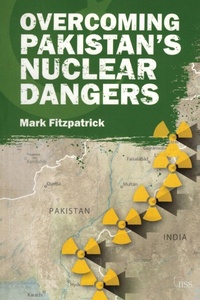
Overcoming Pakistan's Nuclear Dangers
1st Edition
Published on 20. March 2014
Book
Paperback/Softback
172 pages
978-1-138-79667-6 (ISBN)
Description
Pakistan's nuclear arsenal - the fastest growing in the world - raises concerns on many grounds. Although far from the scale of the Cold War, South Asia is experiencing a strategic arms race. And the more weapons there are, the more potential for theft, sabotage and nuclear terrorism. Worries that Pakistan's nuclear-weapons technology might again be transferred to nuclear aspirants have not been expunged. Being outside the nuclear club makes it harder to ensure nuclear safety. Of gravest concern is the potential for a nuclear war, triggered by another large-scale terrorist attack in India with Pakistani state fingerprints as in the 2008 Mumbai atrocity, this time followed by an Indian Army reprisal. Lowering the nuclear threshold, Pakistan has vowed to deter this with newly introduced battlefield nuclear weapons.
Mark Fitzpatrick evaluates each of the potential nuclear dangers, giving credit where credit is due. Understanding the risks of nuclear terrorism and nuclear accidents, Pakistani authorities have taken appropriate steps. Pakistan and India give less attention, however, to engaging each other on the issues that could spark a nuclear clash. The author argues that to reduce the nuclear dangers, Pakistan should be offered a formula for nuclear legitimacy, tied to its adopting policies associated with global nuclear norms.
Mark Fitzpatrick evaluates each of the potential nuclear dangers, giving credit where credit is due. Understanding the risks of nuclear terrorism and nuclear accidents, Pakistani authorities have taken appropriate steps. Pakistan and India give less attention, however, to engaging each other on the issues that could spark a nuclear clash. The author argues that to reduce the nuclear dangers, Pakistan should be offered a formula for nuclear legitimacy, tied to its adopting policies associated with global nuclear norms.
More details
Series
Language
English
Place of publication
London
United Kingdom
Publishing group
Taylor & Francis Ltd
Target group
College/higher education
Professional and scholarly
Dimensions
Height: 234 mm
Width: 156 mm
Thickness: 10 mm
Weight
275 gr
ISBN-13
978-1-138-79667-6 (9781138796676)
Copyright in bibliographic data and cover images is held by Nielsen Book Services Limited or by the publishers or by their respective licensors: all rights reserved.
Schweitzer Classification
Other editions
Additional editions
Mark Fitzpatrick
Overcoming Pakistan's Nuclear Dangers
Book
12/2020
1st Edition
Routledge
€246.40
Shipment within 10-20 days
Person
Mark Fitzpatrick is Director of the Non-Proliferation and Disarmament Programme at the International Institute for Strategic Studies (IISS). Before joining the Institute in 2005, he spent 26 years as a US diplomat. He is the author of The Iranian Nuclear Crisis: Avoiding worst-case outcomes (Routledge for IISS, 2008).
Content
Acknowledgements -- Glossary and acronyms -- Introduction -- Chapter One Pakistan's nuclear programme -- Beginnings -- Uranium enrichment -- Plutonium production -- Warheads -- Delivery systems -- Nuclear policy -- No intention to operationalise Nasr -- Monetary costs -- Civilian nuclear sector -- Chapter Two The potential for nuclear use -- India-Pakistan conflicts in the nuclear age -- Assessment -- Chapter Three The potential for a nuclear arms race -- Pakistan's motivations for TNWs -- Destabilising impact of TNWs -- Strain on command and control -- Nuclearisation of the sea -- Impact on CTBT and FMCT -- NATO analogies -- Chapter Four The potential for nuclear terrorism -- Defining nuclear terrorism -- Presence of terrorist groups -- Terrorist interest in nuclear weapons -- Western assessments -- Nuclear-security measures -- Paranoia about the US -- Potential for insider collusion -- Transport vulnerability -- Comparison with India and other countries -- Assessment -- Chapter Five The potential for onward prolife ration and for nuclear accidents -- Onward proliferation -- Nuclear transfer to Saudi Arabia? -- Nuclear safety risks -- Conclusion -- Nuclear normalisation - Index.