

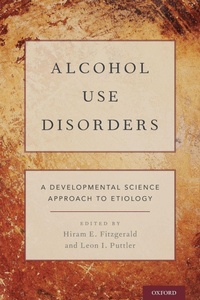
Alcohol Use Disorders
A Developmental Science Approach to Etiology
Published on 22. February 2018
Book
Hardback
398 pages
978-0-19-067600-1 (ISBN)
Description
Alcohol Use Disorders takes a life-span/developmental approach to understanding the etiologic processes that heighten risk or resilience factors for alcohol use disorders (AUD). Contemporary understanding benefits from thirty years of longitudinal studies that were specifically designed to assess pre-onset origins, predictors of onset, and outcomes through early adulthood. The overriding theme of the volume is that the origins and expression of AUD are best understood within the context of developmental processes and dynamic systems organization and change. Such dynamic systems give rise to diverse pathways that are characterized by multi-finality and equi-finality due to the exchanges among genes, epigenetic processes, and the complexities of the individual organism's experiential world. For some individuals, these dynamic processes lead to risk cumulative or cascade effects that embody adverse childhood experiences that exacerbate risk, predict early onset drinking (or smoking), and are highly likely to lead to AUD during the transitions to adolescence and emerging adulthood. In other cases, protective factors within or outside of the individual's immediate family enable embodiment of normative stress regulatory systems and neural networks that support resilience and prevention of AUD and other addictive behaviors.
Reviews / Votes
"The book thoroughly covers alcohol use disorders in terms of etiology and developmental transitions. It is a testament to Robert Zucker's work in the field at the University of Michigan for the past 40 years. The book will be useful for researchers and clinicians who are interested in alcohol use disorders." --Doody's Book Review ServiceMore details
Language
English
Place of publication
New York
United States
Target group
Professional and scholarly
Dimensions
Height: 260 mm
Width: 183 mm
Thickness: 26 mm
Weight
941 gr
ISBN-13
978-0-19-067600-1 (9780190676001)
Copyright in bibliographic data and cover images is held by Nielsen Book Services Limited or by the publishers or by their respective licensors: all rights reserved.
Schweitzer Classification
Other editions
Additional editions
Hiram E. Fitzgerald | Leon I. Puttler
Alcohol Use Disorders
A Developmental Science Approach to Etiology
E-Book
12/2017
OUP eBook
€68.49
Available for download
Hiram E. Fitzgerald | Leon I. Puttler
Alcohol Use Disorders
A Developmental Science Approach to Etiology
E-Book
12/2017
OUP eBook
€68.49
Available for download
Persons
Hiram E. Fitzgerald is University Distinguished Professor in the Department of Psychology and Associate Provost for University Outreach and Engagement at Michigan State University. He has been associated with the Michigan Longitudinal Study for 30 years. His major areas of research include the study of infant and family development in community contexts, the impact of fathers on early child development, 0-5 age boys and risk, the etiology of alcoholism, implementation of systemic community models of organizational process and change, and broad issues related to the scholarship of engagement.
Leon I. Puttler is a clinical psychologist working in the Department of Psychiatry at the University of Michigan. He is the Project Director of the Michigan Longitudinal Study where he has worked for 22 years. Current research interests include the development of addictions with an emphasis on risk factors associated with its development, resilience in deviating from expected pathways, and the effects of recovery status of parental alcohol problems on the functioning of children and their parents; Child sexual abuse; Psychotherapy with children, adults, couples, and families.
Leon I. Puttler is a clinical psychologist working in the Department of Psychiatry at the University of Michigan. He is the Project Director of the Michigan Longitudinal Study where he has worked for 22 years. Current research interests include the development of addictions with an emphasis on risk factors associated with its development, resilience in deviating from expected pathways, and the effects of recovery status of parental alcohol problems on the functioning of children and their parents; Child sexual abuse; Psychotherapy with children, adults, couples, and families.
Content
Part I. Alcohol Use Disorders: Perspectives from Developmental Psychopathology and Developmental Science
Chapter 1. Developmental Science, Alcohol Use Disorders and the Risk-Resilience Continuum
Leon Puttler, Robert A. Zucker, and Hiram E. Fitzgerald
Chapter 2. A Developmental Psychopathology Perspective on Substance Use: Illustrations from the Study of Child Maltreatment
Dante Cicchetti and Fred Rogosch
Chapter 3. Multifinality, Equifinality and the Heterogeneity of Alcoholism.
Andrea Hussong, Drew Rothenberg, Ruth K. Smith, and Maleeha Haroon
Part II. Alcohol Use Disorders: Developmental Neurobiology and Early Organization of Risk
Chapter 4. A Developmental Perspective on the Genetic Basis of Substance Use and Abuse
Elisa Trucoo, Gabriel L. Schlomer, and Brian Hicks
Chapter 5. Alcohol Used Disorder: Role of Epigenetics
Igor Ponomarev
Chapter 6: Brain Functional Contributors to Vulnerability for Substance Abuse:
Mary M. Heitzeg
Part III. Alcohol Use Disorders: Developmental Transitions from Infancy to Adolescence
Chapter 7. Etiological processes for substance use disorders beginning in infancy
Rena D. Eiden
Chapter 8. Sleep Problems during the Preschool Years and Beyond as a Marker of Risk and Resilience in Substance Use?
Maria Wong
Chapter 9. Self-regulation, Behavioral Inhibition, and Risk for Alcoholism and Substance Use Disorders.
Joel T. Nigg
Chapter 10: A Framework for Studying Parental Socialization of Child and Adolescent Substance Use.
John Donovan
Chapter 11: Alcohol and Youth: Evaluations of Developmental Impact
Guadalupe A. Bacio, Ty Brumback and Sandra A. Brown
Part IV. Alcohol and Substance Use Disorders: Developmental Transitions from Adolescence to Emergent Adulthood
Chapter12: Substance Use and Abuse during Adolescence and the Transition to Adulthood are Developmental Phenomena: Conceptual and Empirical Considerations.
John Schulenberg, Julie Maslowsky, and Justin Jager
Chapter 13. Who Is Using Alternative Tobacco Products and Why? Research on Adolescents and Young Adults
Alexandra Loukas and Deepti Agarwal
Chapter 14. Developmental Perspectives on Cigarette Smoking: Findings from the IU Smoking Survey
Laurie Chassin, Clark Presson, Jonathan T. Macy and Steven J. Sherman
Chapter 15: Alcohol Use and Consequences across Developmental Transitions during College and Beyond
James R. Ashenhurst and Kim Fromme
Chapter 16. Developmental Transitions and College Binge Drinking: Why Parents Still Matter.
Michael Ichiyama, Kayla Swart, Annie Wescott, Sarah Harrison, and Kelly Birch
Chapter 17. Personality Processes Related to the Development and Resolution of Alcohol Use Disorders: A Long and Continually Evolving Story
Kenneth Sher, Andrew Littlefield, and Matthew Lee
Part V. Alcohol Use Disorders and Marital Relationships
Chapter 18: Developmental Transitions and Emergent Causative Influences: Intimacy, Influence, and Alcohol Problems over the Early Years of Marriage.
Ash Levitt and Kenneth Leonard
Chapter 19: Social Psychology of Alcohol Involvement, Marital Dissolution, and Marital Interaction Processes across Multiple Time Scales
James A. Cranford and Catharine E. Fairbarn
Part VI. Developmental Designs: Methodological and Statistical Innovations
Chapter 20. Integrative Data Analysis from a Unifying Research Synthesis Perspective
Eun-Young Mun, and Anne E. Ray
Chapter 21. New Statistical Methods Inspired by Data Collected from Alcohol and Substance Abuse Research.
Anne Buu and Runze Li
Index
Chapter 1. Developmental Science, Alcohol Use Disorders and the Risk-Resilience Continuum
Leon Puttler, Robert A. Zucker, and Hiram E. Fitzgerald
Chapter 2. A Developmental Psychopathology Perspective on Substance Use: Illustrations from the Study of Child Maltreatment
Dante Cicchetti and Fred Rogosch
Chapter 3. Multifinality, Equifinality and the Heterogeneity of Alcoholism.
Andrea Hussong, Drew Rothenberg, Ruth K. Smith, and Maleeha Haroon
Part II. Alcohol Use Disorders: Developmental Neurobiology and Early Organization of Risk
Chapter 4. A Developmental Perspective on the Genetic Basis of Substance Use and Abuse
Elisa Trucoo, Gabriel L. Schlomer, and Brian Hicks
Chapter 5. Alcohol Used Disorder: Role of Epigenetics
Igor Ponomarev
Chapter 6: Brain Functional Contributors to Vulnerability for Substance Abuse:
Mary M. Heitzeg
Part III. Alcohol Use Disorders: Developmental Transitions from Infancy to Adolescence
Chapter 7. Etiological processes for substance use disorders beginning in infancy
Rena D. Eiden
Chapter 8. Sleep Problems during the Preschool Years and Beyond as a Marker of Risk and Resilience in Substance Use?
Maria Wong
Chapter 9. Self-regulation, Behavioral Inhibition, and Risk for Alcoholism and Substance Use Disorders.
Joel T. Nigg
Chapter 10: A Framework for Studying Parental Socialization of Child and Adolescent Substance Use.
John Donovan
Chapter 11: Alcohol and Youth: Evaluations of Developmental Impact
Guadalupe A. Bacio, Ty Brumback and Sandra A. Brown
Part IV. Alcohol and Substance Use Disorders: Developmental Transitions from Adolescence to Emergent Adulthood
Chapter12: Substance Use and Abuse during Adolescence and the Transition to Adulthood are Developmental Phenomena: Conceptual and Empirical Considerations.
John Schulenberg, Julie Maslowsky, and Justin Jager
Chapter 13. Who Is Using Alternative Tobacco Products and Why? Research on Adolescents and Young Adults
Alexandra Loukas and Deepti Agarwal
Chapter 14. Developmental Perspectives on Cigarette Smoking: Findings from the IU Smoking Survey
Laurie Chassin, Clark Presson, Jonathan T. Macy and Steven J. Sherman
Chapter 15: Alcohol Use and Consequences across Developmental Transitions during College and Beyond
James R. Ashenhurst and Kim Fromme
Chapter 16. Developmental Transitions and College Binge Drinking: Why Parents Still Matter.
Michael Ichiyama, Kayla Swart, Annie Wescott, Sarah Harrison, and Kelly Birch
Chapter 17. Personality Processes Related to the Development and Resolution of Alcohol Use Disorders: A Long and Continually Evolving Story
Kenneth Sher, Andrew Littlefield, and Matthew Lee
Part V. Alcohol Use Disorders and Marital Relationships
Chapter 18: Developmental Transitions and Emergent Causative Influences: Intimacy, Influence, and Alcohol Problems over the Early Years of Marriage.
Ash Levitt and Kenneth Leonard
Chapter 19: Social Psychology of Alcohol Involvement, Marital Dissolution, and Marital Interaction Processes across Multiple Time Scales
James A. Cranford and Catharine E. Fairbarn
Part VI. Developmental Designs: Methodological and Statistical Innovations
Chapter 20. Integrative Data Analysis from a Unifying Research Synthesis Perspective
Eun-Young Mun, and Anne E. Ray
Chapter 21. New Statistical Methods Inspired by Data Collected from Alcohol and Substance Abuse Research.
Anne Buu and Runze Li
Index