

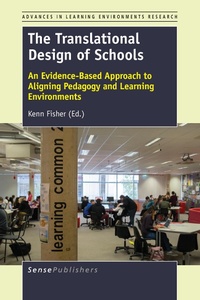
The Translational Design of Schools
An Evidence-Based Approach to Aligning Pedagogy and Learning Environments
Published on 1. January 2016
Book
Paperback/Softback
250 pages
978-94-6300-362-9 (ISBN)
Description
This book summarises the deep level of research carried out since 2008 within the emerging, evidence-based, translational design (EBD) approach to learning environments research. This programme has been carried out by the Learning Environments Applied Research Network of the University of Melbourne, its partners and colleagues. The chapters are based on ten, 3--4 year full-time doctoral research dissertations with each chapter outlining the key findings from these studies.
The book links the chapters through the lens of evidence-based design which originates from the health planning sector. The rigour of that sector is based on the well-accepted methodology of translational research used in clinical medicine for many years.
In adapting that practice, translational medicine is akin to translational development. When applied to other sectors and disciplines this becomes EBD health planning, translational engineering or, in the case of evidence-based architecture, translational design. Thus educational planning becomes the translational design of learning environments. These doctoral dissertations are examples of this approach.
The chapters are organised into a narrative that examines evidence-based design through three key themes. The first explores key issues in learning environments, with three chapters covering spatial literacy in pedagogical practice; engaging students in learning spaces; and re-placing classrooms through flexibility. The second theme focusses on the socio-cultural implications of learning environments exploring student identity formation; aligning learning environment affordances for effective professional development in an innovative senior secondary school; and occupying curriculum as space in the arts. The third theme investigates the design implications for learning environments with three chapters covering the role of the primary school library in learning; plans and pedagogies: school design as socio-spatial assemblage; and evaluating the spatial changes in a technology enabled primary years setting.
The book links the chapters through the lens of evidence-based design which originates from the health planning sector. The rigour of that sector is based on the well-accepted methodology of translational research used in clinical medicine for many years.
In adapting that practice, translational medicine is akin to translational development. When applied to other sectors and disciplines this becomes EBD health planning, translational engineering or, in the case of evidence-based architecture, translational design. Thus educational planning becomes the translational design of learning environments. These doctoral dissertations are examples of this approach.
The chapters are organised into a narrative that examines evidence-based design through three key themes. The first explores key issues in learning environments, with three chapters covering spatial literacy in pedagogical practice; engaging students in learning spaces; and re-placing classrooms through flexibility. The second theme focusses on the socio-cultural implications of learning environments exploring student identity formation; aligning learning environment affordances for effective professional development in an innovative senior secondary school; and occupying curriculum as space in the arts. The third theme investigates the design implications for learning environments with three chapters covering the role of the primary school library in learning; plans and pedagogies: school design as socio-spatial assemblage; and evaluating the spatial changes in a technology enabled primary years setting.
More details
Series
Language
English
Place of publication
Germany
Target group
Professional and scholarly
Product notice
Paperback (trade)
Unsewn / adhesive bound
Dimensions
Height: 233 mm
Width: 154 mm
Thickness: 17 mm
Weight
365 gr
ISBN-13
978-94-6300-362-9 (9789463003629)
Copyright in bibliographic data and cover images is held by Nielsen Book Services Limited or by the publishers or by their respective licensors: all rights reserved.
Schweitzer Classification
Other editions
Additional editions
Kenn Fisher
The Translational Design of Schools
An Evidence-Based Approach to Aligning Pedagogy and Learning Environments
E-Book
10/2016
Brill
€37.45
Available for download
Kenn Fisher
The Translational Design of Schools
An Evidence-Based Approach to Aligning Pedagogy and Learning Environments
Book
01/2016
Brill
€114.50
Shipment within 15-20 days