


Metacognitive Therapy
Distinctive Features
1st Edition
Published on 30. January 2009
Book
Paperback/Softback
152 pages
978-0-415-43499-7 (ISBN)
Description
Metacognitive therapy is based on the principle that worry and rumination are universal processes leading to emotional disorder. These processes are linked to erroneous beliefs about thinking and unhelpful self-regulation strategies.
Metacognitive Therapy: Distinctive Features is an introduction to the theoretical foundations and therapeutic principles of metacognitive therapy. Divided into two sections, Theory and Practice and using thirty key points, the authors explore how metacognitive therapy can allow people to escape from repetitive thinking patterns that often lead to prolonged psychological distress.
This book is a valuable resource for both students and practitioners wishing to develop a basic understanding of metacognitive therapy and how it compares and contrasts with traditional forms of cognitive behavioural therapy.
Metacognitive Therapy: Distinctive Features is an introduction to the theoretical foundations and therapeutic principles of metacognitive therapy. Divided into two sections, Theory and Practice and using thirty key points, the authors explore how metacognitive therapy can allow people to escape from repetitive thinking patterns that often lead to prolonged psychological distress.
This book is a valuable resource for both students and practitioners wishing to develop a basic understanding of metacognitive therapy and how it compares and contrasts with traditional forms of cognitive behavioural therapy.
Reviews / Votes
"This book provides a skilful mix of theory and practice that should be essential reading for all wanting to learn more about MCT... I highly recommend it." - Hans M. Nordahl, Professor of Clinical Psychology, Norwegian University of Science and Technology, Trondheim, Norway"The book is unique in that it expands upon traditional CBT and adds a dimension that may prove to establish metacognitive therapy (MCT) as a distinctive therapeutic technique. The approach offered in this book will make a definite contribution to the field of psychotherapy--for therapists who do not practice traditional CBT as well as for those who do. This book will be of particular value to persons practicing CBT who wish to understand more of the weaknesses (and presumably, therefore, the strengths) of the traditional CBT model.Represents a new paradigm in the treatment of mental disorders. Its foundations are rooted solidly in traditional psychotherapeutic thought (particularly psychoanalysis) yet also within our latest understanding of the developmental and neurological aspects of the brain. It is clearly a book for the seasoned and knowledgeable psychologist." - Richard H. Cox, President Emeritus/Professor of Forest Institute of Professional Psychology, in APA Journals, PsycCRITIQUES
More details
Series
Language
English
Place of publication
London
United Kingdom
Publishing group
Taylor & Francis Ltd
Target group
College/higher education
Professional and scholarly
Postgraduate, Professional, and Professional Practice & Development
Product notice
Paperback (UK-B)
Illustrations
7 s/w Zeichnungen
7 Line drawings, black and white
Dimensions
Height: 184 mm
Width: 123 mm
Thickness: 14 mm
Weight
157 gr
ISBN-13
978-0-415-43499-7 (9780415434997)
Copyright in bibliographic data and cover images is held by Nielsen Book Services Limited or by the publishers or by their respective licensors: all rights reserved.
Schweitzer Classification
Other editions
New editions

Book
approx. 09/2027
2nd Edition
Routledge
€19.00
Not yet published
Additional editions
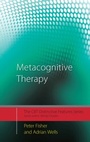
Book
01/2009
1st Edition
Routledge
€163.42
Shipment within 15-20 days
E-Book
01/2009
Routledge
€27.49
Available for download
E-Book
01/2009
Routledge
€27.49
Available for download
Persons
Peter Fisher is a Lecturer in Clinical Psychology at the University of Liverpool and a Clinical Psychologist with Manchester Mental Health and Social Care Trust.
Adrian Wells is Professor of Clinical and Experimental Psychopathology at the University of Manchester and Professor II in Clinical Psychology at Norwegian University, Trondheim.
Adrian Wells is Professor of Clinical and Experimental Psychopathology at the University of Manchester and Professor II in Clinical Psychology at Norwegian University, Trondheim.
Content
Part I: The Distinctive Theoretical Features of Metacognitive Therapy. A Focus on Metacognition. An Information Processing Model of Psychological Disorder. The Cognitive Attentional Syndrome (CAS). Metacognitive Beliefs. Object and Metacognitive Modes. Reformulated A-B-C Analysis. Detached Mindfulness. Executive Control and Attentional Flexibility. Levels of Control. Types of Knowledge. Processes Beyond Cognitive Content. View of Self-awareness. Varieties of Change. Disorder Specific Models. A Universal Treatment? Part II: The Distinctive Practical Features of Metacognitive Therapy. Conducting Therapy at the Metacognitive Level. Assessment of Metacognition. Case Formulation. Meta-level Socialisation Procedures. Shifting to a Metacognitive Mode of Processing. Modifying Negative Metacognitive Beliefs. Modifying Positive Metacognitive Beliefs. Worry/Rumination Postponement. Attention Training Technique. Implementing Detached Mindfulness. Situational Attentional Refocusing. Targeting Meta-emotions. Delivering Metacognitively Focused Exposure. Developing New Plans for Processing. Integrating MCT Techniques: A Case Study.