

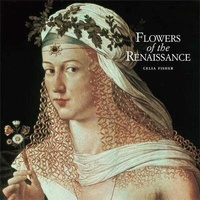
Flowers of the Renaissance
Published on 7. April 2011
Book
Hardback
176 pages
978-0-7112-3068-2 (ISBN)
Description
Flowers pop up everywhere in Renaissance art. Why are there pinks in a pot above a Crivelli Madonna, roses scattered across Botticelli's Primavera and columbines in the borders of many a fifteenth-century manuscript? This is the first book to explore how and why flowers feature so extensively in the extraordinary art of the Renaissance.
Choosing twenty favourite plants, the author introduces each and then describes and illustrates a number of wonderful examples. The new naturalism in Renaissance art makes every one clearly identifiable but there is also still a reason and meaning behind each chosen flower. Even their names can be loaded with meaning and the attributes of these flowers were well known to their original audience. Today we need to have these things explained - whether the flower is in a Tudor portrait, a tapestry, a Leonardo, a piece of jewellery or even on a plate or spoon.
These flowers were valued by everyone from emperors to needlewomen: this delightful and revelatory book seeks out these hidden treasures and provides an unrivalled exploration of their beauty and their significance.
Choosing twenty favourite plants, the author introduces each and then describes and illustrates a number of wonderful examples. The new naturalism in Renaissance art makes every one clearly identifiable but there is also still a reason and meaning behind each chosen flower. Even their names can be loaded with meaning and the attributes of these flowers were well known to their original audience. Today we need to have these things explained - whether the flower is in a Tudor portrait, a tapestry, a Leonardo, a piece of jewellery or even on a plate or spoon.
These flowers were valued by everyone from emperors to needlewomen: this delightful and revelatory book seeks out these hidden treasures and provides an unrivalled exploration of their beauty and their significance.
Reviews / Votes
This study is pleasurable as it is full of insight. Scotsman Today we need books like Fisher's to help us unlock the hidden messages behind the petals. Plaza Watch Sumptuously illustrated, filled with fascinating details and esoteric information, this is a charming book for any garden, flower or art aficionado to dip into at leisure. A delight for anyone interested in the meaning of flowers in Renaissance art. Cassone An accomplished art historian [Fisher] is particularly illuminating about the lesser flowers of Renaissance art: the colombines, poppies, peonies, stocks, strawberries, thistles, larkspurs, periwinkles and grasses which she ties together in unexpected ways. Times Literary Supplement Editor's choice: The revelatory text and copious illustrations bring out an array of hidden treasures, whether in the grass at a saint's feet, on the sleeve of an Elizabethan lady, or inside the lid of a Florentine wedding chest, which shed a delighful new light on Renaissance art. Good Book Guide An elegantly designed oversize volume generously illustrated with full-page Renaissance paintings and some textiles and tableware. Book News In its well-focussed way this book provides an epic manner in which to learn about plants and gardens and, more importantly, gives a glimpse of how they connect to so much else. HortusMore details
Language
English
Place of publication
United Kingdom
Publishing group
Quarto Publishing PLC
Illustrations
120 colour illustrations
Dimensions
Height: 280 mm
Width: 280 mm
ISBN-13
978-0-7112-3068-2 (9780711230682)
Copyright in bibliographic data and cover images is held by Nielsen Book Services Limited or by the publishers or by their respective licensors: all rights reserved.
Schweitzer Classification
Person
Celia Fisher is both an art historian and a plantswoman. At the Royal Botanic Gardens, Kew, she researched the uses of plants worldwide before going on to study at the Courtauld Institute. There she specialised in the history of plants in art. She now lectures and identifies flowers in artworks for galleries and art historians. Her articles have appeared in art and gardening journals, including Apollo, Country Life and Hortus and she has written Flowers in the National Gallery for London's National Gallery and Medieval Flowers for the British Library. Her main relaxation is gardening and her town garden has been open under the National Gardens Scheme. She lives in Kew, Surrey.
Content
Introduction
The Renaissance garden
Roses
Lilies
Irises
Columbines
Pinks and carnations
Tulips
Poppies and peonies
Wallflowers and stocks
Something bue
The flower-strewn grass
The daisy family
Daffodils and narcissi
Violas and violets
Strawberries
Thistles
Conclusion
The Renaissance garden
Roses
Lilies
Irises
Columbines
Pinks and carnations
Tulips
Poppies and peonies
Wallflowers and stocks
Something bue
The flower-strewn grass
The daisy family
Daffodils and narcissi
Violas and violets
Strawberries
Thistles
Conclusion