


The Soviet System
Models of a Political Society
1st Edition
Will be published approx. on 15. February 2012
Book
Paperback/Softback
214 pages
978-1-4128-4275-4 (ISBN)
Description
Many things make up a modern society: its history, culture, natural setting, wealth, classes, and peoples. For some, the power structure, the political system, lies at the heart of the social order. Russia has long been a "political society" and its future may also be decided in large part by the power structure. A good way to understand Russia and other modern societies is to examine the ties between the "Soviet system" and the rest of the country's life. George Fischer argues that it is these ties that explain much about the consequences of a communist state.
The Soviet System, originally published in 1968, presents a provocative challenge to prevailing theories of modernization throughout the world. In this book Fischer takes issue with current assumptions that societies developing an advanced, fully modern economy and culture must inevitably adopt Western-type social and political institutions. The author holds that our understanding of contemporary nations is impeded by assessing them in terms of the prevailing American theory of "pluralism." The notion that a "pluralist" division of labor pervades all of modern society is challenged and tested in the context of the former Soviet Union as a modern society.
The emergence of the dual executive, a leader with a special mixture of political and economic know-how, is emphasized as a trend toward a "monist" model of society. Fischer demonstrates how this model, in which all power is public and both industry and culture remain part of a non-capitalist, non-liberal state structure, can prove useful in studying social change today. The result is a book of value to all scholars and students dealing with the social and political systems of both developing and advanced societies-long after the Soviet system of rule dissolved.
The Soviet System, originally published in 1968, presents a provocative challenge to prevailing theories of modernization throughout the world. In this book Fischer takes issue with current assumptions that societies developing an advanced, fully modern economy and culture must inevitably adopt Western-type social and political institutions. The author holds that our understanding of contemporary nations is impeded by assessing them in terms of the prevailing American theory of "pluralism." The notion that a "pluralist" division of labor pervades all of modern society is challenged and tested in the context of the former Soviet Union as a modern society.
The emergence of the dual executive, a leader with a special mixture of political and economic know-how, is emphasized as a trend toward a "monist" model of society. Fischer demonstrates how this model, in which all power is public and both industry and culture remain part of a non-capitalist, non-liberal state structure, can prove useful in studying social change today. The result is a book of value to all scholars and students dealing with the social and political systems of both developing and advanced societies-long after the Soviet system of rule dissolved.
More details
Language
English
Place of publication
New York
United States
Publishing group
Taylor & Francis Inc
Target group
Professional and scholarly
Dimensions
Height: 229 mm
Width: 152 mm
Weight
260 gr
ISBN-13
978-1-4128-4275-4 (9781412842754)
Copyright in bibliographic data and cover images is held by Nielsen Book Services Limited or by the publishers or by their respective licensors: all rights reserved.
Schweitzer Classification
Other editions
Additional editions
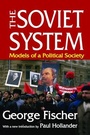
Book
09/2017
1st Edition
Routledge
€215.41
Shipment within 10-20 days
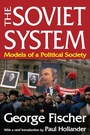
E-Book
07/2017
Routledge
€64.49
Available for download
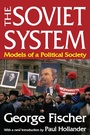
E-Book
07/2017
Routledge
€64.49
Available for download
Person
George Fischer
Content
The Future of the Soviet System; 1: A Sample of Executives; 2: Types of Career: Is There a Trend?; 3: The Social Origin of Executives; 4: Schooling; 5: Past Work; 6: Current Standing; A New Model of modern Society?