

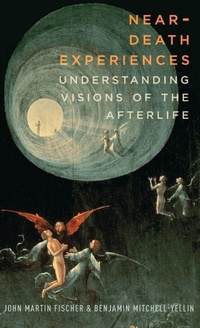
Near-Death Experiences
Understanding Our Visions of the Afterlife
Published on 4. August 2016
Book
Hardback
208 pages
978-0-19-046660-2 (ISBN)
Description
Near-death experiences offer a glimpse not only into the nature of death but also into the meaning of life. They are not only useful tools to aid in the human quest to understand death but are also deeply meaningful, transformative experiences for the people who have them.
In a unique contribution to the growing and popular literature on the subject, philosophers John Martin Fischer and Benjamin Mitchell-Yellin examine prominent near-death experiences, such as those of Pam Reynolds, Eben Alexander and Colton Burpo. They combine their investigations with critiques of the narratives' analysis by those who take them to show that our minds are immaterial and heaven is for real. In contrast, the authors provide a blueprint for a science-based explanation. Focusing on the question of whether near-death experiences provide evidence that consciousness is separable from our brains and bodies, Fischer and Mitchell-Yellin give a naturalistic account of the profound meaning and transformative effects that these experiences engender in many. This book takes the reality of near-death experiences seriously. But it also shows that understanding them through the tools of science is completely compatible with acknowledging their profound meaning.
In a unique contribution to the growing and popular literature on the subject, philosophers John Martin Fischer and Benjamin Mitchell-Yellin examine prominent near-death experiences, such as those of Pam Reynolds, Eben Alexander and Colton Burpo. They combine their investigations with critiques of the narratives' analysis by those who take them to show that our minds are immaterial and heaven is for real. In contrast, the authors provide a blueprint for a science-based explanation. Focusing on the question of whether near-death experiences provide evidence that consciousness is separable from our brains and bodies, Fischer and Mitchell-Yellin give a naturalistic account of the profound meaning and transformative effects that these experiences engender in many. This book takes the reality of near-death experiences seriously. But it also shows that understanding them through the tools of science is completely compatible with acknowledging their profound meaning.
Reviews / Votes
John Martin Fischer and Benjamin Mitchell-Yellin's book is the gold standard for philosophical work aimed at a popular audience. Fischer and Mitchell-Yellin make nuanced, philosophically interesting arguments about a topic largely unexplored by academic philosophers and manage to do so in a way that is accessible to any intellectually curious reader. * Travis Timmerman, The Philosophical Quarterly * provides a brief yet fascinating analysis of a much discussed, yet little understood area of medical science * Suzi Higton, The Expository Times * Basing their definition of the findings of the Immortality Project (2012-15) they argue their case convincingly, but they are careful not to belittle or ridicule the effects which such experiences can have. * Steve Craggs, Northern Echo *More details
Language
English
Place of publication
New York
United States
Target group
College/higher education
Dimensions
Height: 222 mm
Width: 145 mm
Thickness: 16 mm
Weight
423 gr
ISBN-13
978-0-19-046660-2 (9780190466602)
Copyright in bibliographic data and cover images is held by Nielsen Book Services Limited or by the publishers or by their respective licensors: all rights reserved.
Schweitzer Classification
Other editions
Additional editions
John Martin Fischer | Benjamin Mitchell-Yellin
Near-Death Experiences
Understanding Visions of the Afterlife
E-Book
05/2016
1st Edition
OUP eBook
€9.99
Available for download
John Martin Fischer | Benjamin Mitchell-Yellin
Near-Death Experiences
Understanding Visions of the Afterlife
E-Book
05/2016
1st Edition
OUP eBook
€9.99
Available for download
Persons
John Martin Fischer is Distinguished Professor of Philosophy at the University of California, Riverside, where he has held a University of California President's Chair (2006-10). He was President of the American Philosophical Association, Pacific Division (2013-4). He was Project Leader of The Immortality Project (2012-15), sponsored by The John Templeton Foundation.
Benjamin Mitchell-Yellin is Assistant Professor of Philosophy at Sam Houston State University. Previously, he was the Postdoctoral Fellow for the Immortality Project (2012-2015), sponsored by The John Templeton Foundation.
Benjamin Mitchell-Yellin is Assistant Professor of Philosophy at Sam Houston State University. Previously, he was the Postdoctoral Fellow for the Immortality Project (2012-2015), sponsored by The John Templeton Foundation.
Content
Preface
Chapter One: Introduction
Chapter Two: Two Famous Near-Death Experiences
Chapter Three: When Exactly Do the Near-Death Experiences Take Place?
Chapter Four: Must an Explanation of Near-Death Experiences Appeal to the Nonphysical?
Chapter Five: Are Lucid Experiences Necessarily Accurate?
Chapter Six: Near-Death Experiences in the Blind
Chapter Seven: Near-Death Experiences in Children and throughout the World
Chapter Eight: Why Expect Near-Death Experiences to be Explained by a Single Factor?
Chapter Nine: Are Simpler Explanations More Likely to be True?
Chapter Ten: Near-Death Experiences, Transformation, and the Afterlife
Chapter Eleven: A Strategy for Explaining Near-Death Experiences
Chapter Twelve: Confirmation Bias: We Believe What We Want to Believe
Chapter Thirteen: Awe, Wonder, and Hope
References
Chapter One: Introduction
Chapter Two: Two Famous Near-Death Experiences
Chapter Three: When Exactly Do the Near-Death Experiences Take Place?
Chapter Four: Must an Explanation of Near-Death Experiences Appeal to the Nonphysical?
Chapter Five: Are Lucid Experiences Necessarily Accurate?
Chapter Six: Near-Death Experiences in the Blind
Chapter Seven: Near-Death Experiences in Children and throughout the World
Chapter Eight: Why Expect Near-Death Experiences to be Explained by a Single Factor?
Chapter Nine: Are Simpler Explanations More Likely to be True?
Chapter Ten: Near-Death Experiences, Transformation, and the Afterlife
Chapter Eleven: A Strategy for Explaining Near-Death Experiences
Chapter Twelve: Confirmation Bias: We Believe What We Want to Believe
Chapter Thirteen: Awe, Wonder, and Hope
References