

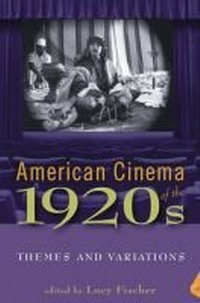
American Cinema of the 1920s
Themes and Variations
Published on 15. April 2009
Book
Hardback
312 pages
978-0-8135-4484-7 (ISBN)
Description
During the 1920s, sound revolutionized the motion picture industry and cinema continued as one of the most significant and popular forms of mass entertainment in the world. Film studios were transformed into major corporations, hiring a host of craftsmen and technicians including cinematographers, editors, screenwriters, and set designers. The birth of the star system supported the meteoric rise and celebrity status of actors including Charlie Chaplin, Mary Pickford, Joan Crawford, Greta Garbo, and Rudolph Valentino while black performers (relegated to 'race films') appeared infrequently in mainstream movies. The classic Hollywood film style was perfected and significant film genres were established: the melodrama, western, historical epic, and romantic comedy, along with slapstick, science fiction, and fantasy. In ten original essays, ""American Cinema of the 1920s"" examines the film industry's continued growth and prosperity while focusing on important themes of the era. Some of the films discussed in this volume include: ""Flesh and the Devil"", ""Applause"", ""The Jazz Singer"", ""Salome"", ""The Affairs of Anatol"", and ""The Electric House"".
More details
Series
Language
English
Place of publication
New Brunswick, NJ
United States
Illustrations
33
Dimensions
Height: 235 mm
Width: 156 mm
Weight
650 gr
ISBN-13
978-0-8135-4484-7 (9780813544847)
Copyright in bibliographic data and cover images is held by Nielsen Book Services Limited or by the publishers or by their respective licensors: all rights reserved.
Schweitzer Classification
Other editions
Additional editions
E-Book
04/2009
1st Edition
Rutgers University Press
€99.99
Available for download