

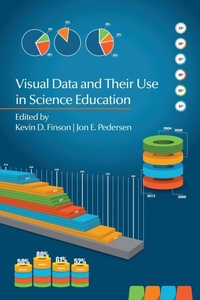
Visual Data and Their Use in Science Education
Published on 25. April 2013
Book
Paperback/Softback
350 pages
978-1-62396-204-3 (ISBN)
Description
Visual Data in Science Education builds upon previous work done by the editors to bring some definition to the meaning of visual data as it relates to education, and highlighted the breadth of types and uses of visual data across the major academic disciplines. In this book, the editors have brought this focus specifically to science education through the contributions of colleagues in the field who actively research about and engage in teaching with visual data. The book begins by examining how the brain functions with respect to processing visual data, then explores models of conceptual frameworks, which then leads into how related ideas are actuated in education settings ranging from elementary science classrooms to college environments. As a whole, this book fosters a more coherent image of the multifaceted process of science teaching and learning that is informed by current understandings of science knowledge construction, the scientific enterprise, and the millennium student as they relate to visual data.
More details
Language
English
Place of publication
Charlotte
United States
Publishing group
Emerald Publishing Inc
Target group
College/higher education
Professional and scholarly
Dimensions
Height: 234 mm
Width: 156 mm
Thickness: 19 mm
Weight
532 gr
ISBN-13
978-1-62396-204-3 (9781623962043)
Copyright in bibliographic data and cover images is held by Nielsen Book Services Limited or by the publishers or by their respective licensors: all rights reserved.
Schweitzer Classification
Other editions
Additional editions
Jon Pedersen
Visual Data and Their Use in Science Education
E-Book
01/2013
1st Edition
Information Age Publishing
from
€62.33
Available for download
Persons
Kevin D. Finson, Bradley University, USA.
Jon Pedersen, University of Nebraska-Lincoln, USA.
Jon Pedersen, University of Nebraska-Lincoln, USA.
Content
Foreword, Gayle A. Buck.
Introduction, Kevin D. Finson and Jon E. Pedersen.
Reviewers.
Section I. Brain Functioning And Conceptual Change.
Chapter 2. The Role of Visualization in Conceptual Learning and Conceptual Change, O. Roger Anderson and Julie Contino.
Chapter 3. A Cognitive Perspective on Conceptual Change in Science, Crystal Bruxvoort and James Jadrich.
Chapter 4. Applying Vosniadou's Conceptual Change Model to Visualizations on Conceptions of Scientists, Kevin D. Finson and Donna Farland-Smith.
Chapter 5. Reconsideration of the DASTT-C, Nathan G. Carnes.
Section II. Preservice Science Teacher Preparation And Visual Data.
Chapter 6. Education Rather than Training: Cognitive Pluralism and Preservice Science Teacher Education, Joanne K. Olson.
Chapter 7. Using Visual Data to Investigate Influences on Preservice Teachers' Attitudes about Scientists, Christine D. Tippett and Todd Milford.
Section III. Using Visual Data With Science Students.
Chapter 8. Innovations in Computer-Based Simulations to Promote Science Learning, Fernand Brunschwig and Lea B. Accalogoun.
Chapter 9. A Comprehensive Literature Review on Students' Conceptual Understandings Enhanced Through Technology Instruction, Kathy Cabe Trundle and Mesut Sackes.
Chapter 10. Revealing Data in Science: Using and Teaching About Data-Based Graphics for Analysis and Display, Anne E. Egger and Anthony Carpi.
Chapter 11. Learning to Do Geospatial Data Visualization in Science Classrooms, Josh Radinsky, Jennifer Mundt Leimberer, and Carlos Rodriguez.
Chapter 12. Optimizing Super Graphics for Effective Informal Scientific Visualization Displays, Renee M. Clary and James H. Wandersee.
Chapter 13. Theory, Practice, and Challenges for Teaching Visual Literacy in Science: Through the Lens of Content Area Literacy, Erin M. McTigue and Julianne M. Coleman.
Chapter 14. Exploring the Use of Visual Data to Uncover Science Students' Conceptions of an Engineer and Engineering, Brenda M. Capobianco and Stephen L. Thompson.
Introduction, Kevin D. Finson and Jon E. Pedersen.
Reviewers.
Section I. Brain Functioning And Conceptual Change.
Chapter 2. The Role of Visualization in Conceptual Learning and Conceptual Change, O. Roger Anderson and Julie Contino.
Chapter 3. A Cognitive Perspective on Conceptual Change in Science, Crystal Bruxvoort and James Jadrich.
Chapter 4. Applying Vosniadou's Conceptual Change Model to Visualizations on Conceptions of Scientists, Kevin D. Finson and Donna Farland-Smith.
Chapter 5. Reconsideration of the DASTT-C, Nathan G. Carnes.
Section II. Preservice Science Teacher Preparation And Visual Data.
Chapter 6. Education Rather than Training: Cognitive Pluralism and Preservice Science Teacher Education, Joanne K. Olson.
Chapter 7. Using Visual Data to Investigate Influences on Preservice Teachers' Attitudes about Scientists, Christine D. Tippett and Todd Milford.
Section III. Using Visual Data With Science Students.
Chapter 8. Innovations in Computer-Based Simulations to Promote Science Learning, Fernand Brunschwig and Lea B. Accalogoun.
Chapter 9. A Comprehensive Literature Review on Students' Conceptual Understandings Enhanced Through Technology Instruction, Kathy Cabe Trundle and Mesut Sackes.
Chapter 10. Revealing Data in Science: Using and Teaching About Data-Based Graphics for Analysis and Display, Anne E. Egger and Anthony Carpi.
Chapter 11. Learning to Do Geospatial Data Visualization in Science Classrooms, Josh Radinsky, Jennifer Mundt Leimberer, and Carlos Rodriguez.
Chapter 12. Optimizing Super Graphics for Effective Informal Scientific Visualization Displays, Renee M. Clary and James H. Wandersee.
Chapter 13. Theory, Practice, and Challenges for Teaching Visual Literacy in Science: Through the Lens of Content Area Literacy, Erin M. McTigue and Julianne M. Coleman.
Chapter 14. Exploring the Use of Visual Data to Uncover Science Students' Conceptions of an Engineer and Engineering, Brenda M. Capobianco and Stephen L. Thompson.