

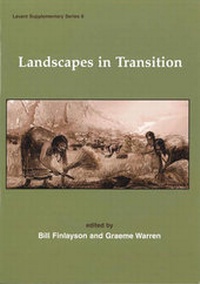
Landscapes in Transition
Published on 20. April 2010
Book
Paperback/Softback
248 pages
978-1-84217-416-6 (ISBN)
Description
This volume presents a collection of papers focusing on archaeological approaches to landscape in the context of the adoption of agriculture in Southwest Asia and Northwest Europe. Case studies are presented from these contrasting regions, one where the transition to farming is indigenous, and the other where the transformation is initiated externally. This allows us to consider to what extent hunter-gatherer and farmer landscapes may be different, or the degree to which apparent differences have been constructed by our expectations and traditions of interpretation.
While the concept 'landscape' enjoys considerable popularity in archaeological interpretation, it is somewhat ill-defined and inconsistently used. Some have suggested that this fluidity allows landscape to be a 'usefully ambiguous concept' but at times there is a danger that this very ambiguity affords imprecision in our narratives. This is particularly important where differing traditions of archaeological interpretation meet, as, for example, in the transition from hunting and gathering to farming. The transition has been understood as a major division in archaeological practice and attitudes to 'landscape' across the transition reflect this dichotomy. The results of these debates are illuminating, and raise questions beyond the immediate geographical scope of the volume. The contrast between the two regions provides valuable comparisons between traditions of archaeological theory and interpretation and the bodies of evidence.
Bill Finlayson is the Director of the Council for British Research in the Levant, Graeme Warren is a College Lecturer in the School of Archaeology, UCD, Ireland.
While the concept 'landscape' enjoys considerable popularity in archaeological interpretation, it is somewhat ill-defined and inconsistently used. Some have suggested that this fluidity allows landscape to be a 'usefully ambiguous concept' but at times there is a danger that this very ambiguity affords imprecision in our narratives. This is particularly important where differing traditions of archaeological interpretation meet, as, for example, in the transition from hunting and gathering to farming. The transition has been understood as a major division in archaeological practice and attitudes to 'landscape' across the transition reflect this dichotomy. The results of these debates are illuminating, and raise questions beyond the immediate geographical scope of the volume. The contrast between the two regions provides valuable comparisons between traditions of archaeological theory and interpretation and the bodies of evidence.
Bill Finlayson is the Director of the Council for British Research in the Levant, Graeme Warren is a College Lecturer in the School of Archaeology, UCD, Ireland.
Reviews / Votes
Landscapes in Transition provides a good overview of the state of the study of the Neolithic transition in both Britain/Ireland and in the Levant... For any scholar interested in the Neolithic transition in Eurasia, this book will be a welcome contribution. -- Bleda S. During The Holocene June 2011 The papers as a group typify the tensions and challenges in trying to explain major transformations in the archaeological record - shifts at a global scale in terms of the beginnings of farming - without falling back on simplistic linear models of causality ('this cause usually resulted in this effect'), whilst also acknowledging the importance of the local, of individual actors, of historically contingent decisionmaking. The collection does not provide the answers, but it underscores the importance of different scales of analysis.' -- Graeme Barker Landscape History Vol. 32, No. 1, 2011More details
Series
Language
English
Place of publication
Oxford
United Kingdom
Target group
College/higher education
ISBN-13
978-1-84217-416-6 (9781842174166)
Copyright in bibliographic data and cover images is held by Nielsen Book Services Limited or by the publishers or by their respective licensors: all rights reserved.
Schweitzer Classification
Other editions
Additional editions
Finlayson Bill Finlayson | Warren Graeme Warren
Landscapes in Transition
E-Book
04/2010
Council for British Research in the Levant
€21.49
Available for download
Persons
Bill Finlayson is Director of the Council for British Research in the Levant and works on the early Neolithic of southwest Asia, primarily undertaking fieldwork in southern Jordan at a number of Pre-Pottery Neolithic sites. He has been working to promote southwest Asian Neolithic heritage as an asset for local communities and tourism. Graeme Warren is a professor in the School of Archaeology, University College Dublin, Ireland, where he has worked since 2002. He is a specialist in the archaeology of hunter-gatherers, with a particular research interest in the Mesolithic of Europe. His major research projects have been in Ireland and Scotland.
Content
Landscapes in Transition
edited by Bill Finlayson and Graeme Warren
1. Introduction: Landscapes in Transition
Bill Finlayson and Graeme Warren
Part One: Changing Landscapes: Process and Scale
2. Different Ways of Being, Different Ways of Seeing ... Changing Worldviews in the Near East
(Nigel Goring-Morris and Anna Belfer-Cohen)
3. From Big Beat to Bebop: Settlement Between 6000 and 3000 BC in the Fenland Basin (UK)
(Fraser Sturt)
4. People and Their Places at the End of the Pleistocene: Evaluating Perspectives on Physical
and Cultural Landscape Change
(Lisa Maher)
5. Subsistence at 4000-3700 cal BC: Landscapes of Change or Continuity?
(Nicky Milner)
6. A Geological Perspective on Climatic and Environmental Change in the Levant and Eastern
Mediterranean from 25,000 to 5000 years BP
(Stuart A. Robinson and Stuart Black, Bruce W. Sellwood, Claire M. C. Rambeau and Paul J. Valdes)
7. The Case for Climatic Stress Forcing Choice in the Adoption of Agriculture in the British Isles
(Richard Tipping)
8. Changing Landscapes - Changing Societies? An Anthropological Perspective
(Marion Benz)
Part Two: Moving Landscapes: Worldviews and Contact
9. The Neolithization of Britain and Ireland: The 'Big Picture'
(Alison Sheridan)
10. Changing People, Changing Environments: How Hunter-Gatherers Became Communities that
Changed the World
(Trevor Watkins)
11. Formalizing the Sacred? The Late Mesolithic and Early Neolithic Monumental Landscapes
of Britain and Ireland
(Vicki Cummings)
12. 'Islanding' the Mesolithic-Neolithic Transition: Approaches to Landscapes of Contact
and Transformation in Northwest Europe
(Gordon Noble)
13. Reconsidering Early Holocene Cyprus within the Eastern Mediterranean Landscape
(Carole McCartney, Sturt W. Manning, David Sewell and Sarah T. Stewart)
14. The Last of the Old: A Homogeneous Later Mesolithic Ireland?
(Thomas Kador)
Part Three: Landscapes of Settlement
15. Farmers, Gatherers or Horticulturalists? Reconstructing Landscapes of Practice in the Early Neolithic
(Eleni Asouti and Andrew S. Fairbairn)
16. Modelling the Agricultural Impacts of the Earliest Large Villages at the Pre-Pottery
Neolithic-Pottery Neolithic Transition
(Dana Campbell)
17. Taskscapes and the Transition
(Chantal Conneller)
18. From Mega-Sites to Farmsteads: Community Size, Ideology and the Nature of Early Farming
Landscapes in Western Asia and Europe
(Amy Bogaard and Valasia Isaakidou)
19. The Temporality of Materials: Occupation Practices in Eastern England During the 5th
and 4th Millennia BC
(Duncan Garrow)
Part Four: Conclusion
20 Time, Scale, Practice: Landscapes in Transition?
(Bill Finlayson and Graeme Warren)
edited by Bill Finlayson and Graeme Warren
1. Introduction: Landscapes in Transition
Bill Finlayson and Graeme Warren
Part One: Changing Landscapes: Process and Scale
2. Different Ways of Being, Different Ways of Seeing ... Changing Worldviews in the Near East
(Nigel Goring-Morris and Anna Belfer-Cohen)
3. From Big Beat to Bebop: Settlement Between 6000 and 3000 BC in the Fenland Basin (UK)
(Fraser Sturt)
4. People and Their Places at the End of the Pleistocene: Evaluating Perspectives on Physical
and Cultural Landscape Change
(Lisa Maher)
5. Subsistence at 4000-3700 cal BC: Landscapes of Change or Continuity?
(Nicky Milner)
6. A Geological Perspective on Climatic and Environmental Change in the Levant and Eastern
Mediterranean from 25,000 to 5000 years BP
(Stuart A. Robinson and Stuart Black, Bruce W. Sellwood, Claire M. C. Rambeau and Paul J. Valdes)
7. The Case for Climatic Stress Forcing Choice in the Adoption of Agriculture in the British Isles
(Richard Tipping)
8. Changing Landscapes - Changing Societies? An Anthropological Perspective
(Marion Benz)
Part Two: Moving Landscapes: Worldviews and Contact
9. The Neolithization of Britain and Ireland: The 'Big Picture'
(Alison Sheridan)
10. Changing People, Changing Environments: How Hunter-Gatherers Became Communities that
Changed the World
(Trevor Watkins)
11. Formalizing the Sacred? The Late Mesolithic and Early Neolithic Monumental Landscapes
of Britain and Ireland
(Vicki Cummings)
12. 'Islanding' the Mesolithic-Neolithic Transition: Approaches to Landscapes of Contact
and Transformation in Northwest Europe
(Gordon Noble)
13. Reconsidering Early Holocene Cyprus within the Eastern Mediterranean Landscape
(Carole McCartney, Sturt W. Manning, David Sewell and Sarah T. Stewart)
14. The Last of the Old: A Homogeneous Later Mesolithic Ireland?
(Thomas Kador)
Part Three: Landscapes of Settlement
15. Farmers, Gatherers or Horticulturalists? Reconstructing Landscapes of Practice in the Early Neolithic
(Eleni Asouti and Andrew S. Fairbairn)
16. Modelling the Agricultural Impacts of the Earliest Large Villages at the Pre-Pottery
Neolithic-Pottery Neolithic Transition
(Dana Campbell)
17. Taskscapes and the Transition
(Chantal Conneller)
18. From Mega-Sites to Farmsteads: Community Size, Ideology and the Nature of Early Farming
Landscapes in Western Asia and Europe
(Amy Bogaard and Valasia Isaakidou)
19. The Temporality of Materials: Occupation Practices in Eastern England During the 5th
and 4th Millennia BC
(Duncan Garrow)
Part Four: Conclusion
20 Time, Scale, Practice: Landscapes in Transition?
(Bill Finlayson and Graeme Warren)