


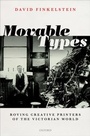
Movable Types
Roving Creative Printers of the Victorian World
Published on 17. July 2018
Book
Hardback
208 pages
978-0-19-882602-6 (ISBN)
Description
This is a study of international print networks developed across the English-speaking world over a significant part of the long nineteenth century. The first study of its kind, it draws on unique sources from Australasia, North America, South Africa, the British Isles, and Ireland, to explore how printers interacted and shared trade and cultural identities across international boundaries during the period 1830-1914. Morality, mobility, mobilisation, and solidarity were central to how compositors and print trade workers defined themselves during this period. These themes are addressed in case studies on roving printers, striking printers, and creative printers. The case studies explore the cultural values and trade skills transmitted and embedded by such actors, the global networks that enabled print workers to travel across continents in search of work and experience, the trade actions reliant on mobilization and information-sharing across the printing world, and the creative ideas that printers shared through such means as memoirs, poetry, prose, and trade news contributions to print trade journals and other public outlets.
Reviews / Votes
David Finkelstein's study is a timely one - to use a printing term, a justified history. * Times Literary Supplement * In three densely argued and fact-filled chapters, David Finkelstein provides an outstanding account of how locally shaped nineteenth-century compositors operated within global contexts... Movable Types is an impressive achievement that will hopefully stimulate extensive scholarly engagement. * Sandro Jung, Shanghai University of Finance and Economics, Journal of the Edinburgh Bibliographical Society * Unlike most trade union journals which are dominated by detailed discussion of wages and conditions, those described here contain a great deal of literary material * Robert Laurie, Scottish Labour History * this volume is intended for a wider readership than simply the printing historian. Movable Types is a reflection on the experience of nineteenth-century print workers within a dynamic and changing trade. Finkelstein argues that only by appreciating the infrastructure and mechanisms that underpinned the industry can we understand the formation and structure of local and transnational print economies. * Caroline Archer-Parre, Publishing History *More details
Language
English
Place of publication
Oxford
United Kingdom
Target group
College/higher education
Illustrations
19 black and white halftones
Dimensions
Height: 241 mm
Width: 163 mm
Thickness: 19 mm
Weight
466 gr
ISBN-13
978-0-19-882602-6 (9780198826026)
Copyright in bibliographic data and cover images is held by Nielsen Book Services Limited or by the publishers or by their respective licensors: all rights reserved.
Schweitzer Classification
Other editions
Additional editions
E-Book
06/2018
1st Edition
OUP eBook
€49.49
Available for download
E-Book
06/2018
1st Edition
OUP eBook
€42.49
Available for download
Person
David Finkelstein was Head of the Centre for Open Learning at the University of Edinburgh. Prior to that he was Dean of the School of Humanities at the University of Dundee. A specialist print culture studies and media history, he is author of works such as The House of Blackwood: Author-Publisher Relations in the Victorian Era (2002), An Introduction to Book History (2006), and Print Culture and the Blackwood Tradition, 1805-1930 (2006), the latter of which was awarded the Robert Colby Scholarly Book Prize for its contribution to the study of periodical press history.
Content
Introduction 1: Roving Printers: International Printer Migration, Skills Exchange, and Information Flow, 1830-1914 2: Striking Printers: Print Trade Disputes and the Nine Hour Movement, 1870-1880 3: Creative Printers: Labour Laureates and the Typographical Trade Press, 1840-1900 Afterword