

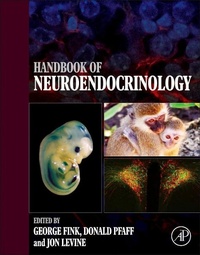
Handbook of Neuroendocrinology
Published on 26. October 2011
Book
Hardback
894 pages
978-0-12-375097-6 (ISBN)
Description
Neuroendocrinology, the discipline concerned with how the nervous system controls hormonal secretion and how hormones control the brain, is pivotal to physiology and medicine. Neuroendocrinology has disclosed and underpins fundamental physiological, molecular biological and genetic principles such as the regulation of gene transcription and translation, the mechanisms of chemical neurotransmission and intracellular and systemic feedback control systems. Reproduction, growth, stress, aggression, metabolism, birth, feeding and drinking and blood pressure are some of the bodily functions that are triggered and/or controlled by neuroendocrine systems. In turn, neuroendocrine dysfunction due to genetic or other deficits can lead, for example, to infertility, impotence, precocious or delayed puberty, defective or excessive growth, obesity and anorexia, Cushing's Syndrome, hypertension or thyroid disorders. These as well as neuroendocrine tumors are some of the themes covered in the 36 chapters of the Handbook. Drafted by internationally acknowledged experts in the field, the Handbook chapters feature detailed up-to-date bibliographies as well as "how do we know?" call out sections that highlight the experimental or technical foundations for major concepts, principles, or methodological advances in each area. Aimed at senior undergraduate and graduate students, post-doctoral fellows and faculty in neuroscience, medicine, endocrinology, psychiatry, psychology and cognate disciplines, the Handbook of Neuroendocrinology satisfies an unmet need that will prove useful at the laboratory bench as well as in the office.
More details
Language
English
Place of publication
San Diego
United States
Publishing group
Elsevier Science Publishing Co Inc
Target group
Professional and scholarly
Researchers and clinicians in the fields of neuroendocrinology and behavior; graduate students in neuroscience and related disciplines (psychiatry, neuropharmacology, medicine & veterinary medicine); medical residents
Product notice
sewn/stitched
Paper over boards
Dimensions
Height: 282 mm
Width: 226 mm
Thickness: 48 mm
Weight
2863 gr
ISBN-13
978-0-12-375097-6 (9780123750976)
Copyright in bibliographic data and cover images is held by Nielsen Book Services Limited or by the publishers or by their respective licensors: all rights reserved.
Schweitzer Classification
Other editions
Additional editions
George Fink | Donald W. Pfaff | Jon Levine
Handbook of Neuroendocrinology
E-Book
08/2011
Academic Press
€122.00
Available for download
Persons
George Fink is a Neuroendocrinologist and Neuropharmacologist who has had a major interest in stress since the start of his career. He was recently appointed Vice President and Director of Research of the Pharmos Corporation in Israel and the United States, and is the former Director of the Medical Research Council's Brain Metabolism Unit and honorary professor in the University of Edinburgh in Scotland. Dr. Fink has published over 340 neuroendocrine papers and several authoritative books, and is past president of the European Neuroendocrine Association. Donald W. Pfaff heads the Laboratory of Neurobiology and Behavior at The Rockefeller University. He received his scientific training at Harvard College and MIT. He is a Member of the U.S. National Academy of Sciences and a Fellow of the American Academy of Arts and Sciences. Pfaff's laboratory focuses on steroid hormones and brain function, genes influencing neuronal functions, and generalized CNS arousal. He is the author or coauthor of over 10 books and more than 900 research publications.
Content
Part I: Basic Principles of Neuroendocrinology
An introduction to neuroendocrine systems
Signaling in neuroendocrine systems
Neuroendocrine Control Systems
Part II: Neural Regulation of Endocrine Systems
Evolution of Neurohormones
Neural control of the anterior lobe of the pituitary gland (pars distalis)
Neural control of the posterior pituitary gland (neurohypophysis)
Neural Control of the Intermediate Lobe of the Pituitary Gland (Pars Intermedia) and Proopiomelanocortin
THE HYPOTHALAMIC PITUITARY ADRENAL AXIS AND NEUROENDOCRINE RESPONSES TO STRESS
Neuroendocrine Control of Reproduction
Lifetime Regulation of Growth-Hormone (GH) Secretion
NEUROENDOCRINE REGULATION OF DEVELOPMENT, GROWTH AND METABOLISM - THYROID
Circadian Rhythms in Neuroendocrine Systems
Cardiovascular control - renin angiotensin- AV3V - PVN
Part III: Hormones, Brain Function and Behavior
Neuroendocrine Regulation of Food Intake and Energy Homeostasis
Neuropeptide regulation of stress-induced behavior: insights from the CRF/Urocortin family
Neuroendocrine regulation of body water and electrolytes: Thirst and salt appetite
Sexual differentiation of brain and behavior
Corticosteroid actions on neurotransmission
Neuroendocrine Mechanism of Puberty
Sexual behaviors
Stress and brain function
Neuroendocrinology of Aggression
Chronic Social Stress: Effects on Neuroendocrine Function
Estrogen and Cognitive Aging in Women: The Critical Period Hypothesis
Hormones, mood and affect
Hormones and the aging brain
Part IV: Neuroendocrine Pathology
KALLMANN SYNDROME AND OTHER CAUSES OF HYPOTHALAMIC HYPOGONADISM AND RELATED DEVELOPMENT DISORDERS
Parental Behavior and the Perinatal Programming of Infant Development
Disorders of the hypothalamic-pituitary- adrenocortical system
Disorders of the Hypothalamic-Pituitary-Gonadal Axis
Disorders of the hypothalamic-pituitary- thyroid system
Neuroendocrine growth disorders - dwarfism - gigantism
Neuroendocrine inherited or induced aromatase enzyme deficits
Pituitary adenomas
Neuroendocrine carcinomas
Psychoneuroendocrinology
An introduction to neuroendocrine systems
Signaling in neuroendocrine systems
Neuroendocrine Control Systems
Part II: Neural Regulation of Endocrine Systems
Evolution of Neurohormones
Neural control of the anterior lobe of the pituitary gland (pars distalis)
Neural control of the posterior pituitary gland (neurohypophysis)
Neural Control of the Intermediate Lobe of the Pituitary Gland (Pars Intermedia) and Proopiomelanocortin
THE HYPOTHALAMIC PITUITARY ADRENAL AXIS AND NEUROENDOCRINE RESPONSES TO STRESS
Neuroendocrine Control of Reproduction
Lifetime Regulation of Growth-Hormone (GH) Secretion
NEUROENDOCRINE REGULATION OF DEVELOPMENT, GROWTH AND METABOLISM - THYROID
Circadian Rhythms in Neuroendocrine Systems
Cardiovascular control - renin angiotensin- AV3V - PVN
Part III: Hormones, Brain Function and Behavior
Neuroendocrine Regulation of Food Intake and Energy Homeostasis
Neuropeptide regulation of stress-induced behavior: insights from the CRF/Urocortin family
Neuroendocrine regulation of body water and electrolytes: Thirst and salt appetite
Sexual differentiation of brain and behavior
Corticosteroid actions on neurotransmission
Neuroendocrine Mechanism of Puberty
Sexual behaviors
Stress and brain function
Neuroendocrinology of Aggression
Chronic Social Stress: Effects on Neuroendocrine Function
Estrogen and Cognitive Aging in Women: The Critical Period Hypothesis
Hormones, mood and affect
Hormones and the aging brain
Part IV: Neuroendocrine Pathology
KALLMANN SYNDROME AND OTHER CAUSES OF HYPOTHALAMIC HYPOGONADISM AND RELATED DEVELOPMENT DISORDERS
Parental Behavior and the Perinatal Programming of Infant Development
Disorders of the hypothalamic-pituitary- adrenocortical system
Disorders of the Hypothalamic-Pituitary-Gonadal Axis
Disorders of the hypothalamic-pituitary- thyroid system
Neuroendocrine growth disorders - dwarfism - gigantism
Neuroendocrine inherited or induced aromatase enzyme deficits
Pituitary adenomas
Neuroendocrine carcinomas
Psychoneuroendocrinology