


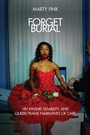
Forget Burial
HIV Kinship, Disability, and Queer/Trans Narratives of Care
Published on 13. November 2020
Book
Hardback
214 pages
978-1-9788-1377-9 (ISBN)
Description
Finalist for the LGBTQ Nonfiction Award from Lambda Literary
Queers and trans people in the 1980s and early '90s were dying of AIDS and the government failed to care. Lovers, strangers, artists, and community activists came together take care of each other in the face of state violence. In revisiting these histories alongside ongoing queer and trans movements, this book uncovers how early HIV care-giving narratives actually shape how we continue to understand our genders and our disabilities. The queer and trans care-giving kinships that formed in response to HIV continue to inspire how we have sex and build chosen families in the present. In unearthing HIV community newsletters, media, zines, porn, literature, and even vampires, Forget Burial bridges early HIV care-giving activisms with contemporary disability movements. In refusing to bury the legacies of long-term survivors and of those we have lost, this book brings early HIV kinships together with ongoing movements for queer and trans body self-determination.
Queers and trans people in the 1980s and early '90s were dying of AIDS and the government failed to care. Lovers, strangers, artists, and community activists came together take care of each other in the face of state violence. In revisiting these histories alongside ongoing queer and trans movements, this book uncovers how early HIV care-giving narratives actually shape how we continue to understand our genders and our disabilities. The queer and trans care-giving kinships that formed in response to HIV continue to inspire how we have sex and build chosen families in the present. In unearthing HIV community newsletters, media, zines, porn, literature, and even vampires, Forget Burial bridges early HIV care-giving activisms with contemporary disability movements. In refusing to bury the legacies of long-term survivors and of those we have lost, this book brings early HIV kinships together with ongoing movements for queer and trans body self-determination.
Reviews / Votes
"Marty Fink's Forget Burial is a vital, much needed contribution to HIV/AIDS scholarship. A wondrous cornucopia of theory, cultural artifacts - fiction, 'zines, video, memoirs, painting, blogs and oral histories - analysis and archival uncovering, Fink's work here is stunning when it makes connections to movements today. Forget Burial is both an act of superb scholarship and of love."- Michael Bronski, author of A Queer History of the United States for Young People"What histories inter as past, Forget Burial bears forth to account for our present. Extending caregiving as a method, the book examines how early HIV archival narrations of trans and disability activisms resurface in later novels, film/video, and online networks. Whether displaying and eroticizing disabilities, or inventing safer sex, these negotiated HIV interdependencies transform state violence and biomedical stigma into kinships for 'body self-determination' that brandish mutual care and institutional access through our unfolding crises."- Jih-Fei Cheng, co-editor of AIDS and the Distribution of Crises
"[A] creative and original study...this book offers historians both useful theoretical frameworks for thinking about HIV/AIDS, disability, and the role of mutual care as well as an exciting collection of sources to learn from."- Social History of Medicine
"Forget Burial is well worth reading. The most successful parts of this book take the reader inside the kitchens, bedrooms, prisons, art galleries, and hospital waiting rooms where people laughed, fought, loved, and sometimes died together. Fink makes a strong case that the early years of the HIV epidemic provide models for living joyously and communally despite the myriad ways capitalist institutions leave individuals to fend for ourselves. In the process of "unburying" the stories of historically marginalized people, Fink rightly and eloquently depicts disability as a generative force."- H-Net
"Marty Fink's Forget Burial is a vital, much needed contribution to HIV/AIDS scholarship. A wondrous cornucopia of theory, cultural artifacts - fiction, 'zines, video, memoirs, painting, blogs and oral histories - analysis and archival uncovering, Fink's work here is stunning when it makes connections to movements today. Forget Burial is both an act of superb scholarship and of love."- Michael Bronski, author of A Queer History of the United States for Young People
"What histories inter as past, Forget Burial bears forth to account for our present. Extending caregiving as a method, the book examines how early HIV archival narrations of trans and disability activisms resurface in later novels, film/video, and online networks. Whether displaying and eroticizing disabilities, or inventing safer sex, these negotiated HIV interdependencies transform state violence and biomedical stigma into kinships for 'body self-determination' that brandish mutual care and institutional access through our unfolding crises."- Jih-Fei Cheng, co-editor of AIDS and the Distribution of Crises
"[A] creative and original study...this book offers historians both useful theoretical frameworks for thinking about HIV/AIDS, disability, and the role of mutual care as well as an exciting collection of sources to learn from."- Social History of Medicine
"Forget Burial is well worth reading. The most successful parts of this book take the reader inside the kitchens, bedrooms, prisons, art galleries, and hospital waiting rooms where people laughed, fought, loved, and sometimes died together. Fink makes a strong case that the early years of the HIV epidemic provide models for living joyously and communally despite the myriad ways capitalist institutions leave individuals to fend for ourselves. In the process of "unburying" the stories of historically marginalized people, Fink rightly and eloquently depicts disability as a generative force."- H-Net
"[A] creative and original study...this book offers historians both useful theoretical frameworks for thinking about HIV/AIDS, disability, and the role of mutual care as well as an exciting collection of sources to learn from."- Social History of Medicine
"Forget Burial is well worth reading. The most successful parts of this book take the reader inside the kitchens, bedrooms, prisons, art galleries, and hospital waiting rooms where people laughed, fought, loved, and sometimes died together. Fink makes a strong case that the early years of the HIV epidemic provide models for living joyously and communally despite the myriad ways capitalist institutions leave individuals to fend for ourselves. In the process of "unburying" the stories of historically marginalized people, Fink rightly and eloquently depicts disability as a generative force."- H-Net
"What histories inter as past, Forget Burial bears forth to account for our present. Extending caregiving as a method, the book examines how early HIV archival narrations of trans and disability activisms resurface in later novels, film/video, and online networks. Whether displaying and eroticizing disabilities, or inventing safer sex, these negotiated HIV interdependencies transform state violence and biomedical stigma into kinships for 'body self-determination' that brandish mutual care and institutional access through our unfolding crises."- Jih-Fei Cheng, co-editor of AIDS and the Distribution of Crises
"Marty Fink's Forget Burial is a vital, much needed contribution to HIV/AIDS scholarship. A wondrous cornucopia of theory, cultural artifacts - fiction, 'zines, video, memoirs, painting, blogs and oral histories - analysis and archival uncovering, Fink's work here is stunning when it makes connections to movements today. Forget Burial is both an act of superb scholarship and of love."- Michael Bronski, author of A Queer History of the United States for Young People
More details
Language
English
Place of publication
New Brunswick NJ
United States
Target group
College/higher education
Product notice
Laminated cover
Illustrations
15 b-w images
Dimensions
Height: 229 mm
Width: 152 mm
Thickness: 18 mm
Weight
4 gr
ISBN-13
978-1-9788-1377-9 (9781978813779)
Copyright in bibliographic data and cover images is held by Nielsen Book Services Limited or by the publishers or by their respective licensors: all rights reserved.
Schweitzer Classification
Other editions
Additional editions
E-Book
11/2020
1st Edition
Rutgers University Press
€94.99
Available for download
Person
MARTY FINK is an assistant professor of professional communication at Ryerson University in Toronto, Ontario, Canada.
Content
Introduction: Taking Care
Chapter 1: Silence = Undead: Vampires, HIV Kinship, and Communities of Care
Chapter 2: Caregiving Collations and Gender Trash from Hell: Trans Women's HIV Archives
Chapter 3: Chosen Families: Rejection, Desire, and Archives of Care
Chapter 4: The Gift of Dykes: Naming Desire in Rebecca Brown's Narratives of Care
Chapter 5: Queering Customs: Unburying Care in My Brother and ACE
Conclusion: Forget Burial
Acknowledgments
Works Cited
About the Author
Chapter 1: Silence = Undead: Vampires, HIV Kinship, and Communities of Care
Chapter 2: Caregiving Collations and Gender Trash from Hell: Trans Women's HIV Archives
Chapter 3: Chosen Families: Rejection, Desire, and Archives of Care
Chapter 4: The Gift of Dykes: Naming Desire in Rebecca Brown's Narratives of Care
Chapter 5: Queering Customs: Unburying Care in My Brother and ACE
Conclusion: Forget Burial
Acknowledgments
Works Cited
About the Author