

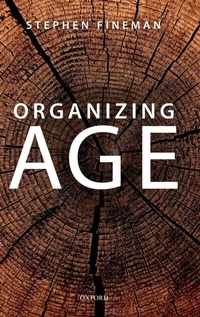
Organizing Age
Published on 12. May 2011
Book
Hardback
188 pages
978-0-19-957804-7 (ISBN)
Description
Age is the silent shaper of work organizations and their human resource practices. It has become a potent feature of how society is structured and how it views itself. Age assumptions mould the behaviours of young and old alike, and are used as political tools by policy makers and managers. Organizing Age asks the perennial question - can age ever not matter?
Drawing on range of social scientific and popular writings, this book casts a critical eye over the social construction and politicization of age in and beyond organizations. Amongst other topics, it discusses: the historical roots of age in society; how we 'perform' our age in different settings; the social impact of defining age groups as generations; ageism; the effect of an age-cluster on an organization's processes and members' experience; the rituals of retirement and the birth of the retirement industry; the impact of economic recession in challenging some of our assumptions about age; and the increasing politicization of the growing 'grey' population.
Organizing Age provides an accessible introduction to the current and emerging themes around this topic, which will be an invaluable resource for students, academics, and policy makers.
Drawing on range of social scientific and popular writings, this book casts a critical eye over the social construction and politicization of age in and beyond organizations. Amongst other topics, it discusses: the historical roots of age in society; how we 'perform' our age in different settings; the social impact of defining age groups as generations; ageism; the effect of an age-cluster on an organization's processes and members' experience; the rituals of retirement and the birth of the retirement industry; the impact of economic recession in challenging some of our assumptions about age; and the increasing politicization of the growing 'grey' population.
Organizing Age provides an accessible introduction to the current and emerging themes around this topic, which will be an invaluable resource for students, academics, and policy makers.
Reviews / Votes
Fineman mixes popular and social scientific thinking, often insightfully and thoughtfully ... he demonstrates well ageisms pervasiveness, influence and neglect by social science. * Ian Glover, Work, Employment and Society * The question that Fineman poses at the end of the chapter on retirement: Is it time to shift our thinking about the relationship between work and retirement and, indeed, the very validity of retirement as a construct? (p. 130) encapsulates what is really good about this book. Fineman offers us a broad brush view of the way in which age is socially constructed and proffers some simulating questions that could help frame new research into the organization of ageing or deepen existing investigations ... but for students, academics and policy makers who are interested in exploring age beyond a simplistic view of age as chronological and generational markers then this is a must read. * Leanne Cutcher, Organization * Timely and relevant ... a valuable contribution to a field of study that is attracting more and more scholarly attention, rightly so. I recommend this text as an essential read for anyone interested in this topic area, but also as a supplementary text on academic courses that adopt a critical perspective on analysing aspects of individual difference in the workplace, and how these are managed by organizations. * Nick Rumens, Management Learning * Provides a broad perspective on the ways in which age is defined in various disciplines and various points in history... the book fills a literature gap, and it does so in a way which most people would find approachable and at times entertaining ... Organizing Age is welcomed as it paves the way for a greater understanding of how we view age and will be valuable in breaking down the barriers of ageism. * Elaine Alden, Ageing and Society *More details
Language
English
Place of publication
Oxford
United Kingdom
Target group
College/higher education
Professional and scholarly
Illustrations
Numerous illustrations
Dimensions
Height: 240 mm
Width: 161 mm
Thickness: 15 mm
Weight
452 gr
ISBN-13
978-0-19-957804-7 (9780199578047)
Copyright in bibliographic data and cover images is held by Nielsen Book Services Limited or by the publishers or by their respective licensors: all rights reserved.
Schweitzer Classification
Other editions
Additional editions
Person
Throughout a distinguished career, Professor Fineman has written extensively in journals, monographs, and textbooks on the political and emotional features of life in organizations. He has been at the forefront of introducing critical, constructionist approaches to the study of organizations in works such as Emotion in Organizations (2000) and Understanding Emotion at Work (2003). He has long been an advocate of blending psychological, sociological, and anthropological insights in our appreciation of organizational phenomena, such as stress, unemployment, greening, leadership, and change.
Content
Preface ; 1. Why Age? ; 2. Age Work ; 3. Generations ; 4. Ageism ; 5. Capturing Age Cohorts ; 6. Retirement ; 7. A New Age?