


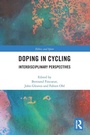
Doping in Cycling
Interdisciplinary Perspectives
1st Edition
Published on 7. December 2018
Book
Hardback
274 pages
978-1-138-47790-2 (ISBN)
Description
Doping in Cycling: Interdisciplinary Perspectives provides an up-to-date overview of the knowledge about doping and anti-doping in the sport that has dominated doping headlines for at least two decades. It critically addresses overarching questions related to doping and anti-doping, and topical issues being raised in the agenda of policy-makers at the global level.
The book features cross-disciplinary contributions from international leading scholars in sports sociology, history, philosophy, psychology and criminology, and even beyond human and social sciences. Split into three parts (the use and supply of doping products; threats on cycling and opportunities for anti-doping; and issues, controversies, and stakes), it covers topics such as changing patterns of drug use in professional cycling, the impact of scientific advances on doping in cycling, whether cycling teams can prevent doping, whistleblowing on doping in cycling, and how to improve the credibility of the sport.
This is a vital resource for researchers, students, policy-makers, anti-doping organisations and sports federations, and an important read for anyone involved in elite cycling.
The book features cross-disciplinary contributions from international leading scholars in sports sociology, history, philosophy, psychology and criminology, and even beyond human and social sciences. Split into three parts (the use and supply of doping products; threats on cycling and opportunities for anti-doping; and issues, controversies, and stakes), it covers topics such as changing patterns of drug use in professional cycling, the impact of scientific advances on doping in cycling, whether cycling teams can prevent doping, whistleblowing on doping in cycling, and how to improve the credibility of the sport.
This is a vital resource for researchers, students, policy-makers, anti-doping organisations and sports federations, and an important read for anyone involved in elite cycling.
More details
Series
Language
English
Place of publication
London
United Kingdom
Publishing group
Taylor & Francis Ltd
Target group
College/higher education
Illustrations
10 s/w Abbildungen, 4 s/w Tabellen, 10 s/w Zeichnungen
4 Tables, black and white; 10 Line drawings, black and white; 10 Illustrations, black and white
Dimensions
Height: 240 mm
Width: 161 mm
Thickness: 19 mm
Weight
581 gr
ISBN-13
978-1-138-47790-2 (9781138477902)
Copyright in bibliographic data and cover images is held by Nielsen Book Services Limited or by the publishers or by their respective licensors: all rights reserved.
Schweitzer Classification
Other editions
Additional editions
Book
09/2020
1st Edition
Routledge
€65.50
Shipment within 15-20 days

E-Book
12/2018
1st Edition
Routledge
€59.49
Available for download

E-Book
12/2018
1st Edition
Routledge
€59.49
Available for download
Persons
Bertrand Fincoeur is Senior Researcher at the Institute of Sports Sciences at the University of Lausanne, Switzerland.
John Gleaves is Associate Professor of Kinesiology at the California State University, Fullerton, USA.
Fabien Ohl is Full Professor of Sociology of Sport at the University of Lausanne, Switzerland.
John Gleaves is Associate Professor of Kinesiology at the California State University, Fullerton, USA.
Fabien Ohl is Full Professor of Sociology of Sport at the University of Lausanne, Switzerland.
Content
Introduction, PART I: The Use and Supply of Doping Products, 1. Assessing and Explaining the Doping Prevalence in Cycling, 2. Changing Patterns of Drug Use in Professional Cycling: Implications for Anti-Doping Policy, 3. Substance Use, Anti-Doping, and Health in Amateur Cycling, 4. The Impact of Scientific Advances on Doping in Cycling, 5. Kicked Out: How Experts Are Being Deterred from Playing on the Doping Market, 6. The Peculiarities of the Market For Doping Products and the Role of Academic Physicians, PART II: Threats on Cycling and Opportunities for Anti-Doping, 7. Doped Humans and Rigged Bikes - And Why We (Wrongly) Get More Upset About the Bikes, 8. Everyone Was Doing It: Applying Lessons from Cycling's EPO Era to a Looming TUE Era, 9. Cycling Teams Preventing Doping: Can the Fox Guard the Hen House?, 10. Blowing the Whistle on Doping in Cycling, 11. Performance Data to Improve Cycling's Credibility?, 12. What Might a Partially Relaxed Anti-Doping Regime in Professional Cycling Look Like?, PART III: Issues, Controversies and Stakes, 13. The Decline of Trust in British Sport Since the London Olympics: Team Sky's Fall from Grace, 14. Is Froome's Performance on the 2015 Tour de France Credible? A Sociological Analysis of the Construction of the Performance's Authenticity in Cycling, 15. The Clean Corrective: Can Thinking About Clean Cyclists Enhance Anti-Doping?, 16. What to do with the TUE Process? Bradley Wiggins, Therapeutic Use and Data Sharing: A Critical Analysis, 17. Doping Relevance and the World Anti-Doping Code