


Decolonizing Data
Algorithms and Society
1st Edition
Published on 26. May 2023
Book
Hardback
68 pages
978-1-032-29072-0 (ISBN)
Description
This book focuses on the values and effects that are operational in data technologies as they sustain colonial and imperialist legacies while also highlighting strategies for resistance to autocratic regimes and pathways towards decolonizing efforts.
Systems and schemes for databases and automated data flow processing often contain implicitly Westernized, autocratic or even imperialist features, but can also be appropriated for resistance and revolt. Algorithms are not strictly mathematical but also embody cultural constructs. Values circulate in systems along with labels and quantities. This entails more critically reflective data practices whether in government, academia, industry or the civic sphere. The volume covers a critique of the data colonialism thesis which frames computer science as a colonizing science that uses data to classify and govern us, an alternate framing of metadata as 'data near data' to challenge seemingly neutral technical terms, and a case study of the use of social media platforms in the 2018 Sudanese uprising.
Scholars and students from many backgrounds, as well as policy makers, journalists and the general reading public will find a multidisciplinary approach to questions posed by data decolonization research from the fields of Communication and Digital Media studies.
Systems and schemes for databases and automated data flow processing often contain implicitly Westernized, autocratic or even imperialist features, but can also be appropriated for resistance and revolt. Algorithms are not strictly mathematical but also embody cultural constructs. Values circulate in systems along with labels and quantities. This entails more critically reflective data practices whether in government, academia, industry or the civic sphere. The volume covers a critique of the data colonialism thesis which frames computer science as a colonizing science that uses data to classify and govern us, an alternate framing of metadata as 'data near data' to challenge seemingly neutral technical terms, and a case study of the use of social media platforms in the 2018 Sudanese uprising.
Scholars and students from many backgrounds, as well as policy makers, journalists and the general reading public will find a multidisciplinary approach to questions posed by data decolonization research from the fields of Communication and Digital Media studies.
More details
Series
Language
English
Place of publication
London
United Kingdom
Publishing group
Taylor & Francis Ltd
Target group
Professional and scholarly
College/higher education
Academic, General, and Postgraduate
Dimensions
Height: 222 mm
Width: 145 mm
Thickness: 8 mm
Weight
246 gr
ISBN-13
978-1-032-29072-0 (9781032290720)
Copyright in bibliographic data and cover images is held by Nielsen Book Services Limited or by the publishers or by their respective licensors: all rights reserved.
Schweitzer Classification
Other editions
Additional editions
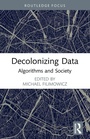
Book
10/2024
1st Edition
Routledge
€32.20
Shipment within 10-20 days
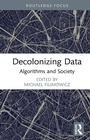
E-Book
05/2023
1st Edition
Routledge
€27.49
Available for download
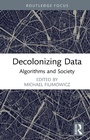
E-Book
05/2023
1st Edition
Routledge
€27.49
Available for download
Person
Michael Filimowicz is Senior Lecturer in the School of Interactive Arts and Technology (SIAT) at Simon Fraser University. He has a background in computer-mediated communications, audiovisual production, new media art and creative writing. His research develops new multimodal display technologies and forms, exploring novel form factors across different application contexts including gaming, immersive exhibitions and simulations.
Content
1 Notes on the Historiography of Data Colonialism; 2 Metadata Is Not Data About Data; 3 Social Media Use in the Sudanese Uprising, 2018: Mediating Civilian-Military Discourse