

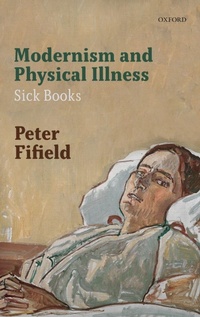
Modernism and Physical Illness
Sick Books
Published on 8. July 2020
Book
Hardback
258 pages
978-0-19-882542-5 (ISBN)
Description
T. S. Eliot memorably said that separation of the man who suffers from the mind that creates is the root of good poetry. This book argues that this is wrong. Beginning from Virginia Woolf's 'On Being Ill', it demonstrates that modernism is, on the contrary, invested in physical illness as a subject, method, and stylizing force. Experience of physical ailments, from the fleeting to the fatal, the familiar to the unusual, structures the writing of the modernists, both as sufferers and onlookers. Illness reorients the relation to, and appearance of, the world, making it appear newly strange; it determines the character of human interactions and models of behaviour. As a topic, illness requires new ways of writing and thinking, altered ideas of the subject, and a re-examination of the roles of invalids and carers. This book reads the work five authors, who are also known for their illness, hypochondria, or medical work: D. H. Lawrence, Virginia Woolf, T. S. Eliot, Dorothy Richardson, and Winifred Holtby. It overturns the assumption that illness is a simple obstacle to creativity and instead argues that it is a subject of careful thought and cultural significance.
Reviews / Votes
A timely and observant piece of research that should be of great interest to scholars of modernism, the medical humanities, and beyond. * Chloe R. Green, University of Melbourne * Modernism and Physical Illness presents excellent original research. It also offers a study in how one might think about the relationship between illness and literary criticism more generally, and the necessary limits to how one might form arguments out of illness. * Kirsty Martin, Modern Language Review * This is a study that prompts more reflection about modernism and illness and does so in such a way that is useful to our current moment. * Robert Volpicelli, Journal of Modern Literature * Overall, Modernism and Physical Illness adds a rigorous close reading of Fifield's selected authors to the ongoing work being done in modernist studies. The intersection of modernist aesthetics and physical illness is rich with possible contributions to our understanding of the modernist movement overall. Fifield's reading is a thoughtful addition that adds dimension to modernist studies while providing groundwork for forging new alliances with new work in disability studies. * Jennifer Marchisotto, James Joyce Quarterly * Recommended. * L. Simon, CHOICE *More details
Language
English
Place of publication
Oxford
United Kingdom
Target group
Professional and scholarly
Dimensions
Height: 240 mm
Width: 161 mm
Thickness: 19 mm
Weight
555 gr
ISBN-13
978-0-19-882542-5 (9780198825425)
Copyright in bibliographic data and cover images is held by Nielsen Book Services Limited or by the publishers or by their respective licensors: all rights reserved.
Schweitzer Classification
Other editions
Additional editions
E-Book
07/2020
1st Edition
OUP eBook
€50.99
Available for download
E-Book
07/2020
1st Edition
OUP eBook
€57.49
Available for download
Person
Peter Fifield is Lecturer in Modern Literature in the Department of English and Humanities at Birkbeck, University of London. His interests include modernism, medical humanities, and literary ethics. He has published work on Samuel Beckett, E. M. Forster, Emmanuel Levinas, and others.
Content
Introduction: Sick Books
1: Sensory intensity and illness in Lawrence
2: Virginia Woolf: Illnesses of the Exotic and the Urban
3: T. S. Eliot and the skin around the skull
4: 'You ought to be supported by the state!' Dorothy Richardson and the Politics of Care
5: Winifred Holtby and the Fevered (Middle)brow
Epilogue
1: Sensory intensity and illness in Lawrence
2: Virginia Woolf: Illnesses of the Exotic and the Urban
3: T. S. Eliot and the skin around the skull
4: 'You ought to be supported by the state!' Dorothy Richardson and the Politics of Care
5: Winifred Holtby and the Fevered (Middle)brow
Epilogue