

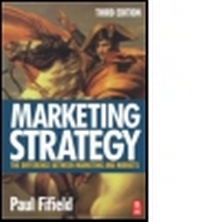
Marketing Strategy
3rd Edition
Published on 26. July 2007
Book
Paperback/Softback
316 pages
978-0-7506-5675-7 (ISBN)
Description
The third edition of this established book brings the reader up to date with the latest repurcussions of new technology upon marketing planning and implementation, and launches a new strategy model (SCORPIO) at the core of the book.
As in previous editions, 'Marketing Strategy' strips away the confusion and jargon that surround what ought to be one of the most straightforward areas of modern business. Retaining a clear focus on the relationships between people as the basis of marketing, the book offers analysis of the pivotal role of marketing in the business strategy process. It shows how to:
* develop a business strategy
* devise a marketing strategy
* implement a marketing strategy
Providing a good balance between sound theory and practical know-how in an increasingly competitive environment, the book is indispensable for marketing practitioners, general managers and students alike.
As in previous editions, 'Marketing Strategy' strips away the confusion and jargon that surround what ought to be one of the most straightforward areas of modern business. Retaining a clear focus on the relationships between people as the basis of marketing, the book offers analysis of the pivotal role of marketing in the business strategy process. It shows how to:
* develop a business strategy
* devise a marketing strategy
* implement a marketing strategy
Providing a good balance between sound theory and practical know-how in an increasingly competitive environment, the book is indispensable for marketing practitioners, general managers and students alike.
More details
Edition
3rd New edition
Language
English
Place of publication
Oxford
United Kingdom
Publishing group
Taylor & Francis Ltd
Target group
College/higher education
Marketing practitioners and managers; CIM Diploma students.
Edition type
New edition
Illustrations
Illustrated
Dimensions
Height: 235 mm
Width: 156 mm
Weight
617 gr
ISBN-13
978-0-7506-5675-7 (9780750656757)
Copyright in bibliographic data and cover images is held by Nielsen Book Services Limited or by the publishers or by their respective licensors: all rights reserved.
Schweitzer Classification
Other editions
Additional editions
Paul Fifield
Marketing Strategy
Book
02/2016
3rd Edition
Routledge
€163.42
Article exhausted; check different version
Previous edition
Book
05/1998
2nd Edition
Butterworth-Heinemann
€40.84
Article exhausted; check for reprint
Person
Dr Fifield is married with three children and lives in Winchester. He holds a degree in Business Studies as well as an MBA and a PhD in Marketing Strategy, both from Cranfield University. He was elected a Fellow of the Chartered Institute of Marketing (FCIM) in 1988, an elected member of CIM Council 1999-2001 and the CIM International Board of Trustees 2002-2004.Paul was appointed Visiting Professor at Southampton University School of Management in 2006. He is currently President of the CIM Southern Region and a Fellow of the Royal Society for the encouragement of Arts, Manufacturers and Commerce (FRSA). Over thirty years of listening, watching, learning and applying academic and strategic thought to marketing has created a fertile mind which Paul brings to his customers, his writing and his teaching. He listens watches learns and applies the best of his vast knowledge to help his clients' organisations align themselves to the market they wish to serve. Only after 20 years is the market segmentation approach that was born out of his PhD thesis coming of age; and forming the foundations of some competitive and exciting new market strategies.
Content
Contents
Preface to the third edition
Preface to the second edition
Preface to the first edition
Acknowledgements
Introduction
I.1 What is Marketing?
I.2 What is Strategy?
I.3 What is Market(ing) Strategy?
I.4 The approach of this book
Part One - Preparing for the Market Strategy
1. The internal business drivers
1.1. Personal value of the key implementers
1.2. The Mission/Leadership
1.3. Shareholder Value
1.4. Long term Financial Objective
1.5. Other Stakeholders' requirements
1.6. The Vision
2. The external environment
2.1. Customer & Market orientation
2.2. The Environment audit
2.2.1. Political audit
2.2.2. Economic audit
2.2.3. Sociological audit
2.2.4. Technological audit
2.2.5. International audit
2.2.6. Environmental audit
2.3. Opportunities & Threats
2.3.1. Industry analysis
2.3.2. Competition
2.3.3. Structural opportunities
2.3.4. The Resource/Performance audit
2.4. Strengths & Weaknesses
2.5. Competitor analysis
2.5.1. Competitive Opportunities
3. The business strategy
3.1. The Financial Hurdles
3.2. The Business Objective
3.3. The Business Strategy
3.4. Competitive Strategy
3.5. Sustainable Competitive Advantage
Part Two - Developing the Market Strategy
4. From business to market strategy
5. The Market Objectives
6. Developing the Market Strategy (SCORPIO (c))
6.1. Industry or Market? (I)
6.2. The Customer (C)
6.3. Segmentation & Targeting (S)
6.4. Positioning & Branding (P)
6.5. Customer Retention (R)
6.6. Organisation - Processes & Culture (O) (with Hamish Mackay)
6.7. Offerings (O)
Part Three - From Market Strategy to Tactics
7. Making it happen
7.1. Market Plans
7.2. Market Control Systems
7.3. Strategy Evaluation
7.4. Identifying Barriers to Implementation
7.5. Identifying Drivers for Change
7.6. Using the System
7.7. Epilogue
Appendices
1. The Strategy Checklist
2. Index
Preface to the third edition
Preface to the second edition
Preface to the first edition
Acknowledgements
Introduction
I.1 What is Marketing?
I.2 What is Strategy?
I.3 What is Market(ing) Strategy?
I.4 The approach of this book
Part One - Preparing for the Market Strategy
1. The internal business drivers
1.1. Personal value of the key implementers
1.2. The Mission/Leadership
1.3. Shareholder Value
1.4. Long term Financial Objective
1.5. Other Stakeholders' requirements
1.6. The Vision
2. The external environment
2.1. Customer & Market orientation
2.2. The Environment audit
2.2.1. Political audit
2.2.2. Economic audit
2.2.3. Sociological audit
2.2.4. Technological audit
2.2.5. International audit
2.2.6. Environmental audit
2.3. Opportunities & Threats
2.3.1. Industry analysis
2.3.2. Competition
2.3.3. Structural opportunities
2.3.4. The Resource/Performance audit
2.4. Strengths & Weaknesses
2.5. Competitor analysis
2.5.1. Competitive Opportunities
3. The business strategy
3.1. The Financial Hurdles
3.2. The Business Objective
3.3. The Business Strategy
3.4. Competitive Strategy
3.5. Sustainable Competitive Advantage
Part Two - Developing the Market Strategy
4. From business to market strategy
5. The Market Objectives
6. Developing the Market Strategy (SCORPIO (c))
6.1. Industry or Market? (I)
6.2. The Customer (C)
6.3. Segmentation & Targeting (S)
6.4. Positioning & Branding (P)
6.5. Customer Retention (R)
6.6. Organisation - Processes & Culture (O) (with Hamish Mackay)
6.7. Offerings (O)
Part Three - From Market Strategy to Tactics
7. Making it happen
7.1. Market Plans
7.2. Market Control Systems
7.3. Strategy Evaluation
7.4. Identifying Barriers to Implementation
7.5. Identifying Drivers for Change
7.6. Using the System
7.7. Epilogue
Appendices
1. The Strategy Checklist
2. Index